All children, including Roma girls, benefit from inclusive education
Teachers in the Brothers Ramiz and Hamid Primary School in Shuto Orizari in Skopje embrace the spirt of inclusive education, which is now effectively helping them to ensure all children are in school and learning well.
- English
- Македонски
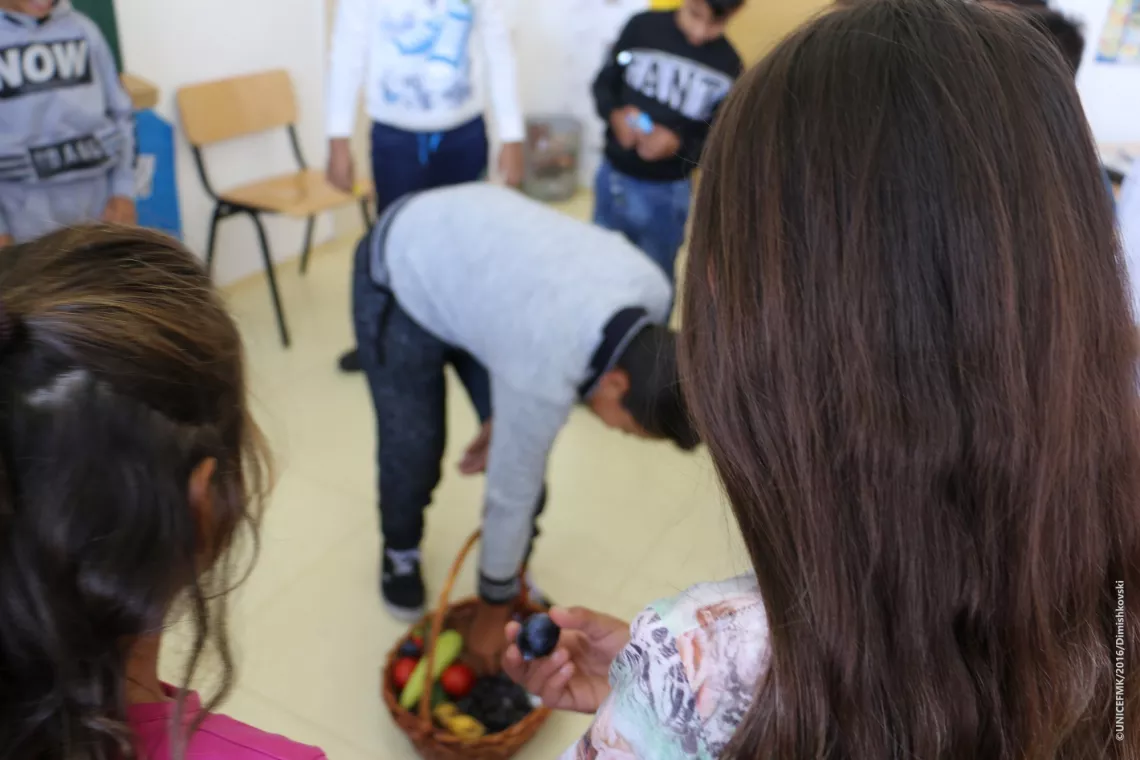
It’s the first day of autumn and one of the teacher of third graders at “Brothers Ramiz and Hamid” Primary School in Skopje brought a basket full of seasonal fruits and vegetables, accompanied by some other snacks. She places the basket in the middle of the classroom and invites the students to come and pick a product of their liking.
Fatime “breaks the ice” in the group of rather shy children. She opts for the carrot. It is one of her favourites, she says. Then another child steps up, and another, until the basket is almost empty. To the surprise of the teacher, most of the children preferred fruits and vegetables before the not so healthy snacks. It is clear — the lesson about the importance of eating healthy food is already well learned!
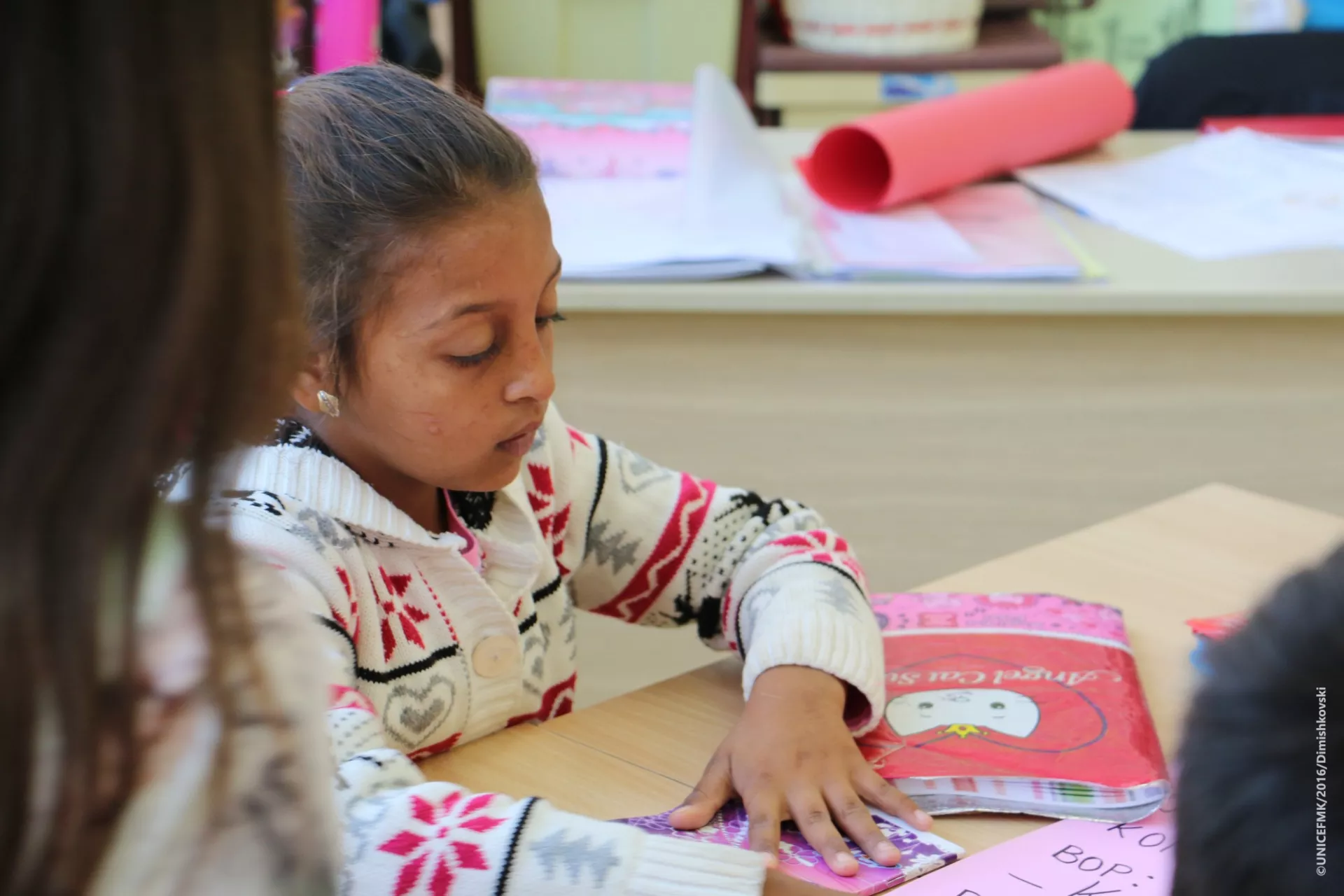
The children are happy. The teacher is smiling. She is particularly proud of Fatime, the girl who had the courage to make the first choice. A year ago, Fatime would have never participated in the activity, let alone be the child to set an example for the others.
“Fatime had difficulties paying much attention. She would often stand up without any apparent reason, or turn away abruptly when talking with her. She was struggling with both reading and writing,” said Suzana Petrovska, the class teacher.
Having been trained as part of the UNICEF supported inclusive education programme, Snezana and her colleagues know all children — regardless of their ability or socioeconomic background — can learn and that all children need support. They have come to appreciate that, one-size-fits-all does not yield results. Some children may require more support, but for some, like Fatime, they may simply need more frequent one-on-one help with their maths and reading.
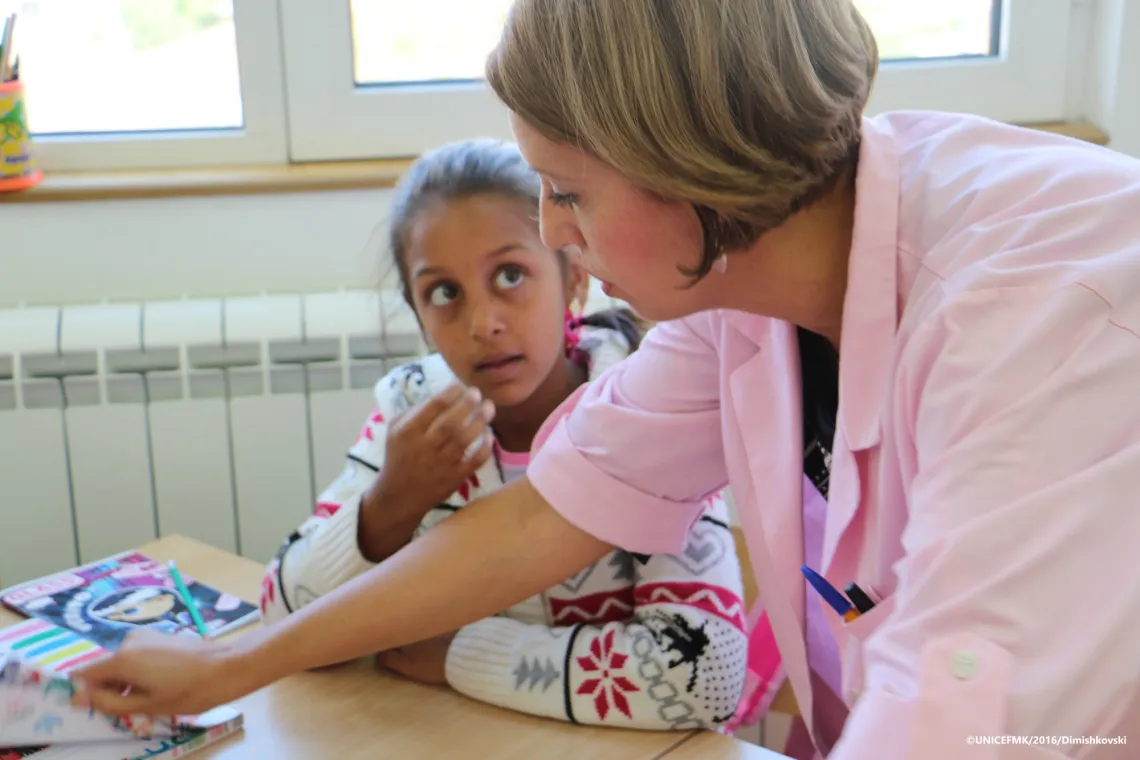
“We have learned a lot about inclusive education and there’s a lot more to learn. We work in a community with high levels of poverty and low literacy rates among parents. Many of the children do not have the support they need at home,” explains Valentina Zlatanovska, the school’s pedagogue. “Inclusive education has taught us how to create individualized educational programmes tailored to the individual child. Fatime is one of 230 children for which the inclusive school team created such a programme and her progress is more than encouraging.”
The UNICEF supported inclusive education programme was introduced in 2012 as a pilot initiative in 12 schools to build the capacity of schools to support inclusion of all children, including children with disabilities and children with other special education needs. Since initiated, the programme has expanded to 20 schools, including seven in Roma communities which are supported by the Austrian Development Agency.