Public institutions to foster green skills of students from vocational schools
- English
- Македонски
- Shqip
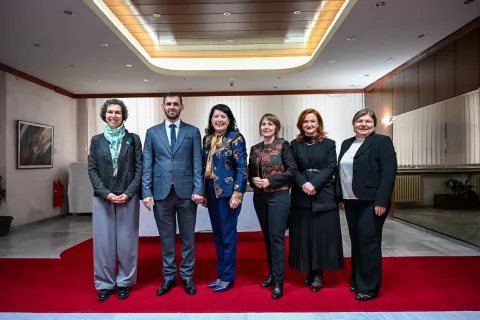
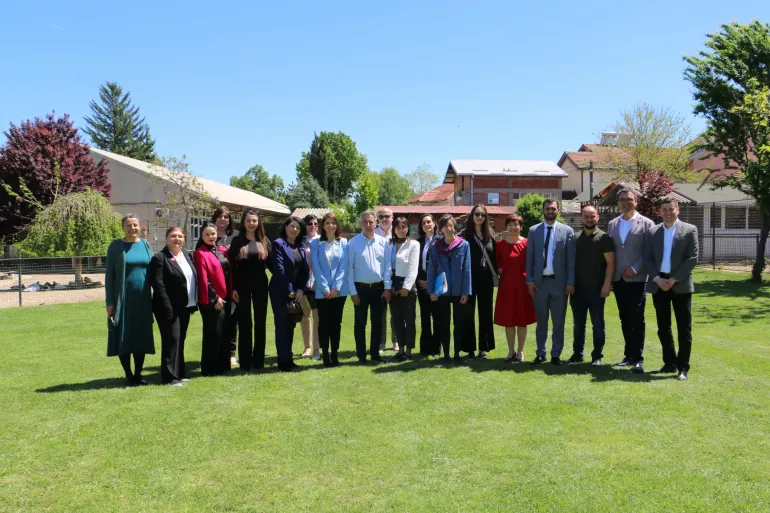
Skopje, 29 April 2025 - Secondary schools for vocational education and training (VET) signed a Memorandum of Understanding with six public institutions to support the development of green skills of students through practical instruction.
The public institutions include the Hydrometeorological Bureau, the Seismological Observatory at the Faculty of Natural Sciences, the National Railway Transport, the National Railway Infrastructure, the Public Cadaster and the National Post.
“As environmental challenges grow, so does the need for a professional workforce able to help advance climate resilience and sustainability. By fostering a deep understanding of environmental issues and providing opportunities to adolescents to develop practical skills, we empower the next generation to build a sustainable and resilient future,” said Silvia Chiarucci, UNICEF Deputy Representative.
“Learning becomes truly valuable once the student steps outside the walls of the school and faces the real world. For this reason, practical education – especially when conducted in real-life conditions, in institutions and companies – represents a key segment in the process of forming a quality, capable, and competent workforce,“ said Besnik Zendeli, Director of the VET Center
"As a business system with over 5,500 people who use their knowledge and skills to make our business more successful, we deeply believe that high-quality and continuous education, as well as the development of green and digital skills for the 21st century, are crucial for both society and the economy. In this way, our children and youth will be prepared for the modern labor market in the future, while also having the necessary knowledge to tackle the challenges posed by the increasingly dynamic global economy. Through collaboration with UNICEF, institutions, and the private sector, our goal is to bridge the gap between learning and employment, thereby contributing to sustainable development and a better future", said Saško Blaževski, Executive Director of Nelt ST, and added that an investment of $330,000 has been allocated to enhance the skills of 500 students from 20 vocational education and training schools, through practical instruction and summer internships, with a focus on increasing green skills.
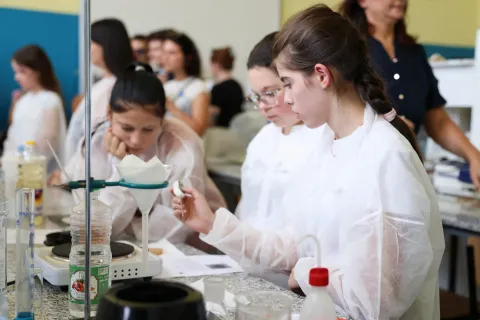
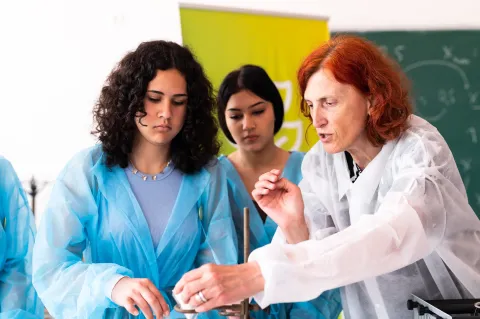
This event is part of an initiative which aims to provide over 500 students in vocational education with hands-on training, work-based learning and summer internships in public and scientific institutions across the country, preparing them to contribute to environmental sustainability and the transition to green economy through their chosen professions.
The new partnerships between VET schools and public institutions are a result of collaboration between UNICEF, the Ministry of Education and Science and the VET Centre with financial support from the private sector Nelt group and Sweden.
UNICEF is supporting the Vocational Education Center to develop green curricula, facilitate training of teachers and mentors and facilitate practical instruction to ensure that all VET students can learn about the environment and climate through the lens of their profession.
Whilst vocational students have had other opportunities for practical training in public institutions, this is the first time public institutions are engaging in systematic efforts to prepare students for careers driving the green transition in the country. The participating students come from schools specializing in machinery, transportation, freight forwarding and logistics, veterinary, chemistry, construction, architecture, law, economics, and electrical engineering.
More partnerships will follow, with over 40 scientific and public institutions expected to open their doors for students and offer meaningful hands-on experience that will better prepare them for the evolving demands of the job market.
Media contacts
About UNICEF
UNICEF, the United Nations agency for children, works to protect the rights of every child, everywhere, especially the most disadvantaged children and in the toughest places to reach. Across more than 190 countries and territories, we do whatever it takes to help children survive, thrive, and fulfil their potential.