Vocational secondary education modernized with STEM skills for the jobs of the future
- English
- Македонски
- Shqip
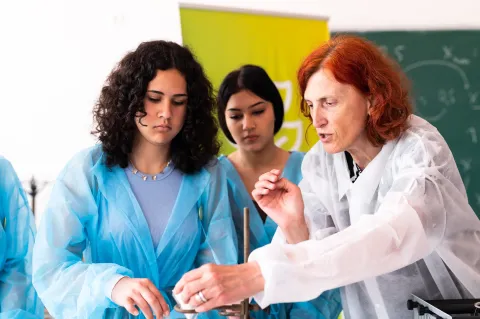
Skopje, 16 September 2026 – With the start of the new school year, around 10,800 students enrolled in the first year of vocational secondary education will become the first generation to study under modernized curricula that integrate STEM competencies, including green and digital aspects, across all vocational fields.
Through the training of 569 teachers, the development of new learning resources and strengthened cooperation with the private sector, this reform will help students apply sustainable practices in their future workplaces and respond to climate-related challenges that are increasingly affecting every sector of the economy.
"The reform comes at a time when vocational education is becoming increasingly attractive to young people. Today's students will enter a labour market shaped by technological change, the green transition and new ways of working. By modernizing vocational education, we are helping young people acquire the skills they need to succeed, while giving companies access to a workforce prepared to drive growth, innovation and competitiveness," said Vesna Janevska, Minister of Education and Science.
While these skills are particularly important in sectors such as renewable energy, sustainable construction and green technologies, the transition to a green economy is transforming jobs across almost all sectors. Students in business and entrepreneurship programmes will learn about green business models and sustainable innovation, while students in hospitality and tourism programmes will learn how to reduce food waste and apply sustainable practices.
The reform seeks to bridge the gap between young people's environmental ambitions and their knowledge and skills in the field of environmental sustainability.
Led by the Ministry of Education and Science and the Vocational Education and Training Centre, the reform embeds STEM skills, including green and digital aspects, into vocational education. UNICEF provided technical support with funding from the Government of Sweden and Nelt.
"Preparing children and young people for the future requires rethinking which skills matter across the education system. By integrating STEM skills, including green and digital competencies, into vocational education, North Macedonia is helping ensure that every student is prepared to succeed in a changing economy and climate," said Lesley Miller, UNICEF Representative.
The new curricula help students develop not only technical knowledge but also problem-solving, innovation and adaptability skills, enabling them to make a significant contribution to achieving the goals of the Education Strategy 2026-2032 and North Macedonia's Reform Agenda 2024-2027.
Media contacts
About UNICEF
UNICEF, the United Nations agency for children, works to protect the rights of every child, everywhere, especially the most disadvantaged children and in the toughest places to reach. Across more than 190 countries and territories, we do whatever it takes to help children survive, thrive, and fulfil their potential.