From Trauma to Triumph
The ongoing journey of resilience and recovery by the Yelewata community

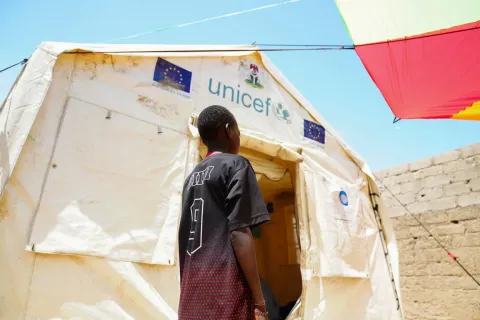
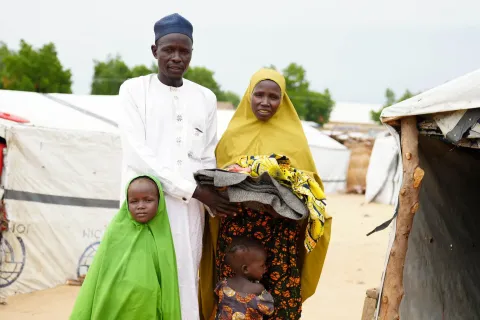
In Benue State, Nigeria, UNICEF has been making a noteworthy impact at the Ultra-Modern Temporary IDP camp facilities. The Yelewata people who have been relocated to this new set up, now feel protected in this supportive environment, an emotion resonating strongly among the thousands of children, girls and women living here.
In conflict and disaster, children suffer first and the most. During emergencies and humanitarian contexts, children are especially vulnerable to disease, malnutrition and violence. They are more likely to be missing out on access to their basic needs in life.


UNICEF has been helping to redefine life in this camp through:
On‑ground assessment and solidarity: UNICEF Nigeria’s Country Director, Cristian Munduate, was directly involved in the field, visiting the IDP camp at Makurdi International Market alongside EU counterparts, UNHCR, IOM, among other UN agencies to assess the ground situation and offer her solidarity.
Healthcare, WASH, and school recovery support: With significant destruction seen in Yelawata, UNICEF remains committed to supporting primary healthcare facilities, assessing and repairing schools and ensuring clean water sources (e.g., boreholes). Such services are kept functional to facilitate a safe and dignified return for families.
Water & Sanitation, lifesaving essentials: UNICEF installed water bladders and revived boreholes to ensure access to 30,000 litres of water daily, serving 3,400 people, enough for vital use in 36 toilets in the camp. Training of hygiene promoters, including IDPs themselves on “best practices” have been ongoing to mitigate the spread of disease.
Gender-Sensitive Facilities: With 36 toilets added to the local wash points, women and girls can maintain their privacy, hygiene, and dignity— a crucial factor especially during their menstruation.
Safe Spaces and Psychosocial Support: Acknowledging the trauma endured especially by children, UNICEF integrated psychosocial support and social protection into its response during an emergency of this magnitude. Aligning with a broader EU–ILO–UNICEF initiative to strengthen social safety nets, Safe spaces (in collaboration with JASPI and Benue SEMA) now offer confidential areas for psychosocial trauma counseling, GBV support, VAC prevention and response, group learning sessions and recreational activities.
Child-Friendly spaces and Learning Centers: UNICEF has set up learning hubs in the camp where over 1000 children can play, read, and learn every day. These centers provide structure and hope, helping children continue their education and regain their confidence in learning.
Community Engagement and Empowerment: Training IDPs as “hygiene promoters” and peer mentors empowers residents, supports sustainability, and strengthens trust and ownership in camp programmes.
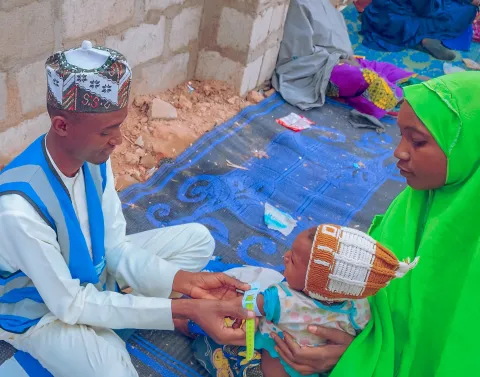
Health and Nutrition: UNICEF demonstrated its commitment to vaccinating children and pregnant women. It has been actively supporting health and nutrition interventions for IDPs in the Ultra-Modern Temporary Camp in Benue, where people displaced from Yelewata community are currently staying.
This includes vaccination programmes to minimize disease outbreaks and build herd immunity, medical consultations and treatment of minor ailments, management of child malnutrition through early detection of Severe Acute Malnutrition and administration of RUTF to children under 59 months of age, Vitamin A to pregnant mothers and promotion of exclusive breastfeeding among others.
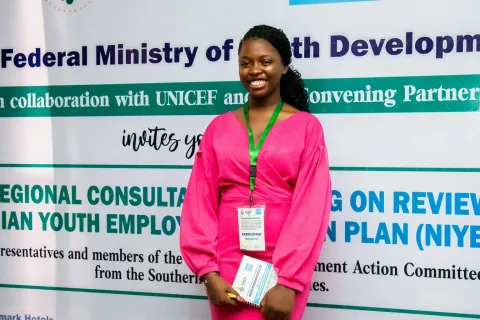
Promoting Social and Behavioural Change: In the Yelewata IDP camp in Benue State, UNICEF is transforming lives through a powerful blend of community-driven Social and Behaviour Change (SBC) and Risk Communication and Community Engagements (RCCE). Ten trained Camp Youth Volunteers (CYVs) – five young women and five young men ranging from age 20 to 25 – are at the forefront, conducting daily house-to-house visits to engage families, delivering key messages on immunization, antenatal care, nutrition, hygiene, and protection, and referring residents to critical health, nutrition, and psychosocial services.
Their work has reached over 3000 residents, with 640 households visited and multiple life-saving referrals made. This approach has not only improved knowledge and service uptake, especially for women and children, but has also fostered growing trust in the volunteers and the humanitarian response.
To deepen impact, a fully operational Complaints and Feedback Mechanism (CFM) now gives residents a voice in the emergency response system. Feedback from such sessions has already been received from a good number people in these focused group discussions including young men and women, pregnant mothers and elderly men.
In a novel move, a newly produced song, promoting positive behavioral shift is also energizing the camp and is being used during dance dramas and mobile audio campaigns to reinforce life-saving messages in a culturally engaging way and helping to minimize the collective trauma. Together, these SBC-RCCE efforts are not just improving social services but also restoring hope, dignity, and community resilience at this camp.
Facilitating safe and voluntary return: The affected communities have expressed a strong desire to return home — to farm their fields and send their children to school. In response, UNICEF planned to partner with the UN and EU in a joint response to support safe, voluntary, and sustainable return for such tribes.
The chaos and insecurity caused by the recent Yelewata attack, destroyed access to food, shelter, social support and health care, and resulted in increased vulnerability in communities, especially for children. UNICEF is focusing on these children and their families to help them heal, provide them with the essential interventions required for protection, to save lives and to ensure the rights of all children are fulfilled. UNICEF’s holistic approach to the Yelewata emergency response and also neighbouring camps such as mega camp in Makurdi demonstrates how essential water, sanitation, hygiene, safe spaces, learning, and community-led programs are to restoring dignity and resilience for vulnerable populations
This unique transformation of a regular IDP camp into a space to help rebuild lives with dignity and hope has helped an entire community emerge stronger and more resilient. These IDP residents are grateful to the UNICEF teams, working tirelessly to ensure that the traumatized and vulnerable men, women and children of Yelewata find a safe and secure passage back home, empowered and enabled, to reclaim what they lost.