Supporting Teacher Modu
What makes a day great?
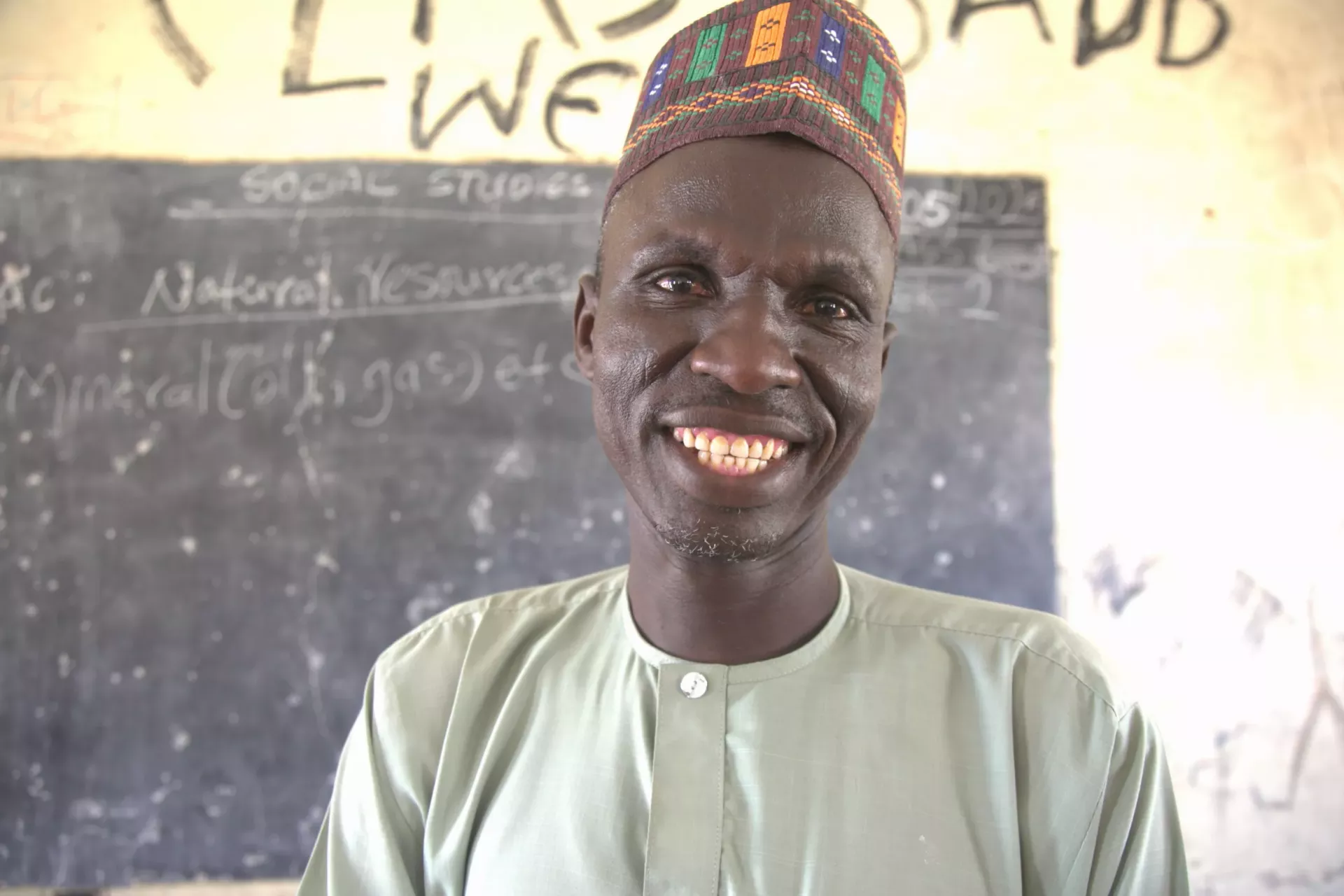
For Modu Ali Fannami, a teacher at Shehu Sanda Primary School in Dikwa, a small town in northeast Nigeria, what makes a day great are the simple things of life.
“It is when I meet my former students, and they say, ‘Good morning, sir.’ I don’t even recognize some of them. They tell me, ‘Sir, I used to be your student. I am now a student at the College of Agriculture, or I am now a student at the university. That makes my day anytime. It is the best feeling in the world,’’ he said.
Truly, Modu derives great joy from his teaching profession. This humble Social Studies teacher’s love for his work is seen easily manifested by his candor, short response time, and a happy glint in his eyes. Back in Dubula, his ancestral village not far from Dikwa, Modu was inspired by his uncle, who motivated him to embrace the profession. “He was well respected in Dubula. He is my inspiration. I have been teaching for 18 years now, and I have no regrets,’’ he added.
In 2016, incessant attacks on Dubula province forced Modu and other villagers to flee. He relocated to Dikwa, a garrison town with a military presence and safety. Nine years later, he is one of the teachers in northeast Nigeria being supported by UNICEF and local administration to improve the quality of teaching and learning.
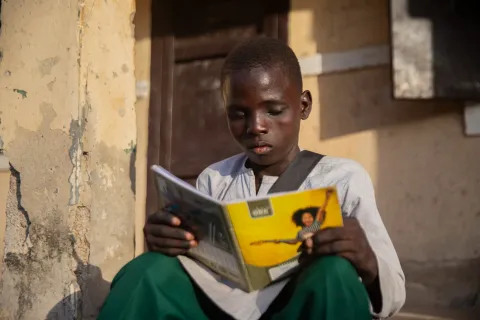
Modu is also a volunteer teacher for the UNICEF-supported Accelerated Education Programme (ABEP) for out-of-school children in Dikwa. The 45-year-old sees it as an opportunity to support displaced and other vulnerable children hailing from conflict zones like Dubula and surrounding villagers who now live in IDP camps in Dikwa.
As a displaced person myself, I am in a better position to work with out-of-school children and encourage them to learn. The ABEP programme is held in the afternoon every day except Fridays.

According to the 2025 Joint Education Needs Assessment (JENA), an estimated two million children in northeast Nigeria are out of school. With the support from the Global Partnership for Education (GPE) project in northeast Nigeria. Such training opportunities for teachers were aimed at providing inclusive, informal education for out-of-school children for nine months. The curriculum then prepares them for mainstreaming into formal education.
“Some of them must go to the market to make ends meet in the morning; some of them are busy in the morning fetching firewood, mostly out of poverty. However, the ABEP program provides them an informal opportunity to read and write. And they are catching up. We have some success stories,’’ he adds with a smile.
Modu is one proud teacher among several such instructors being supported through the ABEP training modules, which are needed to provide informal but quality education services for displaced communities and children in northeast Nigeria. “I wasn’t even familiar with the education curriculum for out-of-school children. With the ABEP curriculum, we use flip charts, we show the alphabet physically, and we encourage the children to participate. The training made a huge difference in my career. It added value to my teaching skills,’’ he said.