What a Teacher Learns After 35 Years
In a classroom in Bauchi, one woman has watched children grow, stumble, rise, and quietly prove that health decides everything
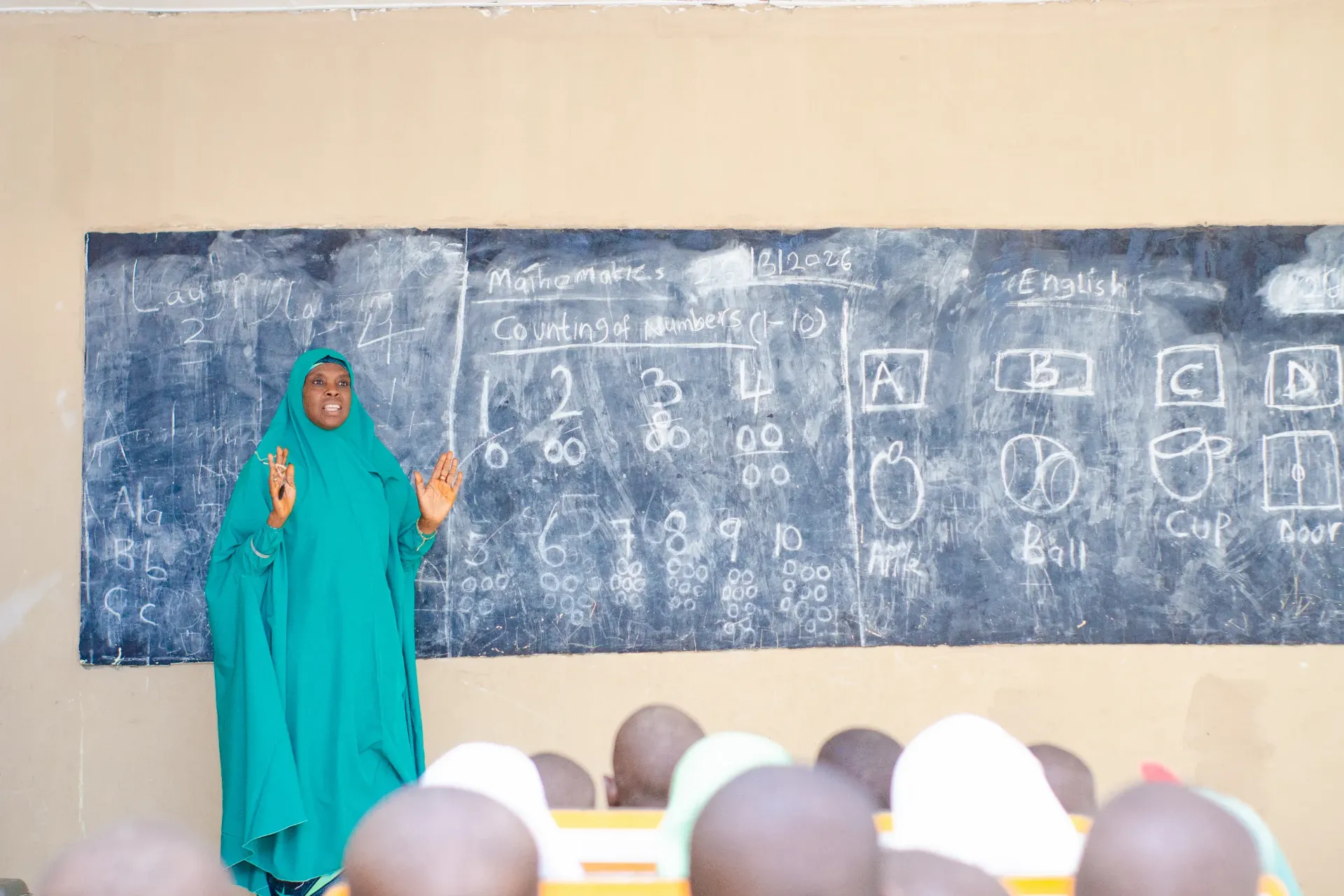
After 34 years in the classroom, Azumi Dahuwa can read a child before they say a word.
She can tell who has eaten, who has not. Who slept well, who didn’t. Who is ready to learn, and who is simply trying to get through the day.
In Bauchi State, where she has spent nearly her entire life teaching, classrooms are not just places for lessons. They are where futures begin, or sometimes, where they quietly struggle to take shape.
“I like it when my class is vibrant,” she says, her face softening into a smile that feels earned. “That is the joy of a teacher. When children are active, when they are full of energy.”
She has seen that energy in hundreds, maybe thousands, of children over the years. Small hands raised eagerly. Voices stumbling through answers. Laughter spilling over when no one is watching closely enough.
But she has also seen what happens when that energy disappears.
An empty desk. A child staring blankly. A body present, but a mind too tired, too unwell to keep up.
“An ill child cannot be active in class,” she says simply.
No theory. No abstraction. Just something she has lived with, day after day.
For Azumi, the connection became impossible to ignore. Health is not separate from learning. It is the foundation of it. Without it, everything else begins to fall apart.
That is why the days vaccinators come to school have always mattered to her.
She remembers them clearly. The quiet arrival. The careful preparation. The children lining up, some curious, some afraid. And then, one by one, a small moment of discomfort that carries something much bigger with it.
“I know vaccines protect children from diseases,” she says. “That is why I am glad when I see them come.”
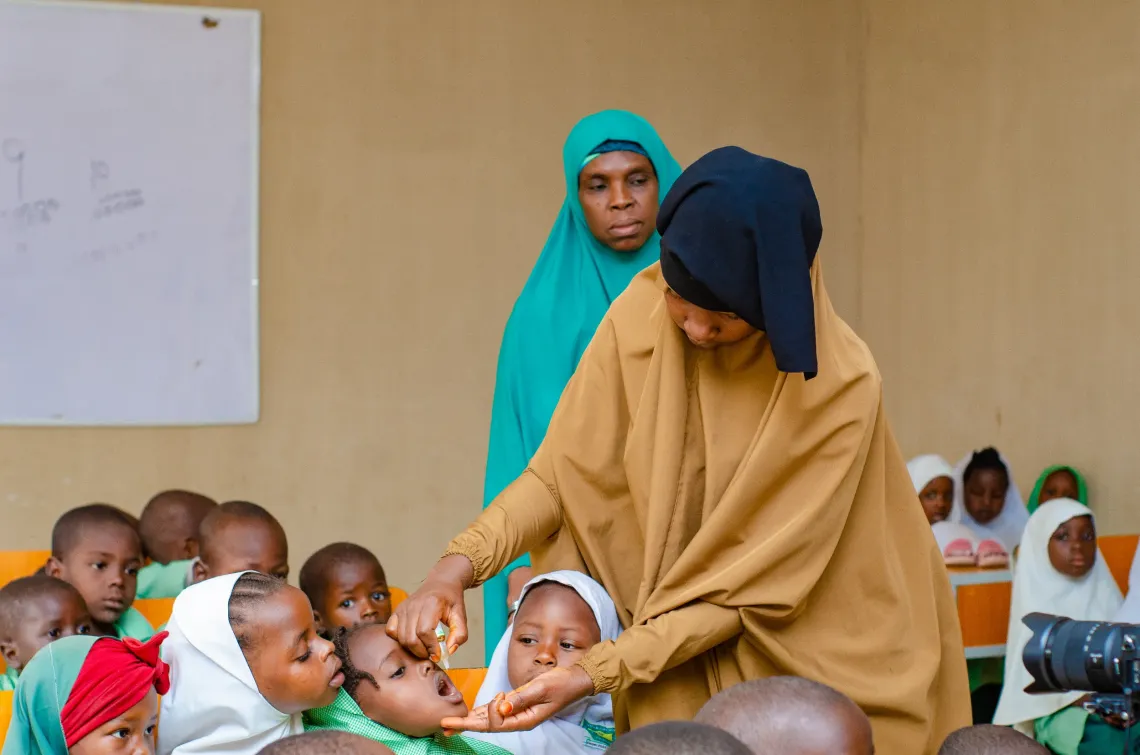
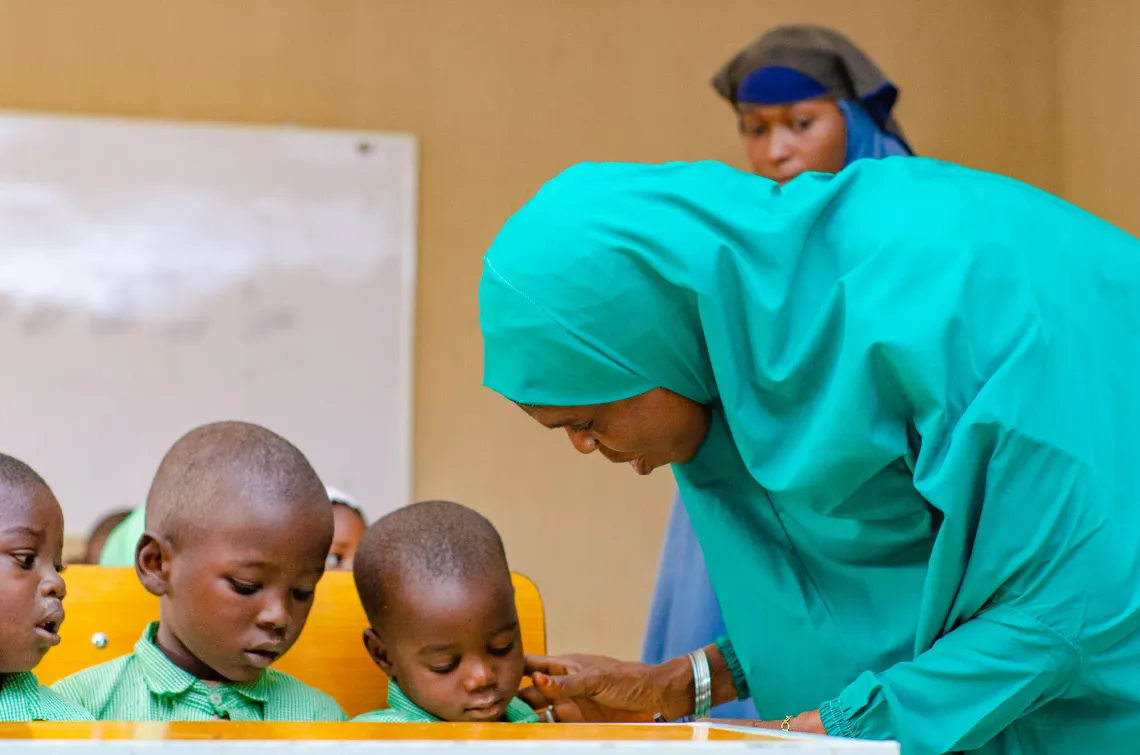
Over the years, she has watched those visits protect her pupils from diseases that once changed lives forever. Polio. Measles. Illnesses that could take a child out of school, out of routine, sometimes out of the future they were just beginning to build.
Most of her pupils will never know what was prevented for them.
She does.
Because she has been there long enough to see both sides of that story.
This belief is not something she keeps at the school gate. It followed her home, shaped the choices she made as a mother.
“I made sure my own children were vaccinated,” she says, a quiet pride settling into her voice. “They even received Vitamin A.”
Six children. Different paths. Different lives.
Today, three of them are graduates.
It is easy to celebrate that as a success of education. She does not separate it that way. For her, it began much earlier, with something more basic. Keeping them healthy long enough to learn, to grow, to keep going.
Now, as she approaches retirement, just one year short of 35 years of service, the classroom feels different.
Not smaller. Not quieter.
Just more precious.
“I will miss my pupils,” she admits. “Their laughter, their energy. That is what made every day meaningful.”
You can hear it in the way she says it. This is not just about leaving a job. It is about stepping away from something that has given shape to her days, her purpose, her identity.
But she is not done.
Not really.
Because what she has learned cannot be unlearned.
In her community, she already knows what she will keep doing. Talking to parents. Encouraging them. Reminding them, gently but firmly, of what she has seen with her own eyes.
Healthy children learn better.
It sounds obvious when you say it out loud. Yet it is something people forget, or overlook, or postpone.
Azumi does not.
She has lived long enough to watch vaccinated children grow into adults. To see them leave her classroom, step into the world, and build lives that were not interrupted by preventable disease.
Her own children are part of that story. So are generations of her pupils.
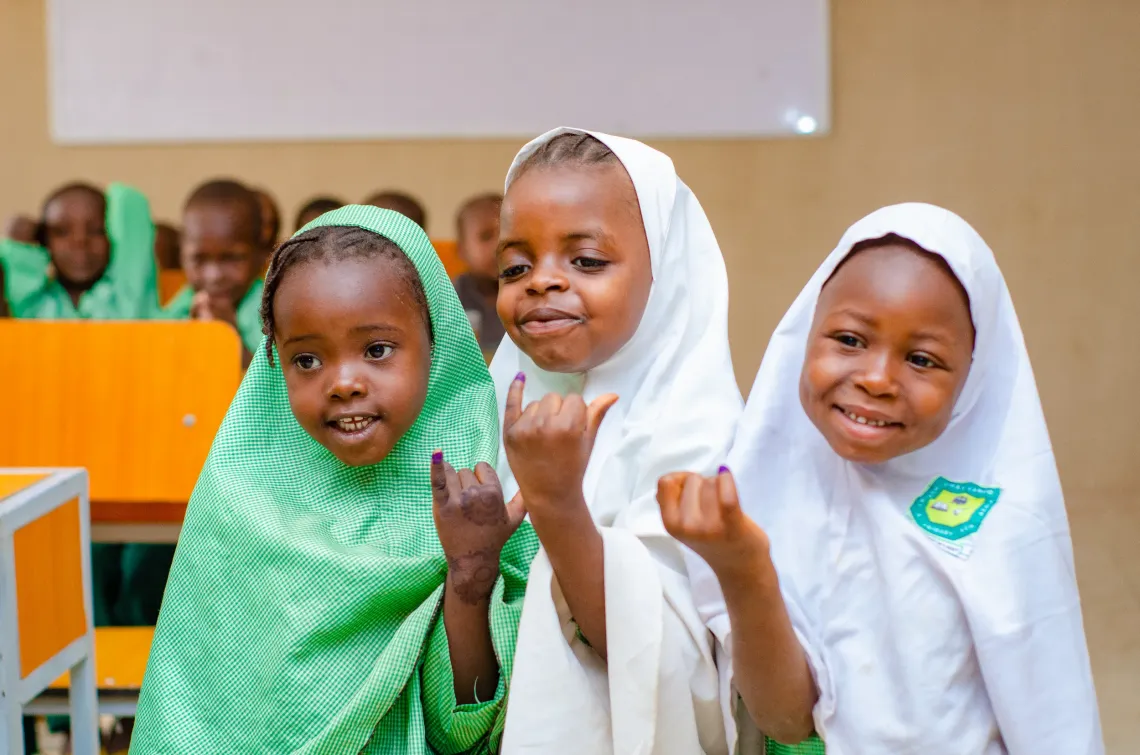
Across the world, millions of lives have been saved through immunization over the past decades. Diseases that once defined childhood have been pushed back, sometimes to the point where they are barely remembered.
But none of that happens on its own.
It happens because someone makes a decision.
A parent who shows up.
A teacher who insists.
A health worker who keeps returning.
In Bauchi, that effort continues, supported by partnerships that keep vaccines reaching children who need them most. Quiet systems, steady work, often unnoticed.
Just like a good teacher.
As Azumi prepares to leave the classroom, she carries something with her that no retirement can take away.
Not just memories.
Certainty.
That every child deserves a fair start.
That health is where that start begins.
And that something as small as a vaccine can decide whether a child merely attends school, or truly has the chance to learn, to grow, to become.