Ismail - Impossible is Nothing
A partially blind teenager who works on farms every morning is fighting his way back to school in northeast Nigeria
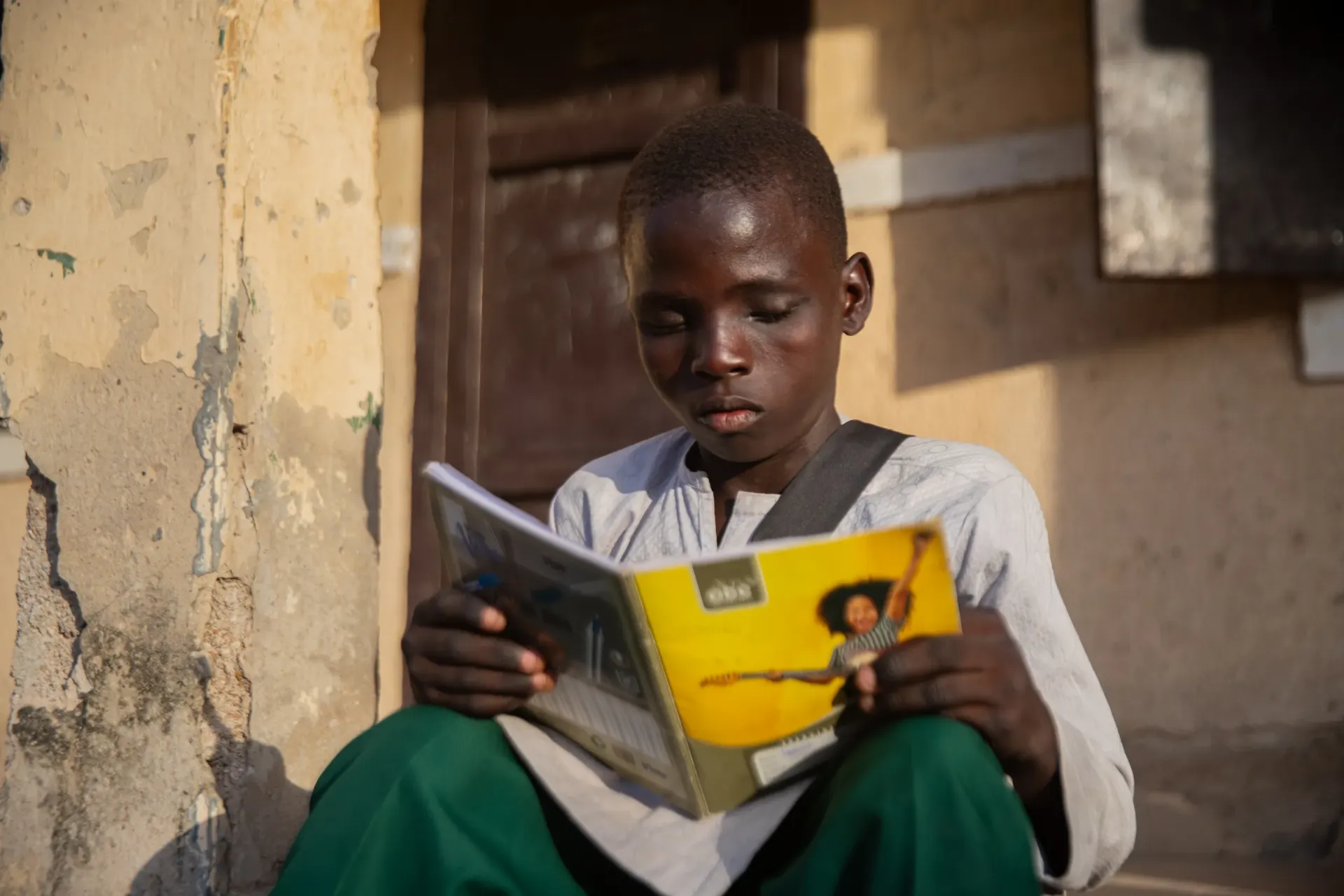
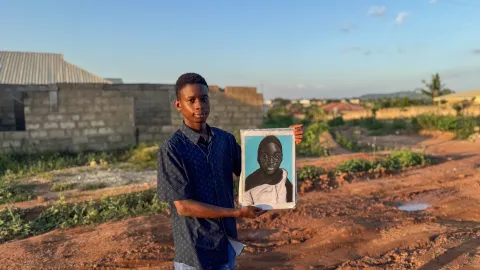
Every morning, before most children in Gwoza think about school, Ismail Idris is already at work.
The 14-year-old walks to nearby farms where he spends hours doing manual labour under the hot northeast Nigerian sun. The little money he earns helps support the only family he has left, his grandmother and his two younger sisters, Ummu and Ihsan. By afternoon, while many adults would be exhausted, Ismail picks up his school bag and heads to class.
He has not missed a day. Not one. What makes that determination remarkable is that Ismail cannot fully see the world around him. Years ago, he survived measles, a disease that should never have changed the course of a child's life. But it did. The illness left him partially blind.
Many children would have given up. Ismail never considered it. "I want to go to school," he says simply.
That dream brought him one afternoon to Guduf B Primary School in Gwoza, a town nestled beneath the dramatic Mandara Mountains that mark Nigeria's border with Cameroon. The registration period for the catch-up classes had already closed.
The classroom was full. The answer should have been no.But Ismail would not leave. His teacher, Muhammed Ngwave, still remembers the encounter.
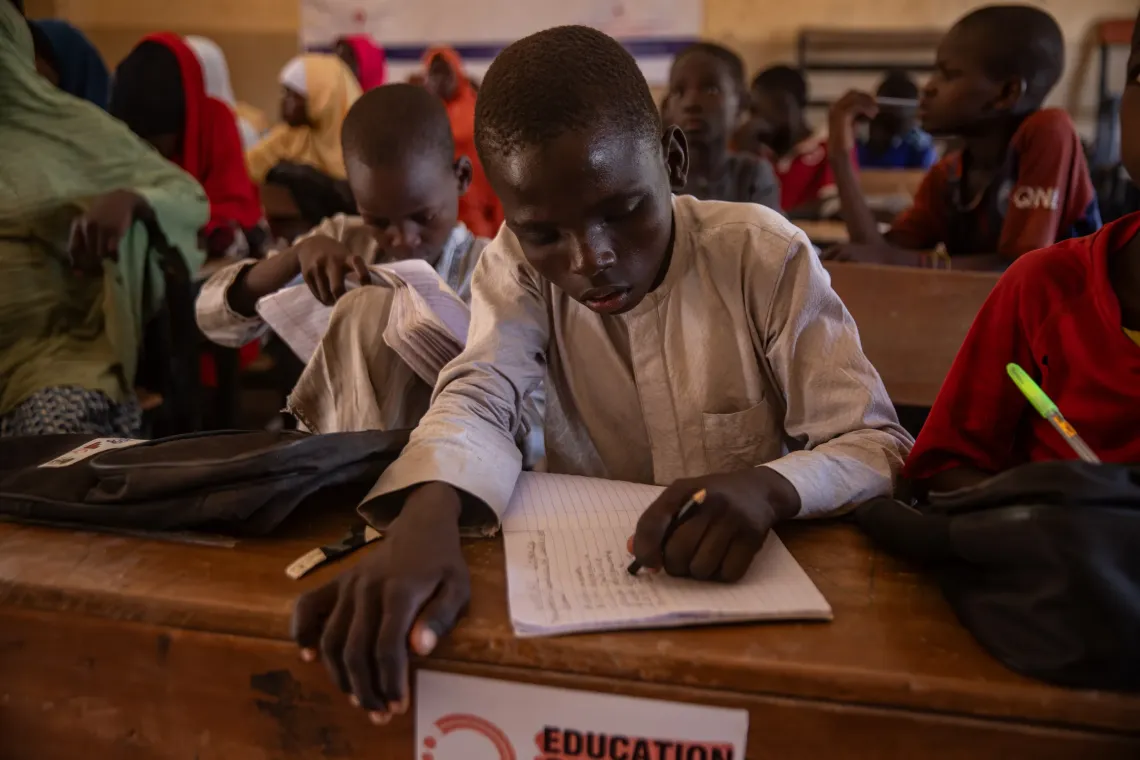
"He kept insisting that he wanted to learn," says Ngwave. "His determination caught my attention." Unsure whether the boy would stay committed, Ngwave offered him a challenge.
"I told him that if he could attend every class for one week without missing a single day, I would enrol him."
The teacher expected enthusiasm. What he saw instead was extraordinary commitment. For seven consecutive days, Ismail arrived on time. Every day. No excuses. No absences. No complaints. The following week, he became a student. "He has never missed a class since," says Ngwave.
But Ismail was not satisfied with changing only his own future. Soon after enrolling, he convinced his younger sisters to join as well. "He wanted all of us to learn," says one of his classmates.
For Ismail, education is not just personal. It is family. It is survival. It is hope. The catch-up classes are supported through Education Cannot Wait (ECW) and implemented by a consortium comprising UNICEF, the Norwegian Refugee Council and Grow Strong Foundation.
The programme helps children who have missed years of education because of conflict, displacement, poverty and other crises regain lost learning and transition into formal schooling.
In northeast Nigeria, where conflict has disrupted childhoods for more than a decade, that opportunity can be life-changing. Across 19 local government areas, nearly 20,000 children are reclaiming their education through the programme. Among them are more than 1,500 children living with disabilities.
Children like Ismail. His classroom reflects the reality of Gwoza. Many of the students are orphans. Many have been displaced. Many spend their mornings working to help their families survive. All of them are trying to recover years that conflict stole from them.
Outside the classroom, Gwoza is breathtaking. The Mandara Mountains rise dramatically above the town, their rugged peaks stretching across the horizon. For generations, they were symbols of culture, history and identity.Today, they carry a different legacy. Years of insecurity have left deep scars across the community.
Conflict forced families from their homes, disrupted education and robbed thousands of children of the chance to learn. For a long time, dreams felt distant here.
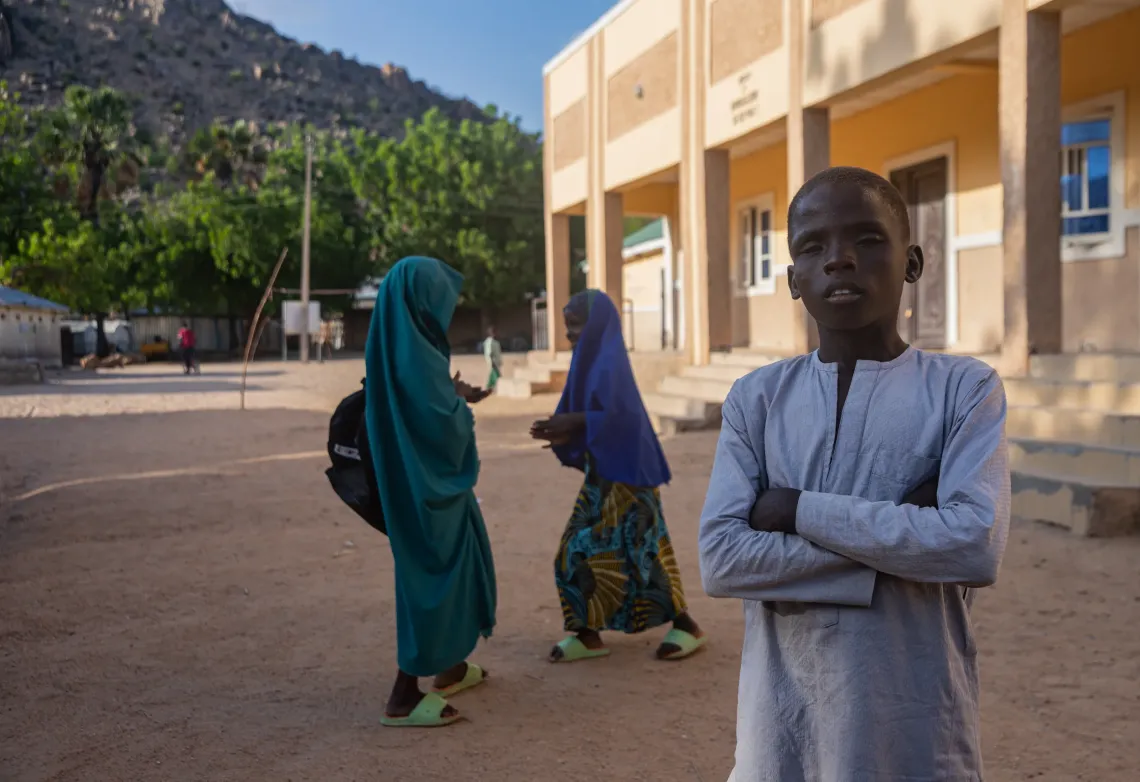
The catch-up classes are helping bring them back. For Ismail, those dreams have become surprisingly specific. He wants to become a doctor. Not just any doctor. An eye doctor.
"I want to help people who have eye problems like mine," he says.
The ambition comes from experience. He knows what it means to struggle to see. He knows what it feels like when a simple disease changes the course of your life. And he knows what it means when someone gives you a second chance. Inside the classroom, his teacher has placed him in a special seat at the front so he can better see the blackboard.
It is a small adjustment that makes a big difference. Ngwave says the boy's determination inspires everyone around him.
"I believe children like Ismail should be encouraged in every possible way," he says. "He is wise beyond his years. To be honest, I am inspired by him."
As lessons end each afternoon, Ismail gathers his books and begins the journey home. Waiting for him are the same responsibilities he carried before he became a student. The same financial pressures. The same uncertainty. The same challenges. Yet something has changed. There is now a path forward. A path that leads beyond the farms where he works every morning.
Beyond the disability that could have defined his life. Beyond the conflict that disrupted his childhood. When asked what keeps him going, Ismail pauses for a moment. Then he smiles.
"I want to make my grandmother proud," he says. "And I want to help my sisters."
It is a simple dream.
For a boy who has already overcome so much, it may also be the beginning of something extraordinary.