A Spoonful of Hope for Kaka
With support from the Nigeria Humanitarian Fund, children affected by conflict and acute malnutrition in northeast Nigeria are getting a second chance at life
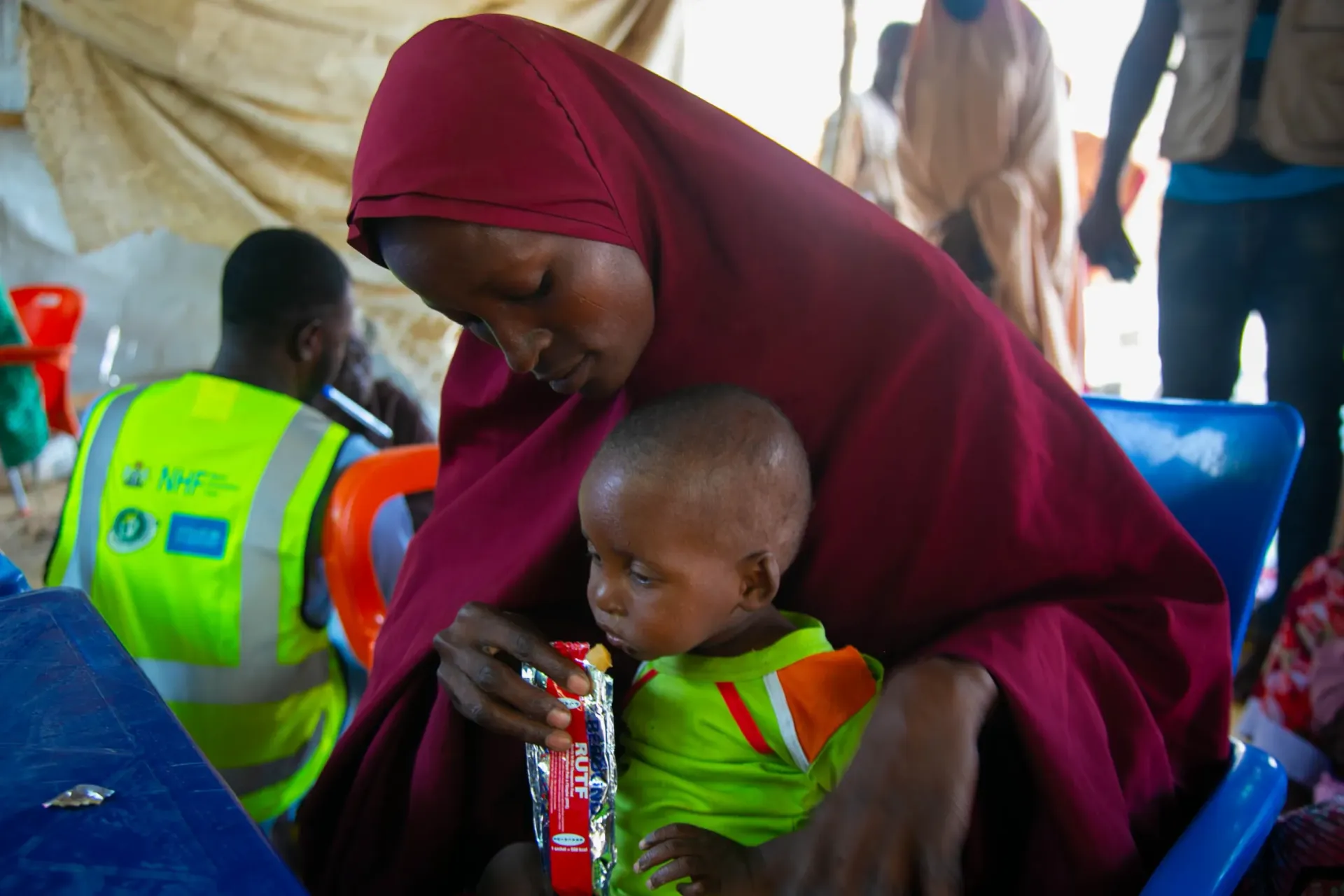
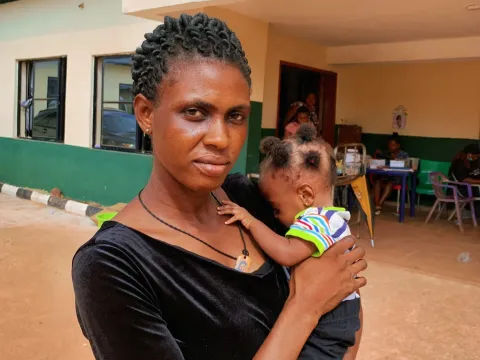
Every morning, before the heat settles over Mudu Kaza, Kaltum lifts her son into her arms and studies his face.
She watches his eyes. His smile. The way he reaches out for her.
A few weeks ago, she feared she might lose him.
"I could see him getting weaker every day," she says quietly. "As a mother, you know when something is wrong."
Kaltum is 25 years old and lives in Mudu Kaza, an informal displacement camp on the outskirts of Dikwa in northeast Nigeria. Home to nearly 4,000 people uprooted by conflict, the settlement stretches across a dusty landscape of makeshift shelters built from mud, sticks and dried leaves.
It was never supposed to be home. In 2024, heavily pregnant with her first child, Kaltum fled her village of Gajibo with her husband as insecurity spread through the area. Like thousands of other families, they left behind everything they knew.
Their farmland. Their livelihood. Their sense of certainty.
"We ran because we wanted to stay alive," she says.
What they found in Dikwa was safety, but survival remained a daily struggle. Food was scarce. Opportunities to earn an income were almost non-existent. Families depended heavily on humanitarian assistance to get by. For Kaltum, every day became a balancing act between feeding herself and caring for her young son, Kaka.
Then Kaka fell sick. At ten months old, he started vomiting and passing frequent stools. His tiny body grew weaker. His appetite disappeared. The cheerful child who once reached eagerly for his mother's arms became increasingly quiet.
To make matters worse, Kaltum was facing the crisis alone. Her husband, Mohammed, had travelled hundreds of kilometres away to Lagos in search of work.
"I was scared," she recalls. "I didn't know what to do. I tried some remedies at home, but he wasn't getting better."
Each day brought fresh anxiety. Would he recover? Would he survive?
Then came news that changed everything. An outpatient nutrition clinic inside the camp had resumed operations.
For mothers like Kaltum, it felt like a lifeline.
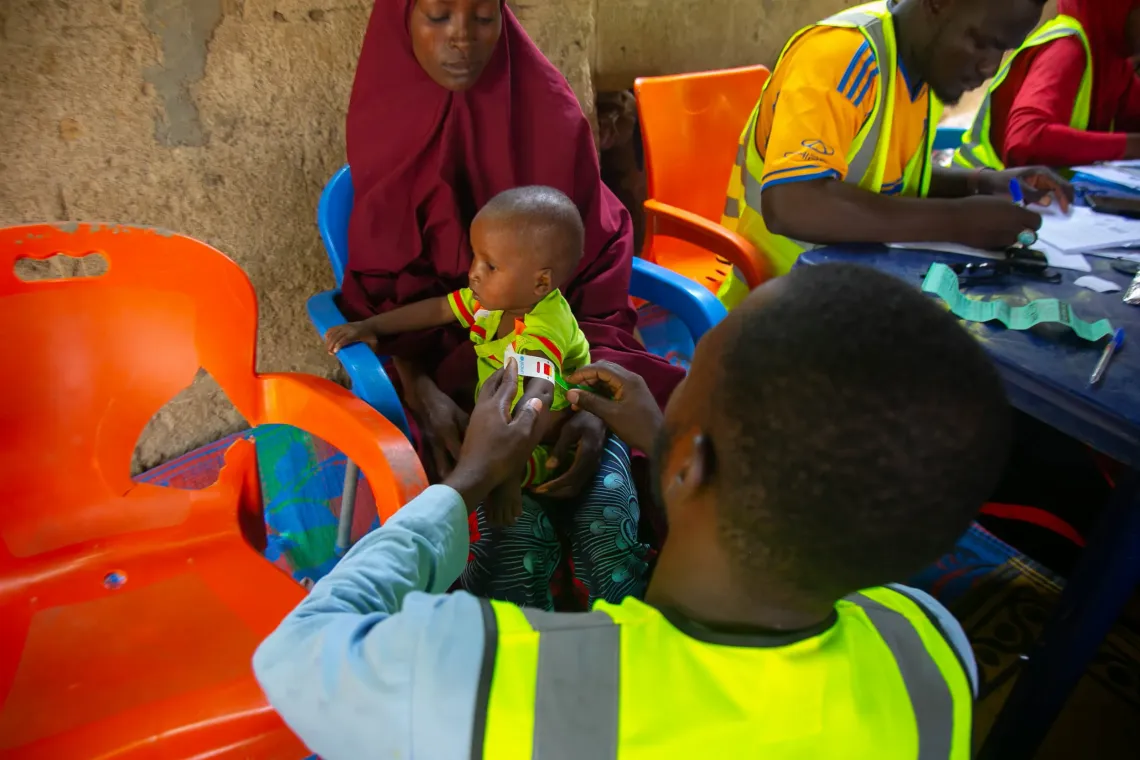
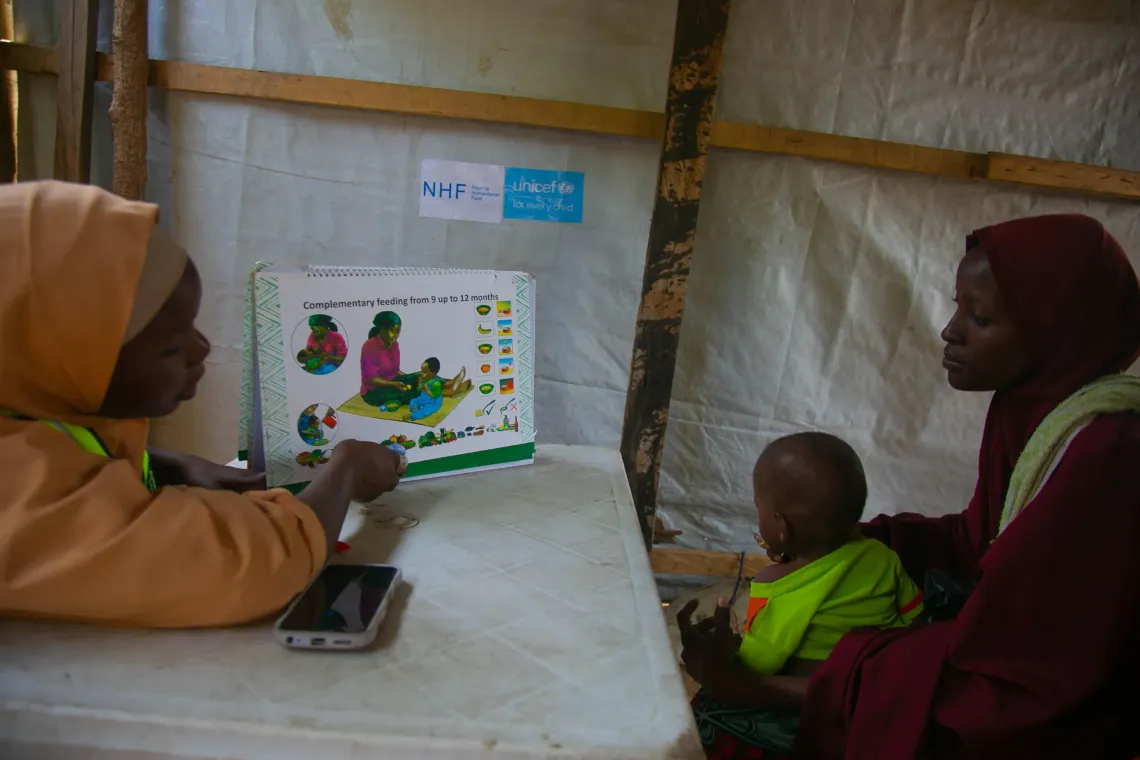
Supported by the Nigeria Humanitarian Fund (NHF) and managed by UNICEF's partner, Lindii Peace Foundation, the clinic provides treatment for children suffering from acute malnutrition. The support helps ensure the availability of Ready-to-Use Therapeutic Food (RUTF) and other life-saving nutrition supplies for vulnerable children.
Kaltum did not waste a moment. Carrying Kaka in her arms, she made her way to the clinic. Health workers quickly assessed him. His Mid-Upper Arm Circumference (MUAC), one of the key measurements used to detect acute malnutrition, was just 11 centimetres.The diagnosis confirmed what Kaltum had feared. Her son was acutely malnourished. But there was also good news. He could be treated.
Kaka was immediately enrolled in the programme and started on RUTF, a nutrient-rich therapeutic food specially designed to help severely malnourished children recover. His mother received counselling on feeding practices and hygiene to support his recovery at home.
The change came sooner than she expected.
"Kaka's health started improving after treatment began," she says, her face breaking into a smile. "The stooling reduced. He started becoming active again. He began gaining weight."
Today, only weeks later, Kaka sits comfortably on his mother's lap, alert and curious about the world around him. His MUAC measurement has increased from 11 centimetres to 12.4 centimetres. It is a small increase that means everything. To health workers, it signals recovery.
To Kaltum, it means her son is coming back.
"I am so happy," she says. "The treatment is free and close to where we live. If this clinic was not here, I don't know what would have happened to my child."
Her story reflects a much larger crisis unfolding across northeast Nigeria. Nearly two decades of conflict have devastated communities, disrupted livelihoods and forced millions from their homes. Access to farmland has been severely restricted, reducing food production and pushing families deeper into poverty and food insecurity.
Children have paid the highest price.
According to the latest Integrated Food Security Phase Classification (IPC) projections, around one million children across Borno, Adamawa and Yobe States are expected to suffer life-threatening severe acute malnutrition in 2026.
Behind every statistic is a child like Kaka. A child who needs urgent treatment. A mother desperately searching for help. A family hoping for one more chance.
Across northeast Nigeria, UNICEF and the Government, with support from the Nigeria Humanitarian Fund, are working to provide that chance. Every year, nearly half a million children receive treatment for acute malnutrition through UNICEF-supported programmes across the region.
For many, a simple sachet of therapeutic food becomes the difference between life and death. As evening falls across Mudu Kaza, children emerge from between rows of shelters, laughing and chasing one another through narrow sandy pathways.
Among them is Kaka.
Still small for his age, but stronger.
Still recovering, but smiling.
And in the arms of his mother, there is something that had been missing just weeks ago.
Hope.