A Different Type of 1,000: A Window that Shapes a Lifetime
With support from the US Government, Bauchi mothers and fathers lead the fight against malnutrition in the first 1,000 days.

As a Nigerian, the number 1,000 immediately reminds Muslim Abdulahi of the 1,000 Naira note, the highest denomination of the country’s currency. “Anytime I hear 1,000, what comes to my mind is the currency,” he says jokingly. So, the first time a Muslim heard the phrase “the first 1,000 days,” it caught his attention. “Of course, I wondered what it meant and how it links to children’s well-being," he recalls. Later, he would discover that the first 1,000 days are worth far more than their numerical value.
They represent the critical period from conception through a child’s second birthday. It is a once-in-a-lifetime window of rapid growth and development. During this period, the child’s brain develops at an extraordinary pace. This window lays the foundation for learning, health, and well-being throughout a child’s life.
But this development depends heavily on the care a child receives, including adequate nutrition. For Muslims, understanding these factors changed the way he looked at the health of mothers and children in his community.
When knowledge enlightens you
Poor nutrition is one factor that can compromise a child’s development during the first 1,000 days. Muslims began to understand just how important nutrition is after participating in training organized by the Bauchi state government with support from the United States Government and UNICEF for members of Fathers for Good Health groups in Bauchi state. “The training opened my eyes to many things we did not know,” he says. As a community leader, Muslim had seen the reality of malnutrition around him. He had seen pregnant women who appeared weak and unhealthy and families struggling to understand what they could do differently.
“I know the problem of malnutrition is real,” he says. “I have seen pregnant women who are looking unhealthy. I now understand that addressing malnutrition requires both knowledge and the ability to take appropriate actions. The training gave him practical knowledge, which he took into homes across his community. “I understood some simple diets that can ensure that women are well nourished during pregnancy,” he says.
Perhaps most importantly, he learned that a child’s nutrition does not begin at birth. “It starts from when the mother becomes pregnant,” he says.
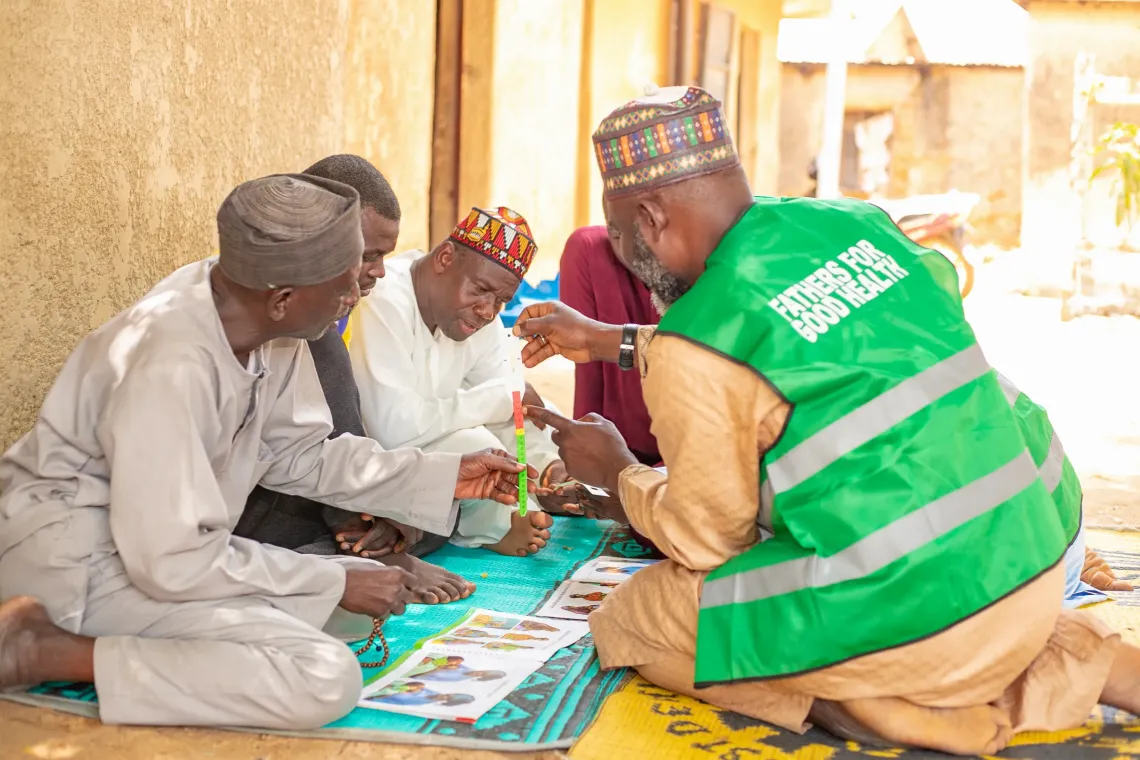
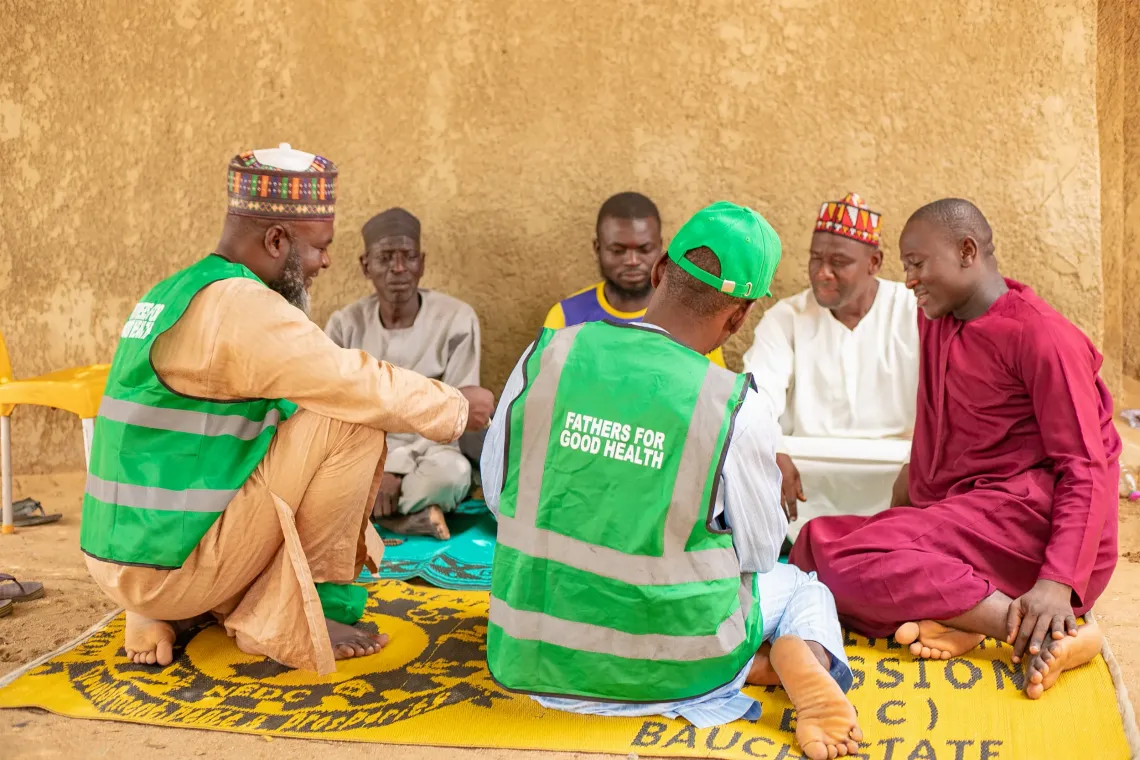
That lesson has given Muslims a new sense of responsibility. As one of the many fathers and community members trained through the US-supported intervention, he is now helping families understand that the choices they make during pregnancy and the first two years of a child’s life can shape that child’s future.
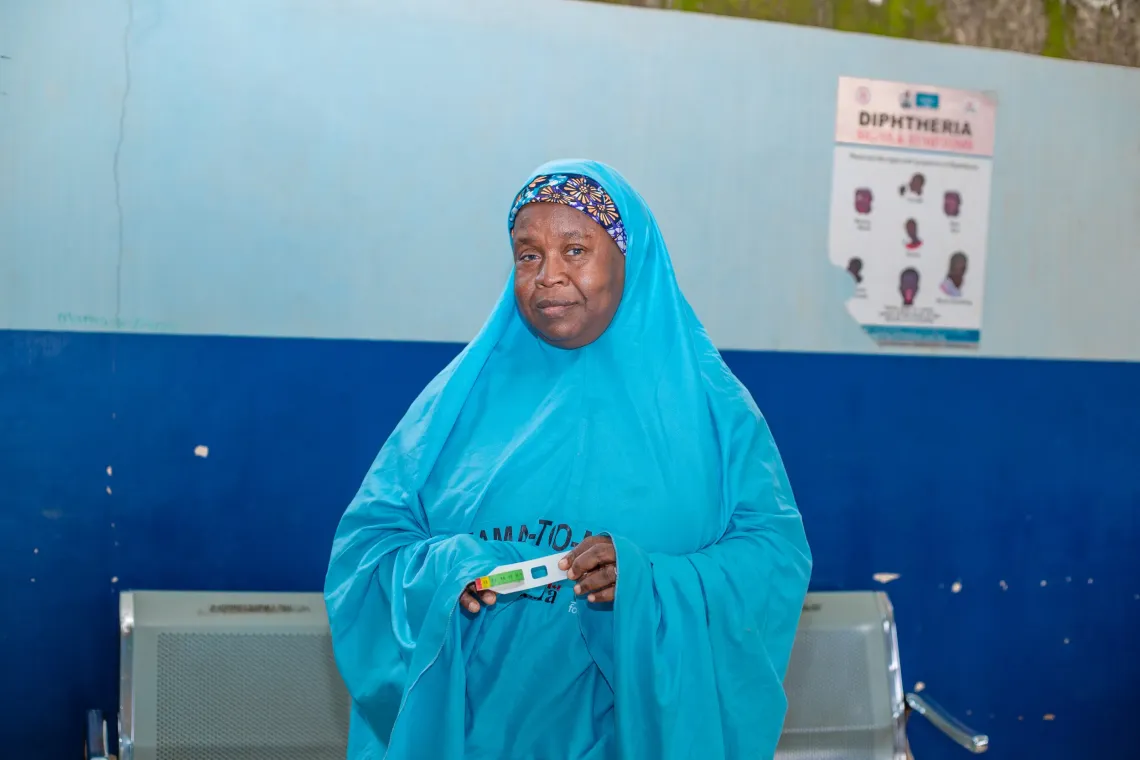
In her light, Balkis Yahaya sees the fight against malnutrition as a bit more personal. She has worked as an auxiliary worker in health facilities in Bauchi for about a decade. Over the years, she has seen children arrive at health facilities weak and severely malnourished. She often wondered what more she could do. So, when she was invited to participate in the US-funded training for members of Mama2Mama groups, she did not hesitate.
“I learned how to use the MUAC tape, and that was the best part for me,” she says.
The Mid-Upper Arm Circumference (MUAC) tape gave Balkis a simple but powerful tool to help identify children who may be malnourished and need immediate support. “I have heard health workers talk about malnutrition but knowing that I could now play a role in my community was very exciting for me,” she says.
Today, Balkis is taking that knowledge from the health facility into the community.
She visits mothers, talks to families, and shares messages about the importance of the first 1,000 days. She helps mothers understand their children’s nutritional status and encourages them to act before malnutrition becomes severe.
The work of Muslims, Balkis, and many other trained community members is part of an innovative approach supported by the US, through which the Bauchi State Government has collaborated with UNICEF to address malnutrition during the first 1,000 days.
The approach recognizes that preventing and fighting malnutrition requires more than just access to health facilities. The approach acknowledges that health facilities alone cannot prevent and combat malnutrition. to health facilities alone. Families and communities must be equipped with the knowledge and tools to act early. That is why community groups such as Fathers for Excellent Health and Mama2Mama are so important.
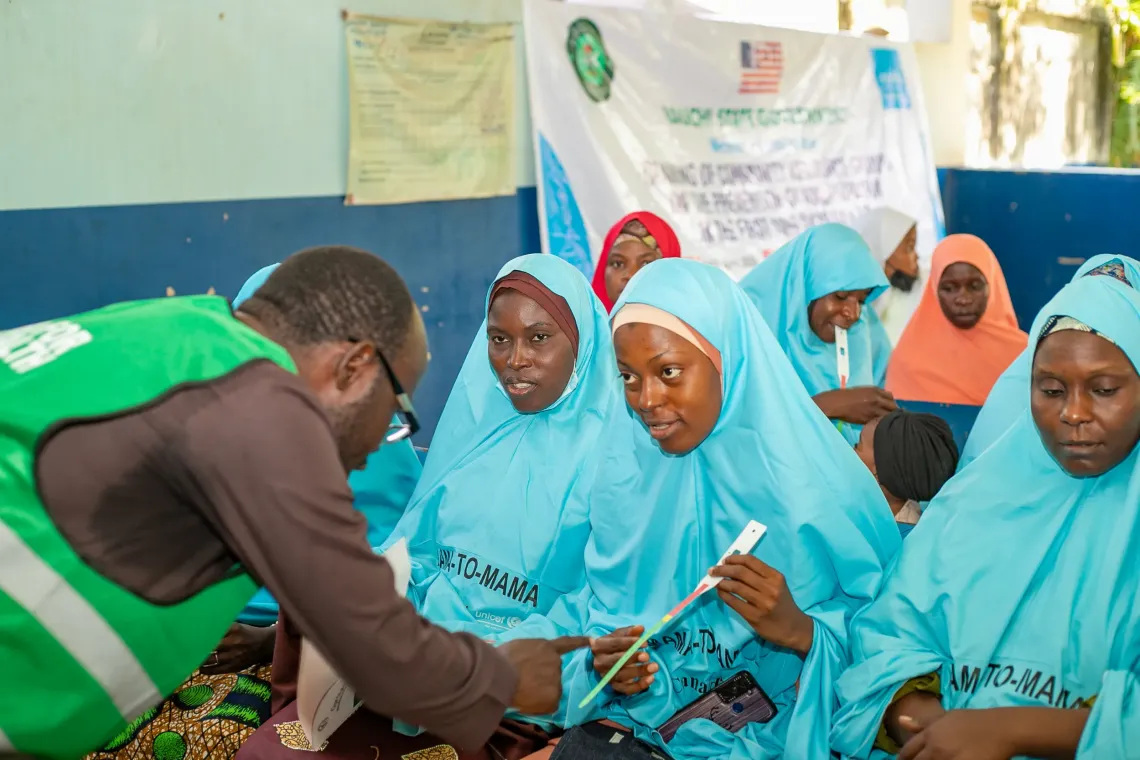
Through these groups, fathers and mothers are becoming advocates for better nutrition within their communities. They are learning practical, community-relevant actions that families can take to improve nutrition for pregnant women and children. The approach emphasizes behavior change.
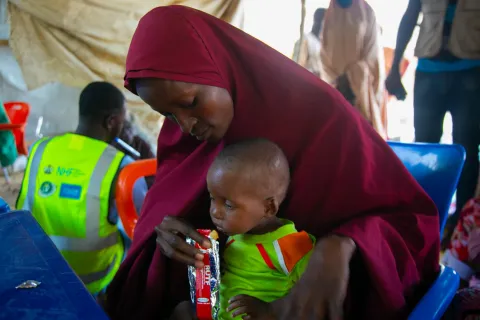
Bauchi State is already taking important steps to combat malnutrition. The state government made a significant investment in the Child Nutrition Fund, which UNICEF and partners have matched to help provide essential nutrition commodities, including Small-Quantity Lipid-based Nutrient Supplements (SQLNS) and Ready-to-Use Therapeutic Food (RUTF), to children whose lives are at risk from malnutrition.
But commodities alone cannot win the fight. The knowledge and action of people like Muslims, Balkis, and other over 4,000 members of Fathers for Good Health and Mama2Mama groups are equally important. They are helping bring malnutrition prevention strategies closer to families, into homes, and into communities where decisions about women’s and children’s diet and health are made every day.
“I am motivated because I know that what I have learned can help families in my community,” Muslim says. “When you see that your knowledge is helping someone, it is very rewarding.”
For Balkis, the motivation is equally powerful. “I am pleased that I can help mothers understand the nutritional status of their children,” she says. Also, their dedication indicates that we must continue to invest in children’s nutrition because when it comes to the first 1,000 days, there is no second chance to get the beginning right.