Restoring Hope in the First 1000 Days
How one child’s fight against malnutrition became a story of being found, lost, and found again
Kpadoo used to cry without sound.
Her mother, Mercy, remembers it clearly. The way her daughter’s body had grown too light in her arms, the way her eyes seemed tired even when she was awake. At ten months old, Kpadoo should have been restless, curious, reaching for everything. Instead, she barely had the strength.
They were living in an internally displaced persons camp in Makurdi at the time, surrounded by hundreds of families trying to rebuild something resembling normal life. Food was scarce, routines were broken, and healthcare came in fragments. Mercy did what any mother would do, she tried to feed her, to comfort her, to wait it out. But deep down, she knew something was wrong.
When Kpadoo was diagnosed with severe acute malnutrition, it felt like the ground had given way.
Help came through nutrition services supported by UNICEF in the camp. Kpadoo was enrolled in treatment and began receiving ready-to-use therapeutic food, small sachets packed with the nutrients her body had been missing. Mercy watched closely, almost cautiously at first, as her daughter began to respond. A little more movement. A little more energy. The slow, fragile return of a child she recognised.
For the first time in weeks, hope felt real.
Then everything changed again.
When families in the camp were resettled back to their homes, the support that had held Kpadoo’s recovery together disappeared almost overnight. There was no follow-up, no steady supply of treatment, no one checking in. What had been carefully rebuilt began to unravel.
Kpadoo slipped back.
The signs came quietly at first, then all at once. The weakness returned. The same emptiness in her body. Mercy had seen this before, and this time, the fear was heavier because she knew exactly what it meant.
It is in these gaps, between support and silence, that children are most at risk.
Kpadoo might have been lost there, like many others, if not for a second intervention.
During an outreach at Yelewata Primary Health Care Centre, health workers began tracing children who had dropped out of treatment. They went looking, not waiting. House by house, family by family, until they found the ones who had slipped through.
They found Kpadoo.
She was brought back into care and her treatment restarted immediately. There was no delay this time, no hesitation. Just a quiet urgency to pick up where things had been left off.
And slowly, steadily, she began to return again.
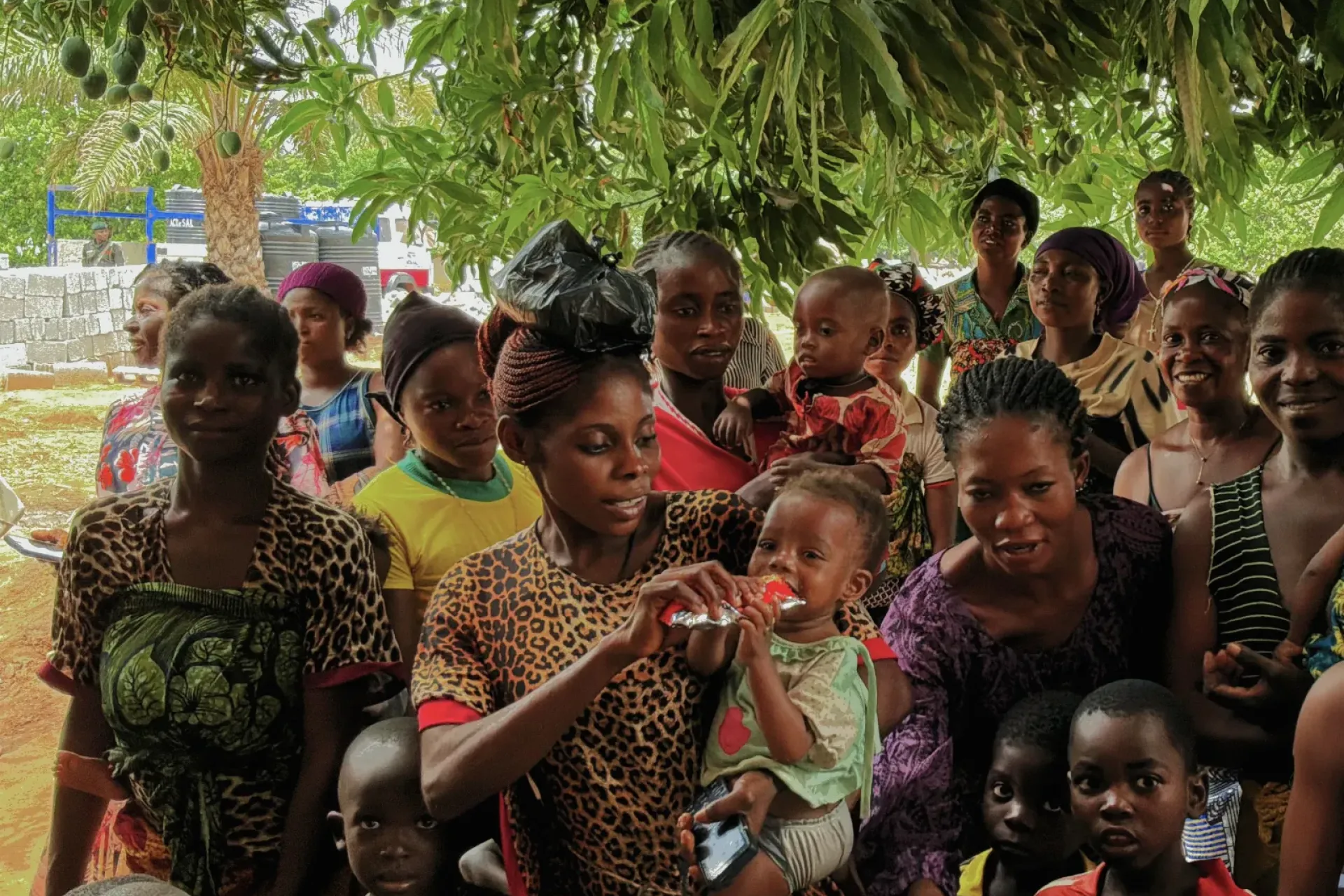
Today, Kpadoo is no longer the child Mercy feared she might lose. She is alert, active, and rebuilding her strength day by day. There is a small, almost tender detail that stays with everyone who meets her, she often holds tightly onto her sachet of therapeutic food, refusing to let it go, as if she understands, in her own way, that it is what brought her back.
For Mercy, the difference is everything. It is the difference between watching your child fade and watching her come back to life.
What Kpadoo’s story reveals is something both simple and uncomfortable. Treatment works. The solutions exist. But they only work if they continue. If someone shows up not just once, but again, and again, until recovery is complete.
Community outreach has become that thread, holding the system together where it might otherwise break. It is what ensures that a child who starts treatment does not disappear halfway through. It is what turns a temporary recovery into a lasting one.
Because in the first 1000 days of life, there is no room for interruption.
Kpadoo’s story is not just about survival. It is about being seen, being missed, and being found again before it was too late.
And sometimes, that is what saving a life really looks like.