Fatima: A Mother and a Miracle Paste
How lifesaving nutrition support is helping mothers protect their children in Yobe state

Fatima does not speak like someone who has just come through fear. She speaks like someone who has crossed it.
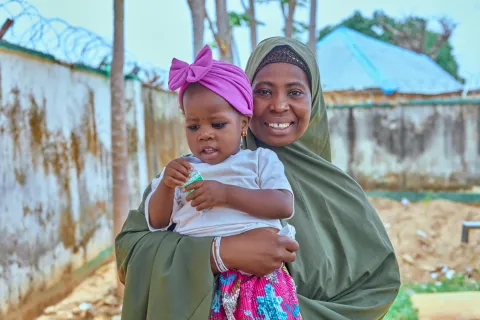
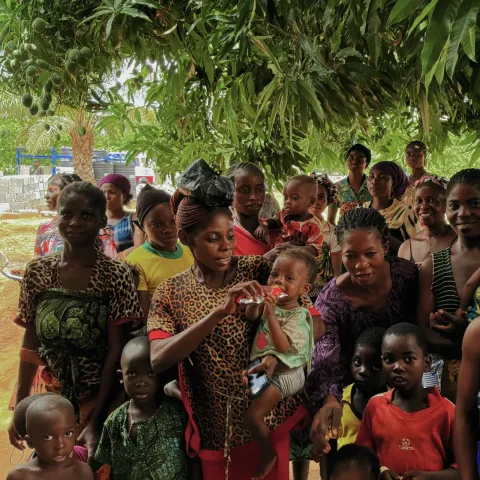
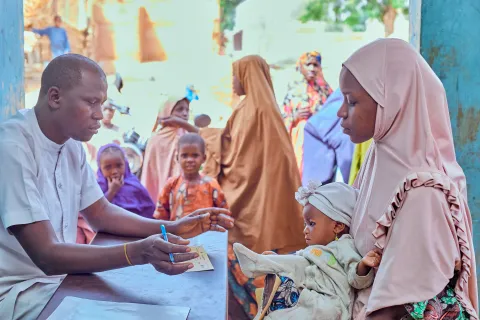
Outside the Nahuta Primary Healthcare Centre, under a harsh Yobe sun, she sits with her daughter asleep in her arms. The clinic is full, as it always is on Tuesdays. Women wait quietly, some rocking babies who are too weak to cry. There is a heaviness in the air, the kind that comes from too many mothers carrying the same worry.
But Fatima is different today.
She lifts her hand as she speaks, almost as if she is making a promise to the world.
“My child will not go back there again,” she says, her voice steady. Then she places her other hand gently on her stomach and adds, almost as an afterthought but with even more conviction, “Not this one either.”
Aisha is just 18 months old. A few months ago, she could barely sit. Her small body had thinned to the point where even sleep did not come easily. Fatima remembers those days in fragments, hunger, worry, and the quiet terror of watching your child fade in front of you.
“I could not eat,” she says softly. “She was so thin, like a broomstick. She would not sleep. She would not drink. I did not know what to do.”
She tried a chemist first. It did not help. Nothing changed. The fear grew.

Then she came here.
The clinic in Nahuta is one of only two serving the entire community. Every week, more children arrive, some carried, some barely held together by the strength of their mothers. The numbers are not just statistics here. They are faces. They are stories. They are children like Aisha.
When Aisha was admitted into the nutrition programme last December, she weighed just 9.3 kilograms. The MUAC tape told the story even more clearly. She was dangerously malnourished.
Treatment began immediately.
Small sachets of ready-to-use therapeutic food, thick, peanut-based paste, packed with everything a child needs to come back to life. It does not look like much. But here, it means everything.
Day by day, something began to change.
“She started getting stronger,” Fatima says, her face lighting up as she remembers. “Her cheeks came back. She began to sleep. She began to play.”
It was not sudden. It never is. Recovery comes quietly, almost shyly, until one day a mother realizes her child is no longer slipping away.

Across northeast Nigeria, stories like Aisha’s are repeated again and again. Conflict, poverty, poor sanitation, and lack of awareness all come together to push children into malnutrition. It is a slow crisis, one that does not shout, but one that takes lives.
Last year alone, more than 350,000 children received treatment for acute malnutrition through support provided by UNICEF and its partners, including funding from the European Union Humanitarian Aid.
Behind that number are thousands of mothers like Fatima, each carrying their own story of fear, and then, if they are lucky, of relief.
For Fatima, the change did not stop with Aisha’s recovery.
She listened carefully to the health workers. She learned. She adapted.
Now, behind her home, there is a small garden. Nothing elaborate. Just enough to grow what she needs. Inside her kitchen, she prepares Kunnu, using local ingredients, making sure her daughter eats better, grows stronger.
She washes her hands before and after cooking. She knows why it matters now.
“I did not know these things before,” she says. “Now I do.”
Aisha stirs slightly in her arms, then settles again, peaceful, safe.
Fatima looks down at her, then back up, her eyes clear, her voice certain.
“This will not happen again.”
And this time, you believe her.