Nigeria Learning Passport: Bridging the Education Gap
How a digital learning platform is bringing education to doorsteps and providing quality education to children.

I am very happy to be among the first set of teachers to be trained on NLP application in Abia State. I will ensure more teachers and pupils are registered on the NLP platform so that access to learning is increased.
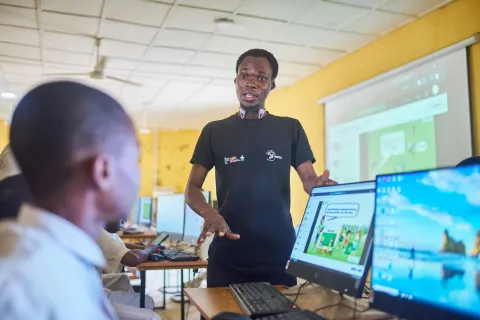
Chidinma is one of the newly trained school teachers in Abia state. Skilled in using digital learning platforms, she was very excited to coach her colleagues on how to use the mobile application on her mobile handset, demonstrating the application of the Nigeria Learning Passport (NLP).

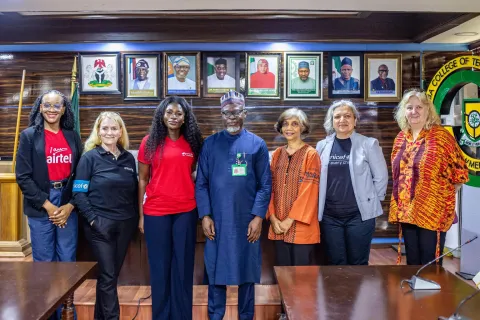
The NLP initiative is being organized by UNICEF in collaboration with Abia State Universal Basic Education Board (ASUBEB) with funding support from IHS Towers.
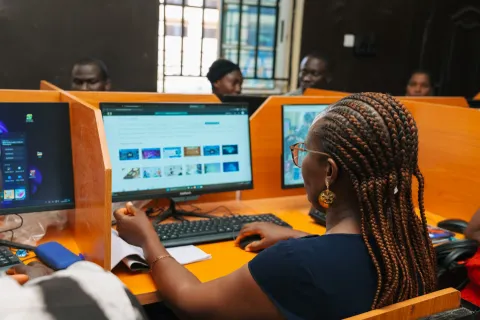
The Nigeria Learning Passport is an online e-learning platform with mobile and offline capability that enables continuous access to quality education. Abia is one of the states where teachers will be trained through IHS Towers Nigeria to increase access to quality learning.
The NLP is designed to improve learning outcomes through an education model for basic and secondary-level education. It is tailored to the needs of children who are either out of school or in school to increase enrolment, retention and completion of education cycle among young children.
UNICEF in Nigeria plays a key role in the Nigeria Learning Passport (NLP), which aims to provide quality education to children, especially in remote areas, and bridge the educational gap. UNICEF partners with the Federal Ministry of Education (FME) to deploy and expand the NLP, making it accessible to learners both online and offline.
The Nigeria Learning Passport has been successful in addressing educational disruptions and has reached a milestone of 888,000 registered users.
- UNICEF, along with communication service providers like Airtel and IHS, works to extend internet infrastructure to underserved areas, connect schools to the internet, and provide devices and training for teachers and education officers.
- The UN Children's Fund also collaborates with various partners, including TECNO, to enhance the platform's content and build training modules for educators to expand its reach.
- UNICEF engages with the FME to deploy NLP to improve learning outcomes for more than 80% of learners in school, at home, and in non-formal structures.
- The UN Children's Fund is also involved in initiatives to improve digital literacy for teachers and educators, recognizing the importance of digital skills in the modern classroom.
The plan is to train 500 teachers on the NLP mobile App. The platform offers a wide range of learning materials, from foundational learning to skills development, and is designed to be accessible both online and offline, even in areas with limited internet connectivity.
With such capacity building partnerships, UNICEF is committed to the NLP digital learning platform, bringing education to children's doorsteps and enhancing quality education access across Nigeria.