The Moment She Holds Her Breath
In a small clinic in Calabar, a mother does something ordinary that quietly changes her child’s future

The room is never truly quiet.
Babies cry, mothers murmur, nurses move with practiced hands that have done this a thousand times before. At the Infant Welfare Clinic of the University of Calabar Teaching Hospital, life arrives in small, fragile forms, and every day, people gather to protect it.
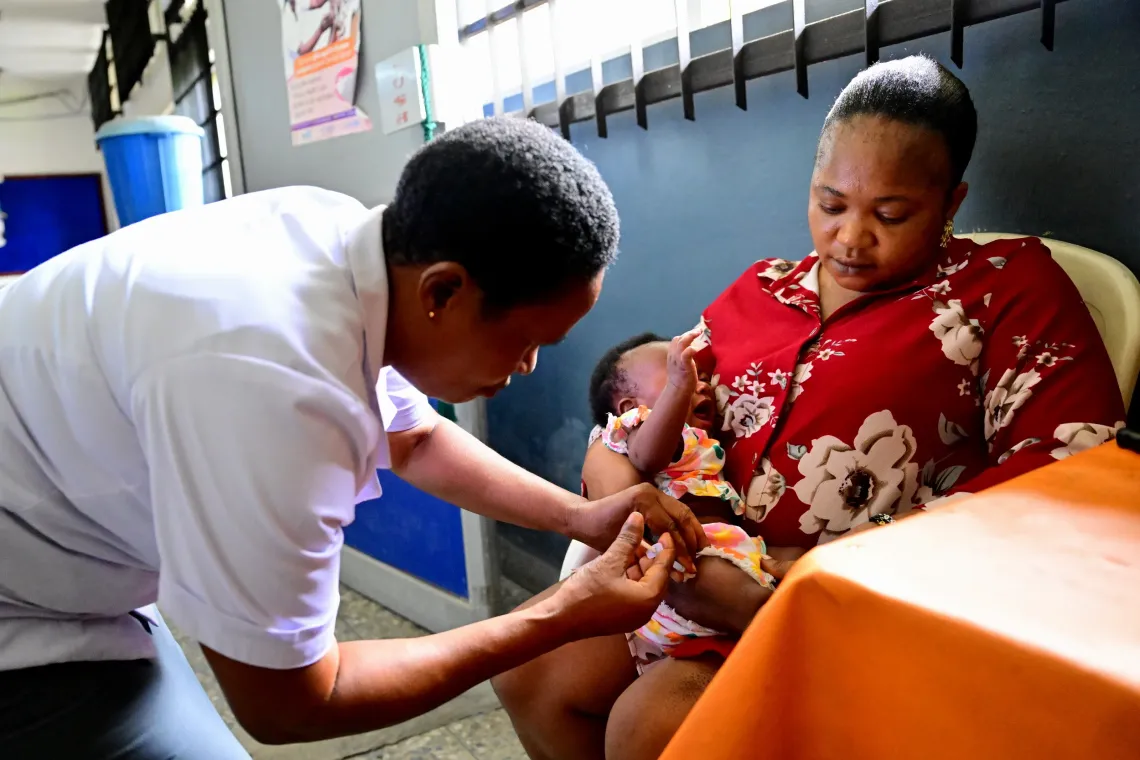
Constance Okpa sits with her daughter Zowe in her arms, rocking her gently. Not to calm her yet, but almost to steady herself. She knows what is coming. She knows the sound her child will make in a few moments. That sharp, sudden cry that feels far louder to a mother than it does to anyone else in the room.
Her husband stands beside her, quiet but present. A hand on her shoulder. A steady presence. This is not something she has to do alone.
Zowe is here for her fourth dose of the pentavalent vaccine. A routine visit, if you look at it from the outside. Another number in a long line of children. Another entry on a card.
But there is nothing routine about what it takes for a parent to hold their child still, knowing it will hurt, even if only for a second.
As the nurse prepares the syringe, Constance leans closer, whispering softly into Zowe’s ear. No one else can hear the words. Maybe they are not even words. Just the instinctive language of a mother trying to make sense of a moment her child cannot yet understand.
The needle goes in.
Zowe cries. Loud, immediate, unmistakable.
For a second, the world narrows to that sound.
And then it passes.
Constance pulls her close, holding her tighter now, her voice softer, steadier. The crying fades into small, broken breaths, then into silence.
“It’s not easy seeing your baby cry,” Constance says later, adjusting Zowe in her arms. “But I know this is for her good. Vaccines are protecting her future, and that gives me peace.”
She lifts Zowe’s immunization card. It is just a piece of paper. A few dates, a few stamps. But in her hands, it carries something heavier. It is proof that she showed up. That she chose protection over fear. That she did what needed to be done, even when it wasn’t easy.
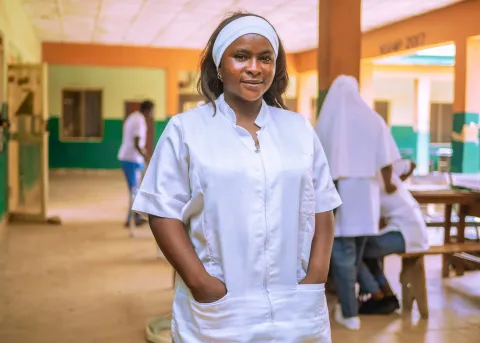
Across the room, Nurse Patience Nyong is already with the next child.
She moves quickly, but not carelessly. There is a rhythm to her work, a quiet confidence built over years of doing this again and again.
“I look forward to vaccinating every child who comes in,” she says. “Every child we reach is a life we are helping to protect. It brings me joy knowing that what we do here prevents serious illnesses and saves lives.”
There is no drama in the way she says it. Just the simple truth of someone who understands the weight of small actions repeated every day.
Across Nigeria, thousands of health workers do the same. And behind them, systems and partners, including UNICEF, keep these moments possible, strengthening services, building trust, and ensuring vaccines reach every child.
This message carries particular urgency during World Immunization Week 2026, marked from April 24 to 30, under the theme “For every generation, vaccines work.” It is a reminder that the protection we often take for granted today exists because generation after generation chose to act, chose to show up, chose to trust.
For Juliet Chiluwe, Chief of UNICEF Field Office in Enugu, the story of mothers like Constance reflects both how far things have come and how far they still need to go.
“Every child deserves a healthy start in life, and vaccines are central to that promise,” she says. “We are encouraged by mothers who continue to show up for their children, and by dedicated health workers who make immunization services possible. Together, we must keep building confidence in vaccines and ensure no child is left behind.”
Back in the clinic, Zowe is asleep now.
Her small body rests against her mother, the storm already forgotten. She does not know what just happened. She does not know what has been prevented, what risks have been pushed back before they ever had the chance to reach her.
She only knows warmth. The steady rhythm of her mother’s heartbeat. The safety of being held.
For Constance, this was never just another appointment.
It was a choice.
A quiet act of courage.
And a promise that her child’s future will be safer than her present.