In Lagos, Healthcare Workers Bring Vaccines to Children Where They Are
Between crowded spaces and scattered wares at Ikotun market, health workers deliver lifesaving measles-rubella vaccine to children at the market square, overcoming the access barrier that leave many children unprotected.

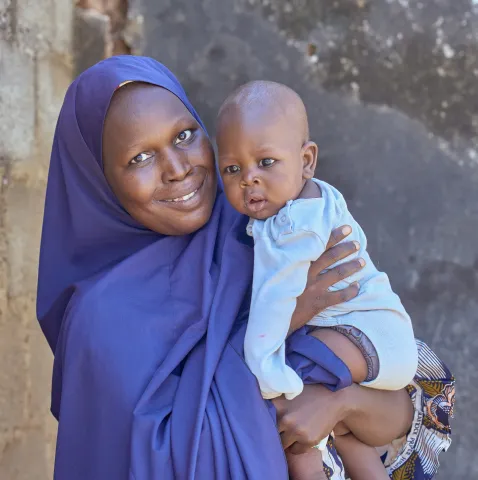
The rain had just stopped when Taiwo Azeez walked into the market to buy oranges for her grandmother. She had no plans to get her one-year-old son, Ahmad vaccinated that day. But that was exactly what happened.


"I was just passing by, and they immunized my baby," says Taiwo, a fashion designer and first-time mother. "I was very happy because going to the health center can be very stressful."
At her usual health center, she sometimes waits five hours before her son gets his shot.
"But today, everything was very easy. They gave immunization to my baby right here inside the market, and my baby was happy."
This is what the measles rubella campaign looks like in Lagos, delivering vaccines at doorsteps.


Eliminating Barriers
Deborah Lucky is a teacher in one of the schools Nurse Abosede’s team visited before reaching Ikotun market. She has two children aged 2 and 4 and knows what it costs to reach a health center beyond money.


"Going to the health center can be stressful, especially the one we attend," she says. "Challenges such as large crowds, long waiting times, high transport fares, and bad roads, especially when it rains discourage parents from taking their children for immunization."
Deborah wants to do what is right for her children. "Normally, after giving birth, I stop taking my children for immunization once they reach 1 year and 3 months." But when the teams come to her community or school like they did today, she will always present her children.


"A child who looks okay today can suddenly start acting differently," Deborah says. She has seen parents treat measles rashes with over-the-counter drugs that dry the skin but do not treat the disease. "Prevention is better than cure. Instead of moving around looking for different medicines, it is better to take our children for immunization."


The Healthcare Team
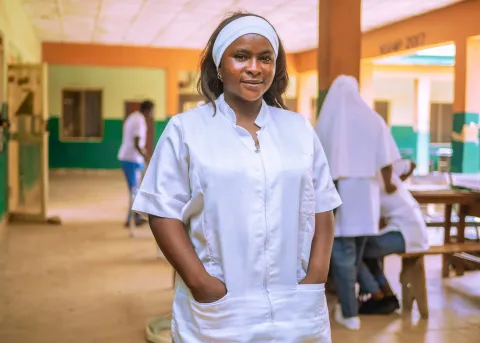
Abosede Badmus and her team started their day in the rain, moving from one school to another before reaching the market. They are vaccinating every child they can find between 9 months and 14.
"The vaccine we are administering is a two-in-one vaccine, measles and rubella combined," she explains. "Even if a child was vaccinated recently, this vaccine is an added advantage."
That matters because measles and rubella used to require separate shots. Now it is one, meaning more protection, less hassle. "This vaccine helps to protect our children, our families, and even reduces medical expenses for parents."


The voice in the Market
None of these works without Mosunmola Elegbede. She has spent over five years as a community mobilizer in Ikotun district, walking shop to shop, house to house, school to school explaining about vaccines to parents and caregivers who do not always trust them.
"Some parents are afraid because they do not fully understand vaccines," she says. "They think the vaccine may cause harm to their children. In such cases, we focus more on education by explaining the benefits and reassuring them."
When she convinces a hesitant parent, the impact is big. "By protecting their children, we're also protecting the entire community, including our own families."

The Lessons
Back at the Ikotun market temporary vaccination point, Taiwo watches her son as the nurse puts the ink mark on his left thumb, a visual symbol that the child is now protected. "Any immunization program that comes around, I make sure my child receives it because it is worth it."
She remembers people from her childhood who missed their measles shots. She saw what that looked like. "When parents take good care of their babies, there will be fewer problems and less unnecessary spending on hospital bills." Her son has barely been to the hospital
By late afternoon, the team packs up their boxes and moves to the next location.
Tomorrow, they will be somewhere else - another school, another market, another street corner. Wherever they find children.