In Jibia, a mother expresses her gratitude for lifesaving nutrition care.
When one-year-old Ummu Salama stopped eating and became less active, her mother hoped she would recover with time. A visit from a trained community nutrition volunteer led to an urgent referral and lifesaving treatment.

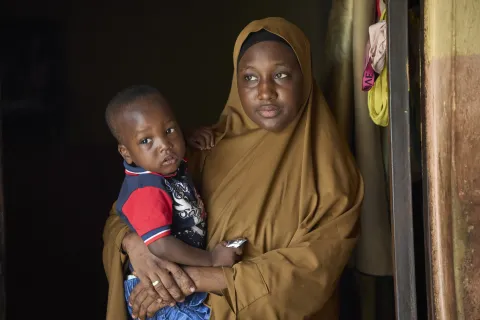
Among the many mothers attending the outpatient treatment clinic for child malnutrition at Baba Jibia Primary Healthcare Centre, Shamsiyya’s face showed relief as she shared how her daughter, Ummusalama Rabiu, had begun treatment to restore her health.
At their home in the Hayin Gada community of violence-affected Jibia Local Government Area of Katsina State, northwest Nigeria, the 25-year-old mother of two had watched her little daughter slowly change. At first, the one-year-old seemed well. She ate, played, and looked like other children her age. But then her appetite faded.
“I noticed Ummu Salama was not healthy,” Shamsiyya recalls. “She was not eating much. Her body condition was poor, unlike a healthy, active child.
Like many caregivers in communities affected by insecurity, Shamsiyya did not immediately seek to know what was wrong with her second baby. She offered porridge, water, and biscuits when the family could get them. Taking Ummu Salama to the hospital for a check-up was the last thing on her mind—an attitude shared by many mothers in her violence-affected community.
“I did not seek any treatment for Ummu Salama. I thought she would get better with time," Shamsiyya says.
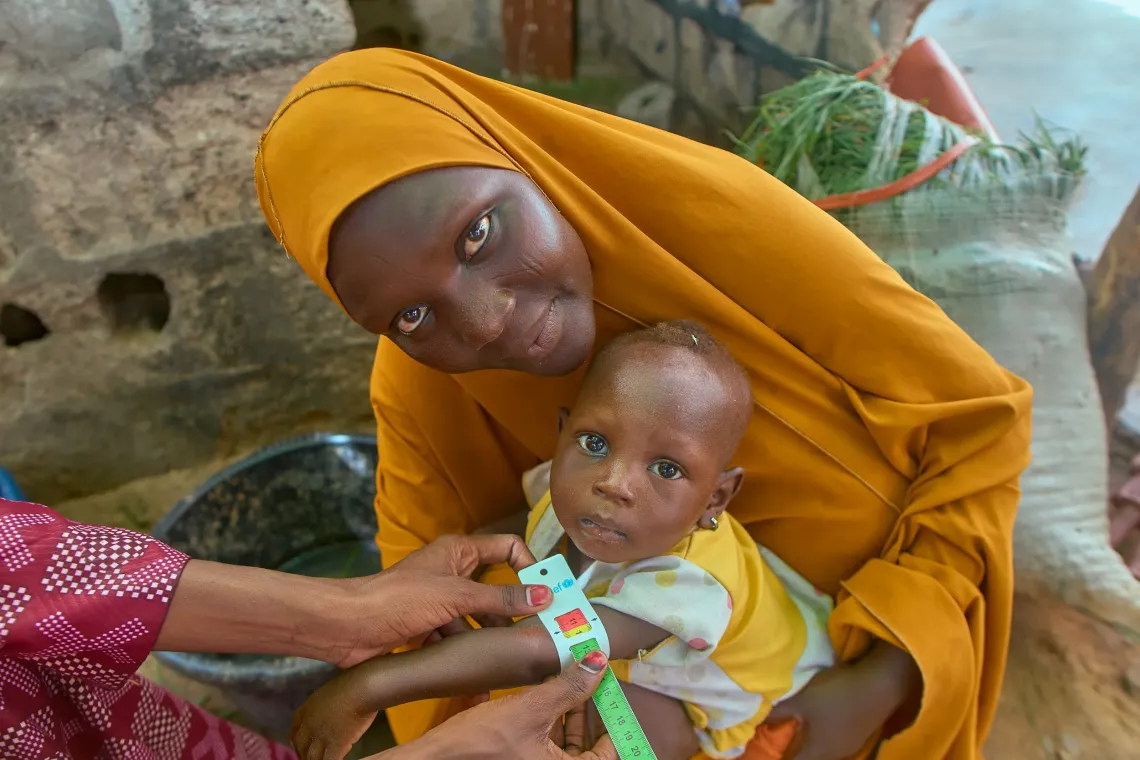
A simple measurement, a critical discovery
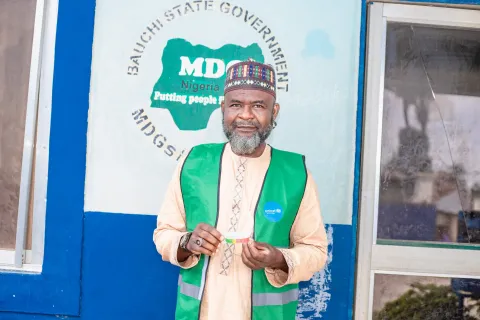
Help came through Rahama Aliyu, a community nutrition volunteer trained with UNICEF support, in partnership with a civil society organization and with funding from the Government of the United States of America. Rahama had been going from house to house to identify children who might be suffering from malnutrition. During her visit, she assessed Ummu Salama with the red, yellow, and green mid-upper arm circumference (MUAC) tape and explained to Shamsiyya that the child needed urgent treatment.
“After placing the red, yellow, and green MUAC tape around Ummu Salama’s mid-upper arm, Rahama told me that my baby needed urgent treatment,” Shamsiyya recalls. “She gave me a referral slip and told me to present it to the health workers when I brought Ummu Salama to the clinic.”
Rahama also counselled the young mother on hygiene and safe feeding practices: keeping the child’s hands clean, using clean bowls, and ensuring the place where the child sits and eats is clean.
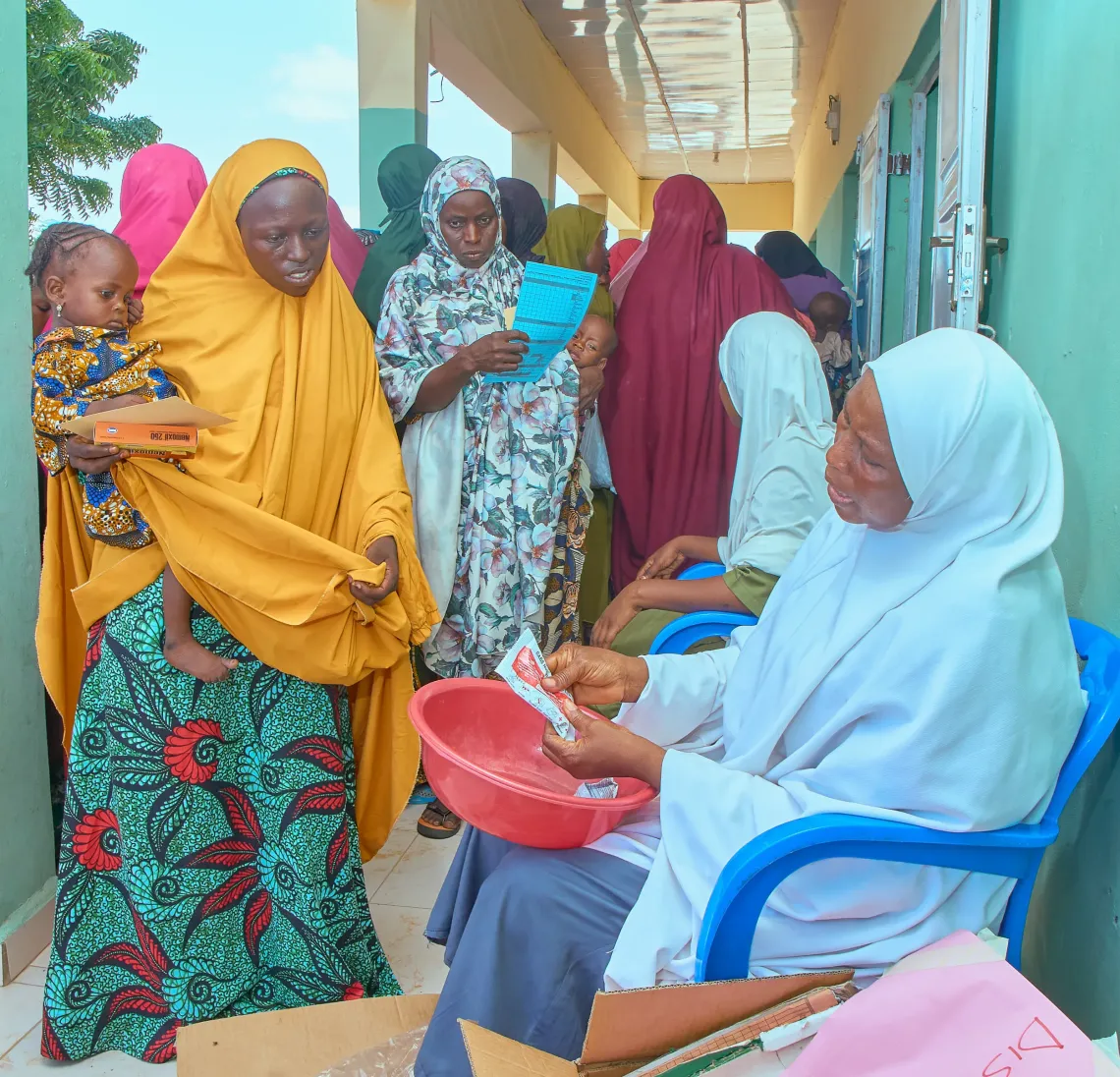
Treatment begins at the health facility.
At the Baba Jibia Primary Healthcare Centre, health workers measured Ummu Salama again and confirmed that she was malnourished and needed urgent treatment. For Shamsiyya, the confirmation was difficult, but it also brought relief: now she knew what was wrong, and care could begin.
“When I went to the hospital, they examined her again and confirmed that she was not healthy,” she says. “Then she was given the therapeutic food. I was surprised that she was eating it. Honestly, I was happy.”
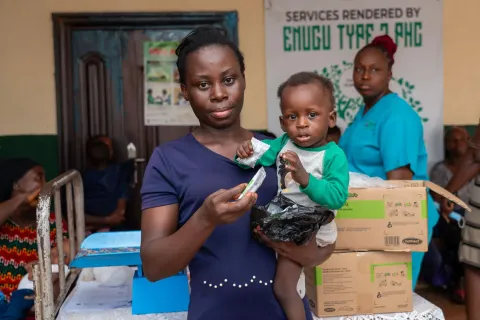
Shamsiyya received 14 sachets of ready-to-use therapeutic food, RUTF, the nutrient-filled paste, commonly used to treat severe acute malnutrition in children under five, and was instructed to give it to Ummu Salama as directed and not to sell it. Before leaving the facility, the little girl had already eaten one sachet.
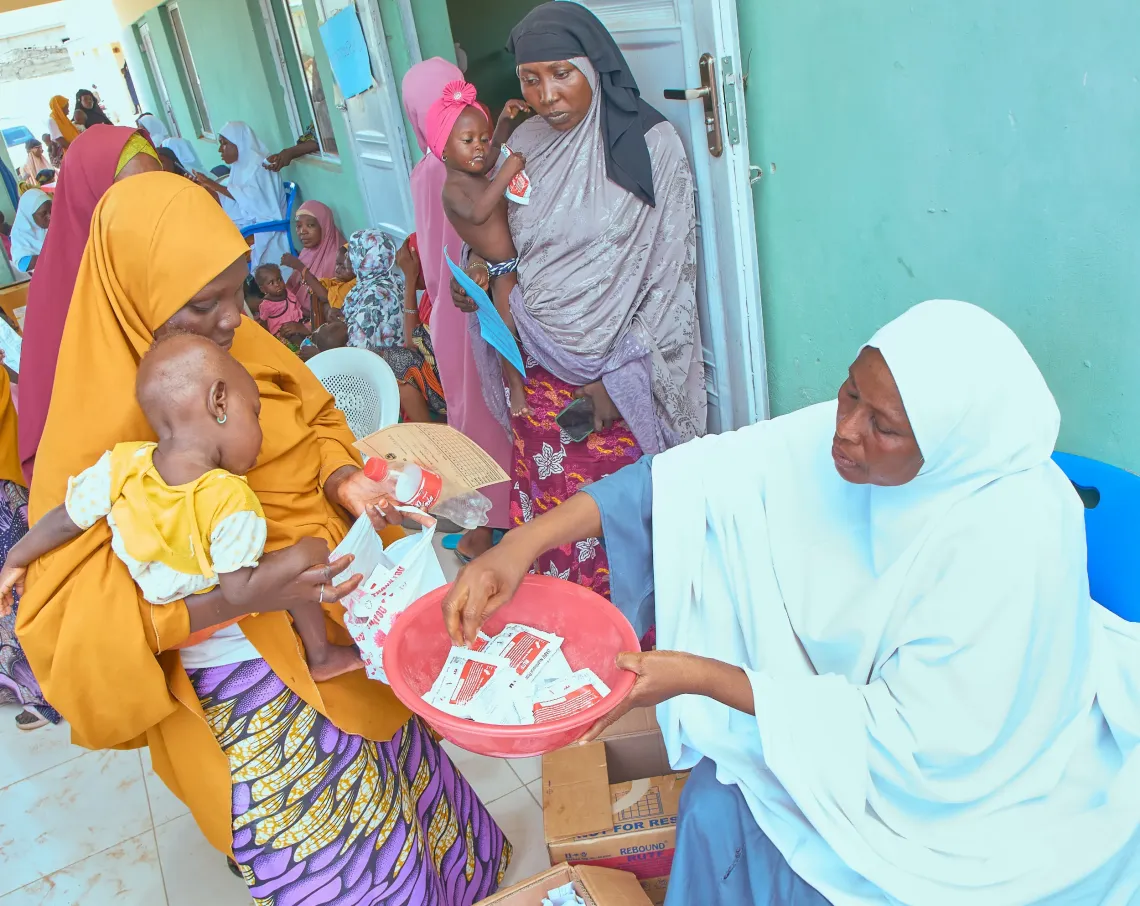
Community volunteers help children reach care early.
In Katsina State and across northwest Nigeria, community-based screening is helping families identify malnutrition before children become critically ill. In Jibia LGA, with the funding support of the Government of the United States of America through the Humanitarian Nutrition Response, UNICEF and partners are supporting active case finding, referral, and treatment with ready-to-use therapeutic food in crisis-affected communities, where conflict, displacement, and food insecurity continue to put children at risk.
For mothers like Shamsiyya, the work of community volunteers means that children who may otherwise be missed are connected to lifesaving services.
“I am thankful to God and to Rahama’s visit,” Shamsiyya says. “I hope that when Ummu Salama finishes eating the therapeutic food, she will get well.”