How a Small Camp Banished Open Defecation
With support from the Nigeria Humanitarian Fund, a minority community in northeast Nigeria has ended open defecation to protect its children and most vulnerable members.

Church Camp is small. About a thousand people live close together in Monguno, a conflict affected town in northeast Nigeria. It is the kind of place where everyone knows everyone.
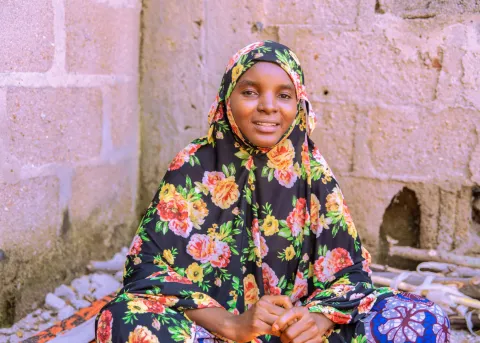
Saratu Emmanuel knows her neighbours by name. They know every member of her household. A grandmother of six, she has lived long enough in the camp to understand its rhythms, its faith, its culture, the ties that run deeper than blood.
For years, the community shared more than identity. They shared toilets.
“We used to share toilets among ourselves as well,” says Saratu. “Only a few of us had toilets in our homes. So it was not uncommon to visit your neighbours and request to use their toilets. The alternative was to use the outdoors which was also not convenient for women and girls.”
For years, open defecation was part of daily life, and the price was paid by the most vulnerable. Children and the elderly.
“My six grandchildren all live with me here and I was constantly worried they could get ill,” says the 56 year old. “We all practiced open defecation because what options do you have when you have small children? How many times do you want to visit your neighbours and inform them that your grandchildren want to use the toilet? It was a difficult time for us. Many of us engaged in open defecation and those who did not dealt with the shame of leaving your own house to use the toilet of your neighbours.”
That reality changed recently.

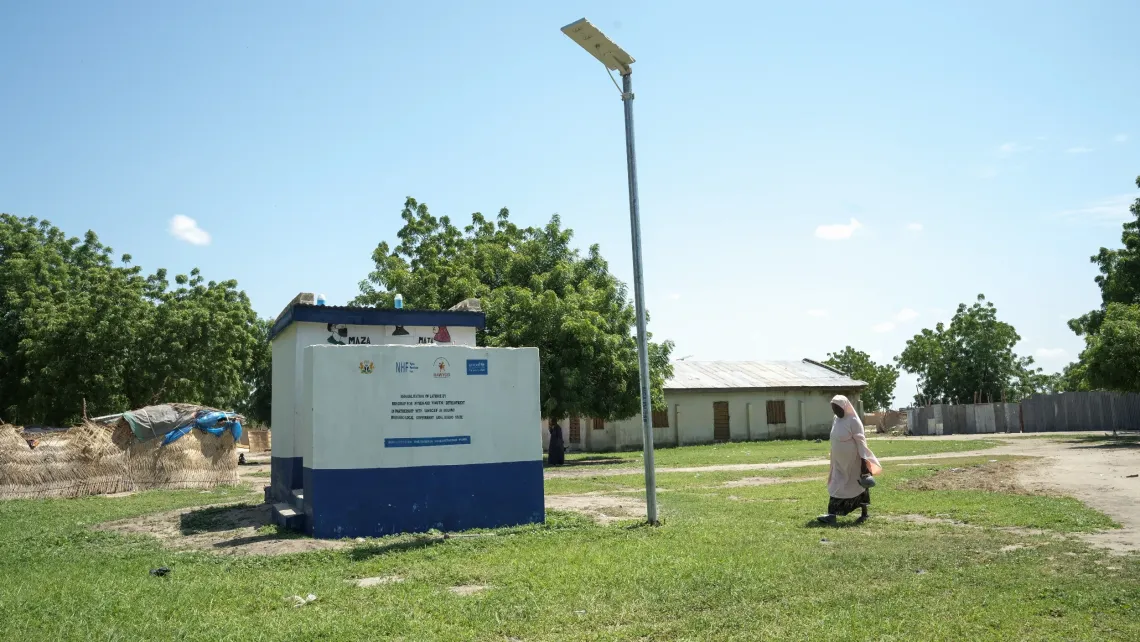
UNICEF, working with the Government and local partner Roadmap for Women and Youth Development, known as RAWYOD, constructed gender segregated latrines in the community. The support, funded by the Nigeria Humanitarian Fund, helped the camp end open defecation and protect children from diseases including cholera.
The change is visible. You can smell it. You can feel it.
“We have other challenges, but we value and appreciate what we have. We now know that we are not forgotten,” says Saratu. “The new toilets are complementing those built in their homes by individuals. We have successfully ended open defecation. The bad odour has completely disappeared, and the presence of flies has greatly reduced. We take turns cleaning the toilets and we keep them in good condition. We would be grateful if additional water sources are constructed and a school established for our children.”
At a time when Borno State is battling a cholera outbreak, those toilets mean more than convenience. They mean a chance for children affected by conflict to survive and thrive.
“We have not had a case of cholera in our community and we hope that it will not happen,” Saratu adds. “Now, I allow my grandchildren to play about without being afraid that they could pick up something contaminated by faeces and then fall ill.”
In a camp that once shared everything, including the burden of open defecation, families are now sharing something else. Relief. Dignity. And the quiet confidence that their children can play safely.