How Mohammed Left Trauma Behind
It is a vocational centre in Bama, northeast Nigeria. But brick by brick, it is where adolescents affected by armed conflict manufacture hope for a brighter future.

The carcass of a car is the first sight that greets visitors near the entrance of the Borno State Government-owned Vocational Training Centre in Bama, northeast Nigeria. It stands stationary, its two rear tires missing, but surrounded by a group of adolescents. The bonnet of the car, a grey Peugeot with black trimmings, is open, revealing the engine of the car.
But this is not an automobile museum. It is a UNICEF-supported automobile department inside a vocational centre for adolescents affected by conflict. Seventeen-year-old Mohammed Kayan (not real name) is one of them. Every morning, Mohammed arrives the centre with hope brewing in his heart. Within three months of enrollment, he has made friends with whom he shared a difficult history. They work together, play together and reminisce on the horrors of their abduction and stolen childhood.
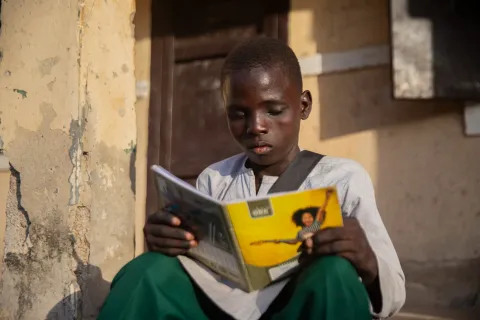
“I was abducted 10 years ago alongside my friends in Bama. I was seven years old,’’ says Mohammed. When I was rescued by the military four years ago, there was really nothing to look forward to. Each day was the same.
“At some point I started sewing caps for sale until someone introduced me to the life skills sessions which were held in my neighbourhood. I saw children and adolescents like me during the sessions and I liked being there. It was from there that I was interviewed and enrolled into the vocational programme,’’ says Mohammed.
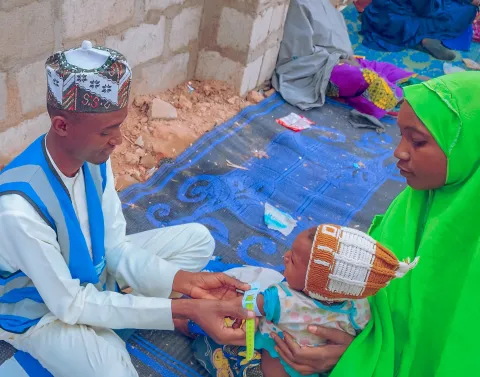
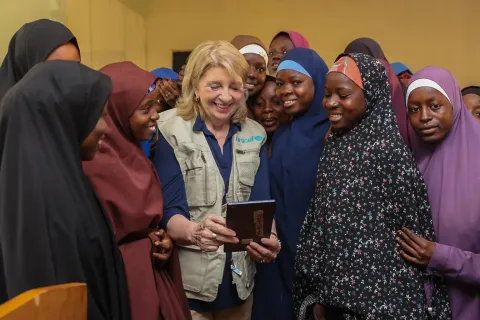
Indeed, the life skills sessions held in Bama’s numerous neighbourhoods have become a platform through which UNICEF, in collaboration with the Borno State Government and partner, Transcultural Psychosocial Organization (TPO), help children and adolescents address the trauma of abduction and child rights violations.
For nearly two decades, children, adolescents and women in northeast Nigeria have borne the greatest impact of armed conflict. The effect has been more devastating for children and adolescents who live in Bama and its environs. These communities fall close to the Timbuktu triangle, the well-known operational base of armed groups in the region.


Abduction and use of children by armed groups are among the top child rights violations prevalent in the region. A 2024 Children and Armed Conflict Annual Report of the United Nations Secretary General ranks Nigeria among countries with the highest numbers of children abducted, recruited and used by armed groups. Nigeria is also listed among countries with the highest numbers of children raped and affected by other forms of sexual violence.
Through the Support for Disengagement, Review, Reintegration and Reconciliation of Persons Formerly Associated with Non-state Armed Groups in Northeast Nigeria (SD3R) Programme, implemented in partnership with the European Union, UNICEF, Government and Transcultural Psychosocial Organization, children and adolescents affected by conflict in northeast Nigeria are receiving integrated support to rebuild their lives.
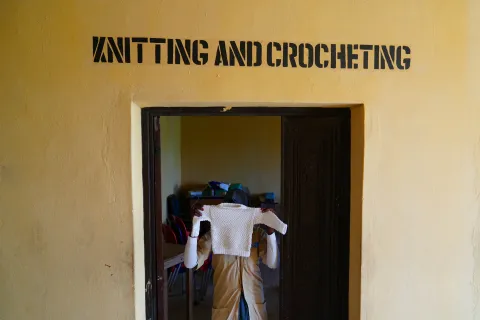
Through this programme, adolescents like Mohammed are finding healing and purpose, not only in the life skills sessions in Bama, but also through vocational training support at the government-owned centre. The centre currently supports 171 adolescents who receive training across eight departments – carpentry, tailoring, aluminium fabrication, auto mechanics, building, welding, barbing and agricultural practice.
Mohammed plans to relocate to Maiduguri to start a car repair garage after his training. But for now, UNICEF is supporting him and other adolescents with a monthly transportation stipend. At the end of his training, UNICEF will also support him with a startup kit through the SD3R intervention.
“I started slowly, but I am improving. The training also includes vulcanizing. I chose this skill because it will always be in demandwherever there are cars, there will be repairs. My dream is to move to Maiduguri, repair many cars and earn a living,” he adds.