Hope Rising for Fatima
An adolescent affected by conflict is rebuilding her future through an EU-funded vocational skills programme in northeast Nigeria.

Every morning, as 18-year-old Fatima Modu walks through the gates of the Zainab Gimba Second Chance Girls/Women Skills Entrepreneurship School in Bama, she carries with her memories that no child should ever have to bear. She thinks of her mother and younger sister, both killed during an armed attack on Bama in 2014, when Fatima was just six years old. Their memory is painful, but it is also what gives her the strength to keep moving forward.
"My father managed to escape, but my stepmother and I were trapped in Bama while it was under the control of armed groups," she recalls. "For months, nobody could leave. One night we escaped under the cover of darkness. They chased us, but God protected us. We walked for days before we finally reached Maiduguri."
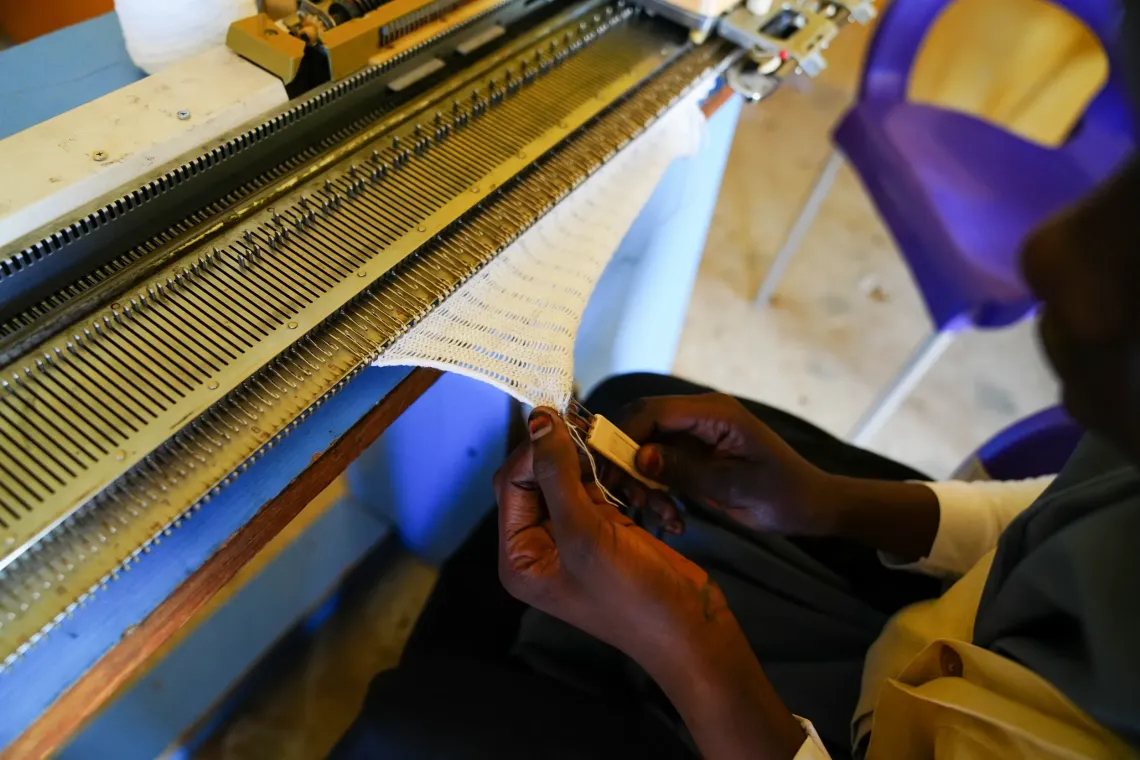
Today, instead of looking back at what she lost, Fatima is focused on what she is building. Seated among nearly 2,000 students at the vocational training centre, she patiently works on her knitting, carefully turning balls of yarn into colourful creations. Every stitch represents more than a new skill. It is a quiet act of healing and hope.
"There are many girls here, and every one of us has a painful story," she says. "But we have to keep going. We cannot allow our past to decide our future."
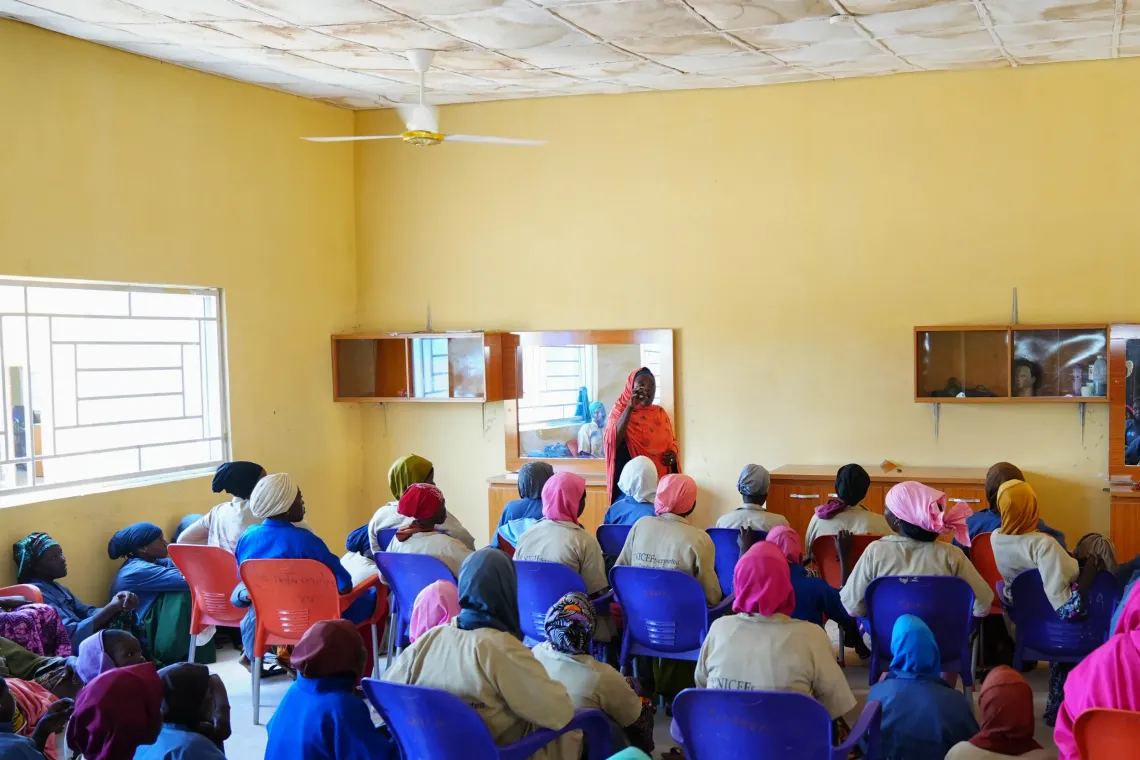
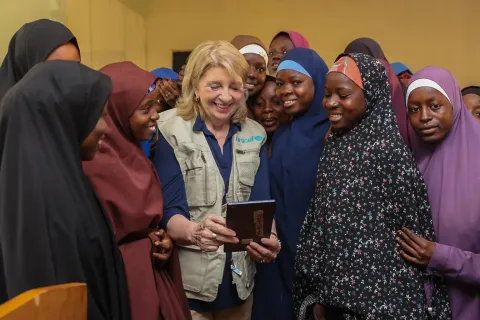
Fatima's story is shared by many of the girls at the school, located on the outskirts of Bama. Most have survived years of conflict and have endured experiences including abduction, gender-based violence, neglect and forced marriage. They have lost family members, homes and childhoods. Yet inside the classrooms and workshops, they are rediscovering confidence, friendship and a sense of possibility.
Nearly two decades after conflict erupted in northeast Nigeria, women, children and adolescents continue to bear its heaviest burden. Insecurity remains a reality in many communities, particularly those close to Sambisa Forest, where non-state armed groups continue to operate. According to the United Nations Secretary-General's Report on Children and Armed Conflict, more than 1,000 children were recruited or used by armed groups in 2024, exposing many to grave violations of their rights.
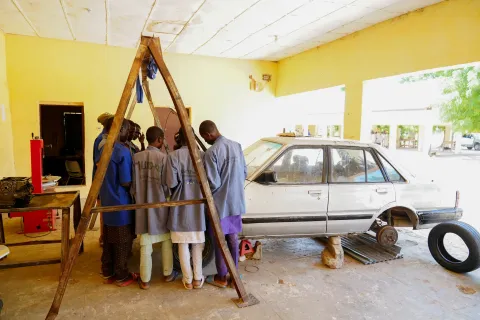
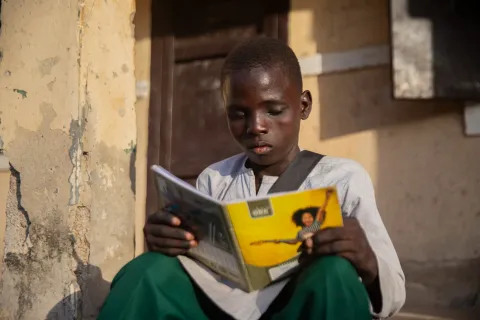
Against this backdrop, the vocational school, managed by the Borno State Government, is offering adolescent girls a genuine second chance. Alongside training in tailoring, knitting, catering, hairdressing and throw pillow production, students also receive literacy and numeracy education, helping them rebuild skills that conflict interrupted.
With support from UNICEF through the European Union-funded Support for the Disengagement, Disassociation, Reintegration and Reconciliation (SD3R) programme, graduates receive start-up kits that enable them to begin earning an income after completing their training.
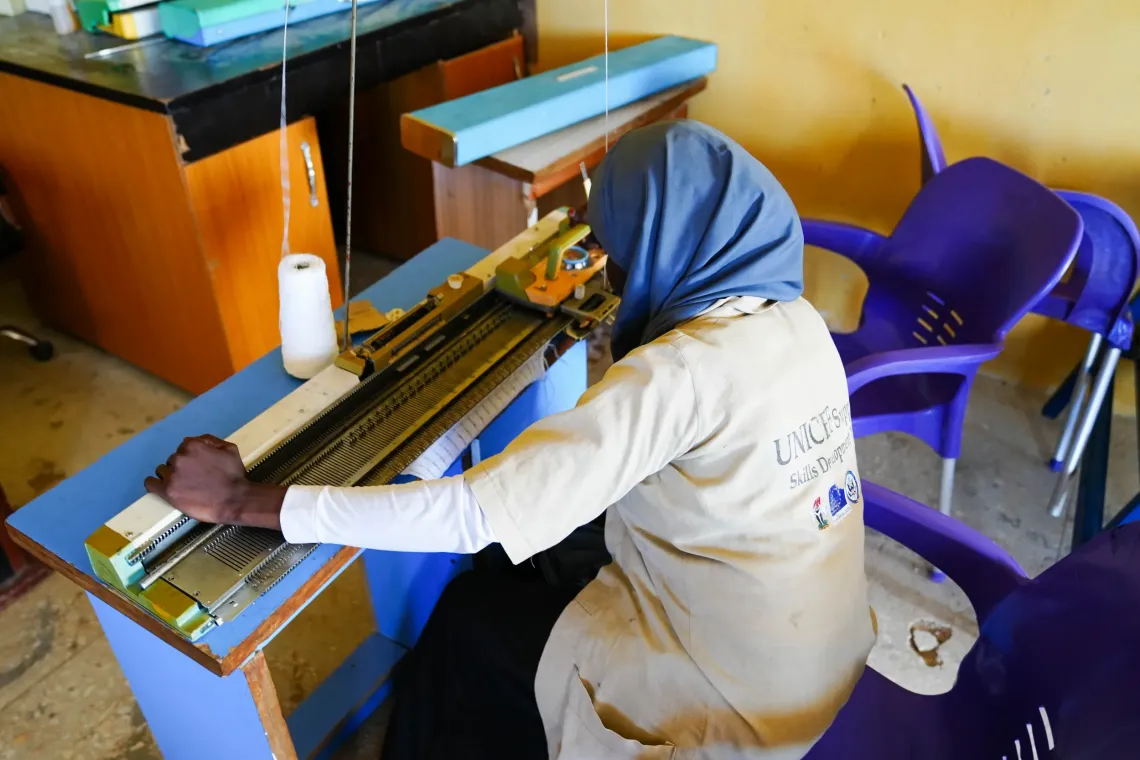
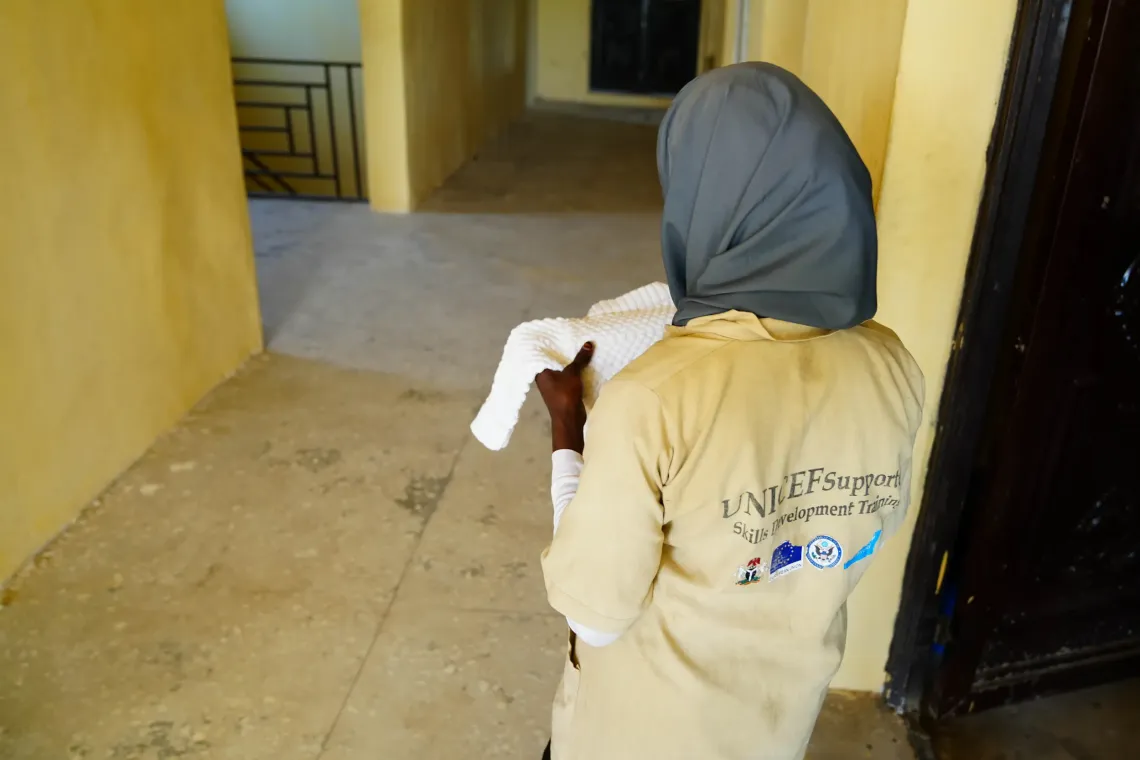
"It is the final piece that gives them confidence to start again," says the school's principal, Hajjagana Saleh Adam. "Our graduates receive industrial sewing machines, knitting machines, catering equipment and other tools. Many are now running their own businesses, while some have even returned as trainers to support other girls."
The school, established in 2024, began with just 120 students and a three-month training programme. As demand grew and the need became clearer, the programme expanded to one year, with literacy and numeracy classes added to give students a stronger foundation for life.
"I am proud that this school is changing lives," says Hajjagana. "Many of these girls have survived unimaginable hardship. When they arrive here, they become part of a new community. They begin to believe in themselves again and see that they still have a future."
For Fatima, that future is becoming clearer with every passing day.
"What I love most about knitting is creating something from nothing," she says with a smile. "It reminds me that even after everything that has happened, it is still possible to build something beautiful. One day, I want to open my own shop, employ other young people and sell my products in the biggest markets."
For a young woman whose childhood was shaped by violence and loss, that dream is no longer beyond reach. It is slowly taking shape, one stitch at a time.