Hope for Brighter Smile
A humanitarian document his first time experience in a city that records high rates of sick and small children among newborn and zero-dose infants.

Wednesday, November 27,
It was midday at the office, and I was neck-deep in my tasks, trying to clear my to-do list. Responding to emails, monitoring digital channels, and attending webinars filled my day. I had just returned from lunch when Safiya, a colleague leading an upcoming event, walked in with news that changed my week. "Get ready; we're going to Calabar next week. I've already discussed it with Chief," she announced. I was excited for the opportunity to advocate for the health and well-being of children and newborns.
The news brought back memories of my childhood, specifically the story "Edet Lives in Calabar" from the old Macmillan English Book 3. After decades of imagining Edet's beautiful city, I was finally going to see it. The nostalgia brought a smile to my face.
Thursday, November 28,
At 9:00 am I began processing my travel bookings and seeking the necessary approvals the following day. Everything was sorted by Friday, November 29, even as I juggled another assignment over the weekend. Such is the life of humanitarian work—always on the move, always multitasking.
Tuesday, December 3,
Finally, the day arrived. At 11:20 am, I got to the Nnamdi Azikiwe International Airport to catch my 12:25 pm flight. The airport was bustling with travelers. December is peak travel season in Nigeria, with people journeying for the holidays.
At 12:15 pm, the airplane's engines roared to life, and we took off from sunny Abuja, heading to the cooler, greener Calabar. My heart swelled with purpose—I was on a mission to amplify vulnerable children's voices and showcase the impactful work of UNICEF and its partners in providing life-saving support. Fifty minutes later, we touched down at Margaret Ekpo International Airport.
Unlike Abuja, the Calabar airport was serene, and the city's lush greenery was immediately noticeable. The proximity to rivers, perhaps, explains why it's called Cross River State.
As we drove to our hotel, I admired the dazzling trees in the city centre—a testament to being green-driven by the government.
By 2:15 pm, the team had gathered for a briefing. Work resumed as I reviewed emails, responded to pending office work and planned through the next day's activities on the agenda.
At 9:48 pm, my team lead informed us we'd leave at 7:30 AM for field visits to healthcare centres, including the University of Calabar Teaching Hospital.
Wednesday, December 4,
After a quick breakfast at 6:50 am, I was ready to go.

At 9:10 am, we embarked on our field trip. Our first stop was the Mary Slessor General Hospital in Calabar. where journalists toured the medical oxygen plant and interacted with experts managing it. I captured video content as a colleague shared his experience, highlighting the support of UNICEF and partners in strengthening healthcare in Nigeria.
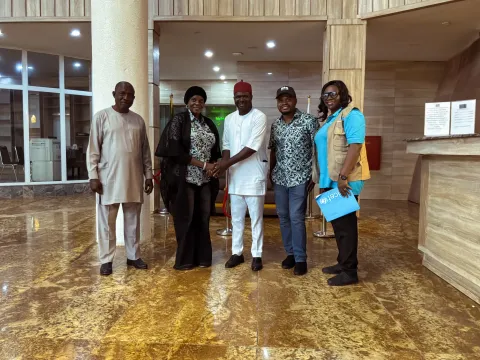
By 10:45 am, together with Dr. Vivien Otu, the Director-General of the Cross River State Primary Healthcare Development Agency, we went to Ekpo Abasi Primary Healthcare Centre. There, we met mothers with their newborns for their monthly check-ups.
Despite the joy in the air, it was evident the center needed interventions like stable electricity and better equipment to operate 24/7 for pregnant women and nursing mothers.
At 11:40 am, we visited the Primary Healthcare Centre at Ikot Offiong Ambai in Akpabuyo local government.
At the PHC, we had an interactive session with the resident nurses, which revealed that while immunization services were well-received, the facility struggled with electricity supply and staffing issues.


Alarmingly, nurses here often rely on torchlights during deliveries. The PHC has a generator, but it is costly to maintain in the rural community.
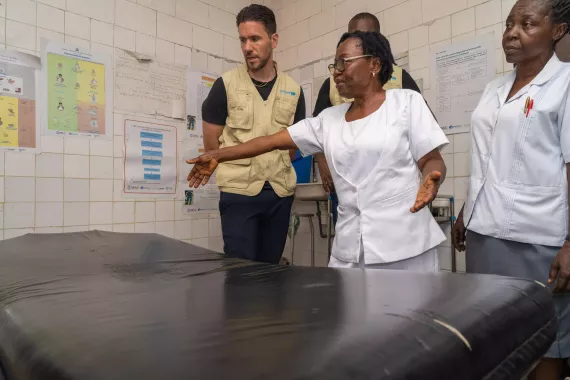
Notably, the location of the centre in a waterlogged area also posed access issues to fully providing services to the community. Patients, including the health workers, find it difficult to access during the rainy season. Dr. Vivien noted that while UNICEF's support had been impactful, more was needed to address these barriers.
By 1:25 pm, we returned to the newborn unit at the University Calabar Teaching Hospital, one of UNICEF's supported facilities.
Thursday, December 5,
At 9:00 am, we kicked off the media dialogue session with participants from 25 media houses alongside with the Cross River State Primary Healthcare Development Agency.

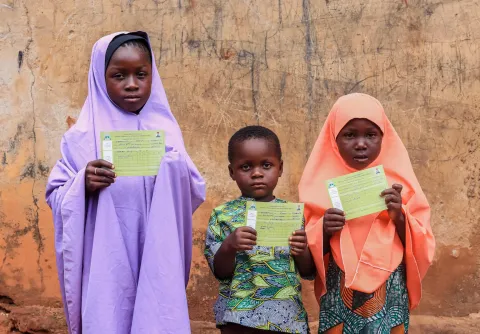
Discussions centered on the health challenges of sick and small newborns and zero-dose children—those who haven't received any vaccinations.
UNICEF experts delivered presentations on health, immunization and social behaviour change. Journalists shared insights from the previous day's field trip, sparking a lively dialogue about improving child health services in the state. While supporting the presentations, I drafted content capturing the dialogue's outcomes.
By 3:10 pm, the event wrapped up with positive feedback. Later, I joined the team to explore Calabar—its serene streets, cultural landmarks, and, of course, its cuisine.

Friday, December 6,
As I headed to Margaret Ekpo International Airport for my return flight to Abuja at 9:00 am, my mind lingered on the babies I'd seen at the healthcare centres.
Their bright smiles and eager eyes reminded me of the work that still needed to be done. Calabar's beauty lies not just in its lush landscape but in its potential to brighten the futures of its children. To achieve this, every hand must be on deck to eradicate zero-dose cases and address barriers to healthcare access.
As the captain announced our departure and the airplane ascended, I glanced down at the green expanse of Calabar. In its beauty, I saw hope—a belief that with collective effort, we can light up the smiles of every child.