Frightening by names, dangerous to lives
Why eliminating neglected tropical diseases matters.

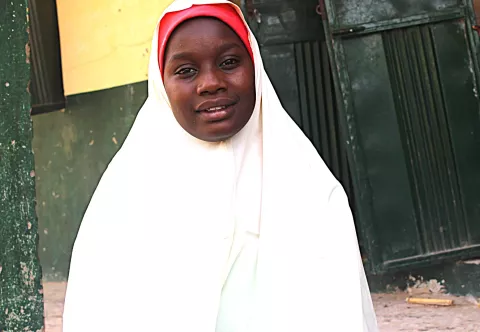
Fatsuma Mohammed has seen what blindness can do to a person. She has observed children leading blind women and blind men sitting quietly at the edges of gatherings, their eyes fixed on nothing. “Sometimes I wonder how they cope,” she says softly. “Losing one’s sight is almost like losing the essence of one’s life.” Fatsuma knows that many factors can cause the loss of eyesight.
But in Kwami, her community in Gombe State, the threat and fear of river blindness, known medically as onchocerciasis, is real. Known in local parlance as “dindimi ido”, Oncho is one of the neglected tropical diseases (NTDs) that put children and families at risk in Gombe State.
“When I first heard about the disease, I was scared,” she recalls. As she made connections, she pondered whether some of the blind individuals she had observed over the years could potentially be Oncho victims. Learning that the disease was only one of the several NTDs that people could contract deepened her fear. These are diseases many have heard little about, yet they destroy millions of lives.
“As a mother, I immediately thought of my children and my family,” Fatsuma says. “I asked myself, what if this happens to us?”
NTDs are among the most devastating diseases affecting vulnerable communities. They blind, disable, and disfigure people, often leaving lifelong scars that go beyond the physical. People living with NTDs often face exclusion, stigmatization, and discrimination, sometimes even from their families. NTDs strip people of their dignity, and for adults, they can take away the ability to work and earn a living.


For children, the consequences are just as severe. NTDs can rob them of their chance to learn and thrive. Some children miss school because they are affected, others stay at home to care for affected parents or relatives. Over time, families become trapped in a painful cycle of illness, rising medical costs, and poverty. And Fatsuma knows this, "This type of disease doesn’t just affect one person, they affect the whole household.”
Often driven by poverty and poor sanitation, NTDs weaken entire communities. The adverse impact stretches far beyond health, undermining education, productivity, and economic growth.
Gombe State is making progress. The state government, with support from partners including UNICEF and Merck USA, has been working to eliminate NTDs. These efforts include raising awareness in communities about how to stay safe and supporting the availability of preventive drugs to those at risk.
Fatsuma and her family have benefited from this support. She remembers the relief she felt when the drugs were distributed in her community. "Receiving the medicine for myself and my family lifted a burden," she expresses. "It bolstered my confidence in my protection."


Beyond medications, families such as Fatsuma’s are also learning about household hygiene practices that help them stave off NTDs. Hygiene promotion teams, supported by the state government and partners, carry out intensive sensitization across communities, teaching people simple but life-saving behaviours to reduce their risks.
The efforts are yielding results, with Gombe State making steady progress toward eliminating NTDs. Still, continued awareness, sustained investment in hygiene and sanitation, and a widespread uptake of positive hygiene behaviours across communities remain critical to eliminating NTDs in the state.
Until this happens, onchocerciasis, or "dindimi ido," lymphatic filariasis, and other NTDs, frightening as they are even by the sound of their names, pose dangers to healthy communities. But mothers like Fatsuma are finding reasons to be confident. “As long as we all do our part, I know we can keep these diseases away,” she says.