A double recovery
In northeast Nigeria, twin girls affected by conflict and wasting are receiving support to regain their health.

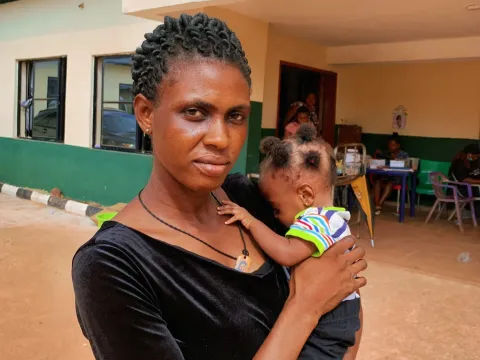
Twins Ahayye and Zara Mohammed were fast asleep when their mother and elder sister brought them to the nutrition clinic last week in Ngala, northeast Nigeria. Despite the hustle and bustle around them, the nine-month-old sisters remained in blissful slumber for minutes, oblivious of the world.
But the situation was a sharp contrast to their conditions three weeks ago when their mother, Ramata Jidda, rushed them to the UNICEF-supported ISS IDP Camp for treatment.
Both of them had very high fever, recalled Ramata. They also had diarrhoea, and they were vomiting almost nonstop. In addition to that, they had heat rashes all over their bodies. I was so disturbed that I couldn’t eat, she added.
While Ahaye measured 10.1 cm on the mid-upper arm circumference (MUAC) tape and weighed 5.5 kg, her sister Zara measured barely 10.4 cm on the MUAC and weighed 5.9 kg. The sisters were gaunt and cried as their mother tried to comfort them at the clinic.
Yet, the twins were just two of the eight children admitted for acute malnutrition that day at the camp clinic providing nutrition care for children from displaced families and others exiting the enclave of armed groups.

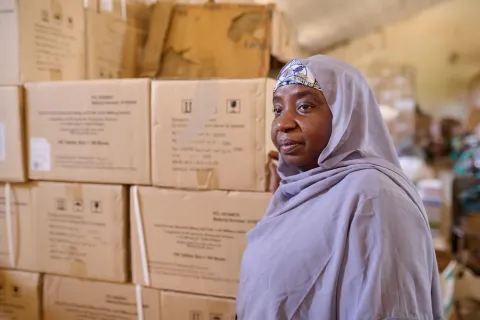
Hardly does a day go by when we don’t admit at least five children into the programme, said Abu Mustapha, one of the health workers at the clinic. Last month, we had 73 new admissions, and the majority of them were children of families who are escaping armed groups, he added.
Ramata had tried traditional herbs to care for the children, and visiting the clinic was her last option.
I did not know what to expect. I had exhausted everything I knew, but nothing worked. The children continued to lose weight. There was nothing else to try or give them, she said.
Health workers at the clinic promptly admitted the twins in the outpatient therapeutic programme which is supported with funds from the Global Affairs for Canada (GAC). At the clinic, UNICEF is providing life-saving nutrition supplies to treat acutely malnourished children and facilitate their survival.
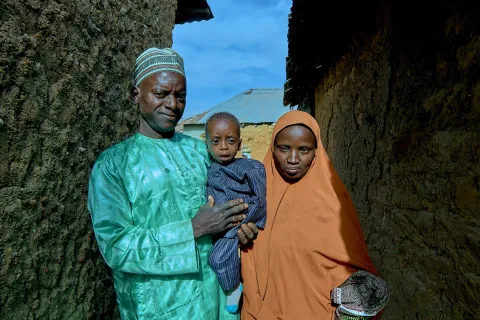
Increasing cases of food insecurity and severe malnutrition are robbing children of their survival and development in northeast Nigeria. Protracted conflict, climate change, rising costs of food, and lack of dietary diversity have been said to be some of the factors responsible for the increasing number of wasted children in the region.
In 2023, almost half a million children in Borno, Adamawa, and Yobe states alone were treated for acute malnutrition in UNICEF-supported facilities across the three states. The alarming number represented a 37 percent jump for the same period in 2022.
With rising inflation and the inability of households to assess farmlands in areas of return, many children face an uncertain future of stunting and possible death.
UNICEF, with support from partners such as the GAC, has been providing integrated interventions to prevent malnutrition and treat children who are already affected by it. In camps and communities across northeast Nigeria, UNICEF has been the sole provider of the lifesaving peanut butter, popularly known as the ready-to-use therapeutic food (RUTF), for the management of acute malnutrition.
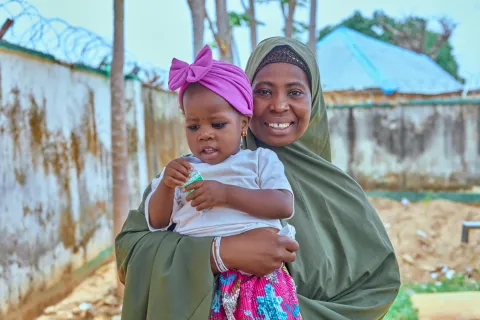
Like hundreds of thousands of children, the twins have benefitted from this intervention and are now on the road to recovery. UNICEF is also supporting governments in the region in personal and food hygiene to prevent relapses.
Additionally, UNICEF also builds the capacity of caregivers to use the MUAC tape and detect malnutrition quicker for prompt referral to health facilities.
The worst is over, and everything is almost back to normal. My children are healthier now, and I pray that they don’t fall ill again, said Ramata.