Carrying Life Through Chaos
Mothers fleeing violence in Alkaleri, Bauchi State, fight to keep their children alive, holding on to the fragile hope of going home

Amina Alhaji had never heard gunshots up close, not like this. She was at the market that morning in March 2026 when everything suddenly shifted, people running in all directions, panic spreading faster than she could understand, and then the sharp, relentless crack of gunfire.
“I didn’t understand what was happening,” she says, her voice still carrying the weight of that moment. “People were just running.” Instinct took over. She ran home, gathered her children, and fled, not stopping to think, not knowing where she was going, only that staying behind was not an option.
Within minutes, her life had split into before and after. Like thousands of others from Alkaleri, she left with nothing, no belongings, no plan, just her children in her arms and the fear that if she slowed down, something worse would catch up.
For Asiya Gambo, escape came with an even heavier burden. She was in the final weeks of her pregnancy when the attack began, already carrying one child in her arms and another life within her.

“I was thinking about both of them,” she says quietly, reflecting on that moment of impossible choice and determination. Every step she took was filled with strain and fear, her body pushing forward despite exhaustion, her mind fixed on keeping her children alive. A passing motorcycle offered her a way out, a small, unexpected lifeline in the middle of chaos. Without it, she does not know how far she would have made it.
Like Amina, she had never imagined her community would come under attack, never thought she would have to run for her life. But conflict does not wait for imagination, it arrives suddenly and rewrites everything.
Today, both women are among thousands who have taken refuge in a makeshift camp in Kashere, in neighbouring Gombe State, where the idea of home feels distant and fragile. Life in the camp is harsh and unrelenting. Families crowd into open spaces, children sit and sleep on bare ground, and makeshift cooking areas struggle to meet even the most basic standards of hygiene. Privacy is almost non-existent, and dignity feels like something constantly under threat.

It was here that Asiya gave birth, bringing a new life into the world in the middle of displacement and uncertainty. The child represents hope, a quiet but powerful reminder that life continues, even in the most difficult conditions, yet that hope sits alongside exhaustion, anxiety, and a deep sense of loss for the life they once knew. “In our community, we could take care of our families,” she says. “Here, it is very hard.”
Across the camp, more than 7,000 displaced people, most of them women and children, are struggling to cope with daily realities that are both visible and deeply felt. Children are becoming thinner, the early signs of malnutrition beginning to show. Mothers watch closely, often in silence, measuring each day against the strength of their children. Clothes are worn thin, water is not always safe, and flies settle too easily in places where they should not.
Illness is a constant threat, and with it comes a growing sense of fear. “I am scared for my children,” Amina says, a fear that echoes across the camp and reflects the reality that displacement is not just about losing a home, it is about living with uncertainty every single day.
In response, the Governments of Bauchi and Gombe States, working with UNICEF and donors, including the Child Nutrition Fund (CNF), have begun to provide critical assistance to families in the camp. Hygiene promotion teams are helping communities reduce the risk of disease outbreaks, while families are receiving hygiene and dignity kits to restore a measure of safety and self-respect.
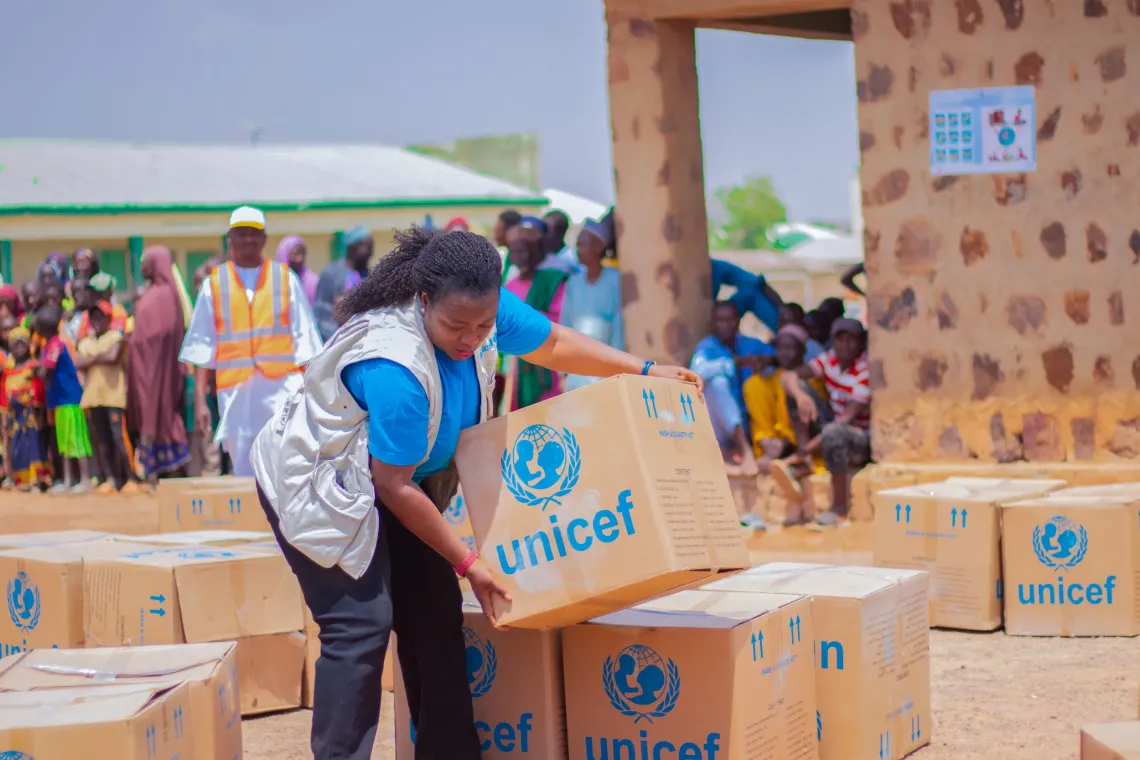
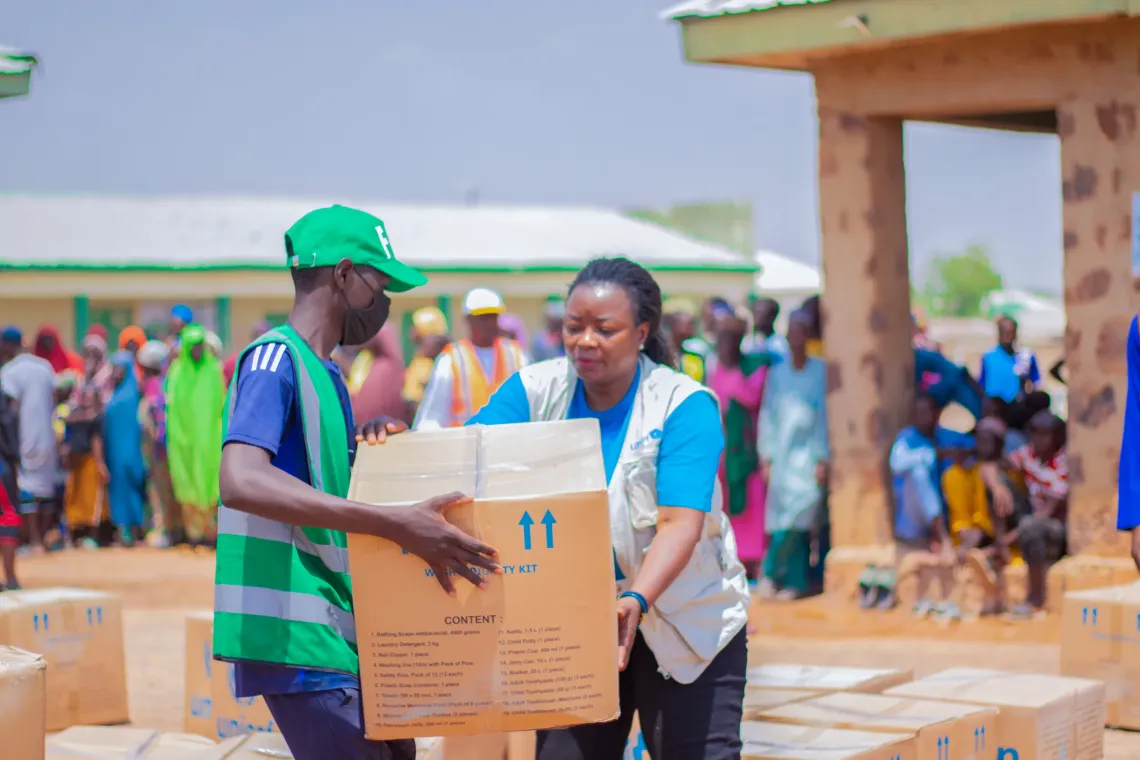
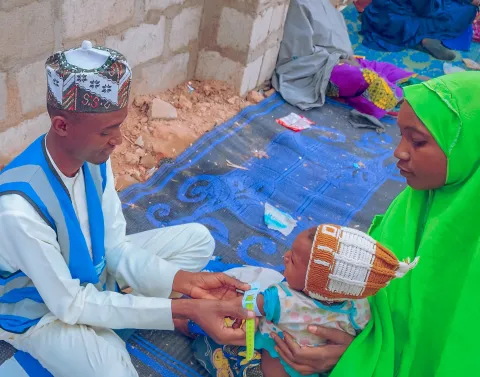
For many mothers, one of the most vital forms of support is the provision of ready-to-use therapeutic food (RUTF), supplied through the CNF, for malnourished children, offering a lifeline in a situation where options are limited and time is critical. For Asiya, this support is deeply personal. Her two-year-old daughter, Nana, is now receiving treatment, and in that small but significant intervention lies a sense of reassurance. “I know it will help her stay strong,” she says, holding on to that belief as she navigates each day.
Yet even with this support, the deeper longing remains unchanged. For Amina, for Asiya, and for thousands of others, survival in the camp is not the end goal, it is only a temporary pause.
Their thoughts are anchored in the places they left behind, in homes they hope are still standing, in lives they aim to rebuild. “I just pray our house is still there,” Amina says. “We want to go back.” Because beyond the immediate struggle to survive, there is a quieter, more powerful desire, that one day soon, they will return to a place where their children can grow without fear, where life regains a sense of normalcy, and where carrying a child no longer means carrying the weight of uncertainty.