A Birth and A Rebirth
After years of ignorance, a family now lives violence-free through engagement and dialogue in northeast Nigeria

When his wife gave birth to a healthy baby boy on a hot Thursday afternoon in July, Mallam Ali, a displaced resident of New Camp in Bama, northeast Nigeria, was over the moon. His eager smile eased the deep creases on his face, giving him a younger, brighter demeanour.
But the father of three was celebrating more than the birth of his son.
“My new baby was born at a time of enlightenment for me. Six months ago, I was not the same person I am today. I have deeper knowledge of what is expected of me not just as a father but also as a husband,” says Ali.
For Ali, the birth comes at a time of significant change in his own life.
In the New Camp area of Bama where he lives, Ali was known for his stern looks and inflexible approach to issues. Like many men in the settlement, years of conflict and displacement have made life difficult for him and his family.
Before coming to Bama, Ali lived in Darajamal, a rural community near the town, where he had a farm. But insecurity forced him to abandon farming. Today, he depends on casual labour to earn a living and support his growing family.
The difficulties he faced also affected life at home. Ali says he ruled his family with an iron hand and often resorted to violence against his wife and children.
“I would say that was my time of ignorance, and these are actions that I regret because it did not lead to any change. The source of conflict did not change. What we quarrelled about last month was only waiting to happen again,” he says.
Six months ago, things began to change.
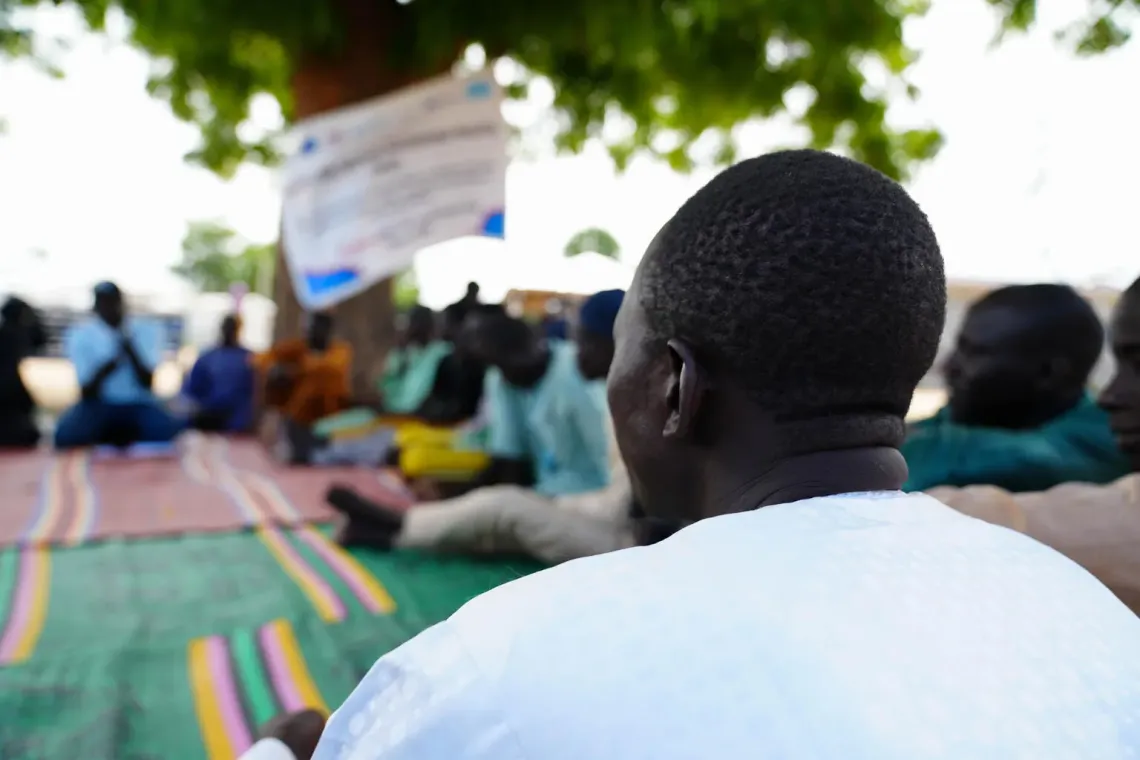
Through a UNICEF-supported programme for men, Ali began learning different ways of communicating, making decisions and resolving conflict within his family.
In collaboration with the Borno State Government and the International Medical Corps (IMC), UNICEF is engaging men in northeast Nigeria on accountable practices. The programme addresses gender-based violence, promotes women’s participation in decision-making and encourages peaceful ways of resolving conflict within families and communities.
Funded by the Government of Germany through KfW and the United Kingdom Government through the Foreign, Commonwealth and Development Office (FCDO), the Engaging Men Through Accountable Practices (EMAP) intervention is helping women and girls live free from everyday violence, trauma and fear.
The intervention helps men like Ali understand the different forms and causes of violence against women and girls and how they can help prevent them. The men also learn positive ways of resolving disagreements at home without resorting to violence.
For Ali, those lessons have changed his understanding of what it means to lead a family.
“My understanding of family leadership has changed. We were taught about how to build consensus in our families in a way that everyone feels a sense of belonging and can work towards a common goal,” he says.
“I have also learned to pause before taking any action and ask myself whether there are alternative options that can bring better results.”
Today, as Ali welcomes his new son, he is also embracing a different way of being a husband and father, one built around dialogue rather than violence.
For his family, the birth of a child has come with another beginning: a home where decisions can be discussed, disagreements resolved peacefully and every member of the family has a voice.