Youth career choices through job exploration
With UNICEF´s support, secondary school students across Montenegro are given the opportunity to explore potential career and academic paths through practical experience

- Crnogorski
- English
- Shqip
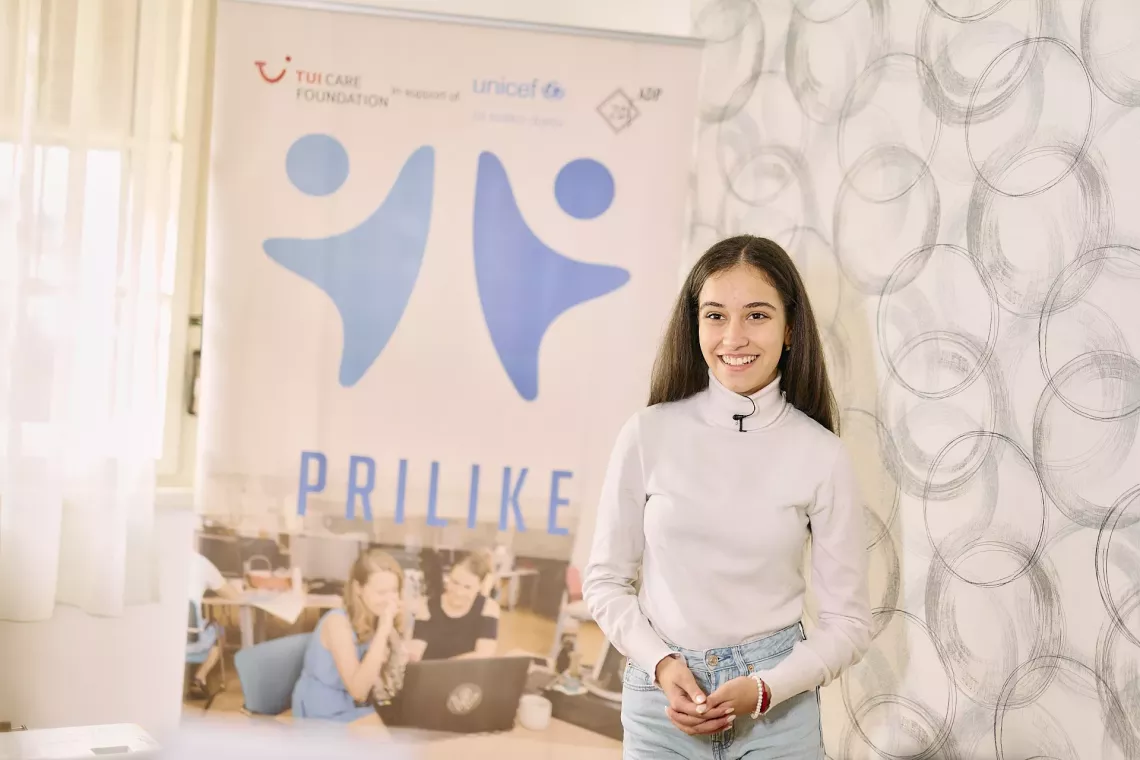
Podgorica, 25 November 2024 - The “Prilike” (Opportunities) programme has offered Mia Brajuskovic and Lazar Mikulic a unique chance to gain practical experience and discover what awaits them in the professional world. Through community work, Mia developed empathy and improved her communication skills, while Lazar realized that psychology is a broader and more creative field than he had previously imagined.
As part of the programme, implemented by the NGOs “Centre for Youth Education” and “ADP Zid”, with UNICEF’s support, secondary school students across Montenegro are given the opportunity to explore potential career and academic paths through practical experience. This initiative connects young people with the workplace, allowing them to develop essential skills that will benefit their lives and careers.
During her internship, Mia learned how to face the challenges of social work. Workshops with children became an opportunity for mutual learning about their rights, helping her understand the importance of tailoring her approach to the needs of others. This experience solidified her desire to work in the field.
“I hadn’t had a similar experience before, so I think this is truly an original opportunity that young people should seize. I feel that, after this internship, many things have changed—not in the sense that I no longer want to pursue this career, but quite the opposite—I want to pursue it even more.”
On the other hand, Lazar gained a realistic insight into the work involved in psychology—the profession he envisions as his future calling. Previously, his understanding of what it means to be a psychologist was limited, but he emphasizes that, thanks to his practical experience, he has come to appreciate the breadth, creativity and diversity of this field.
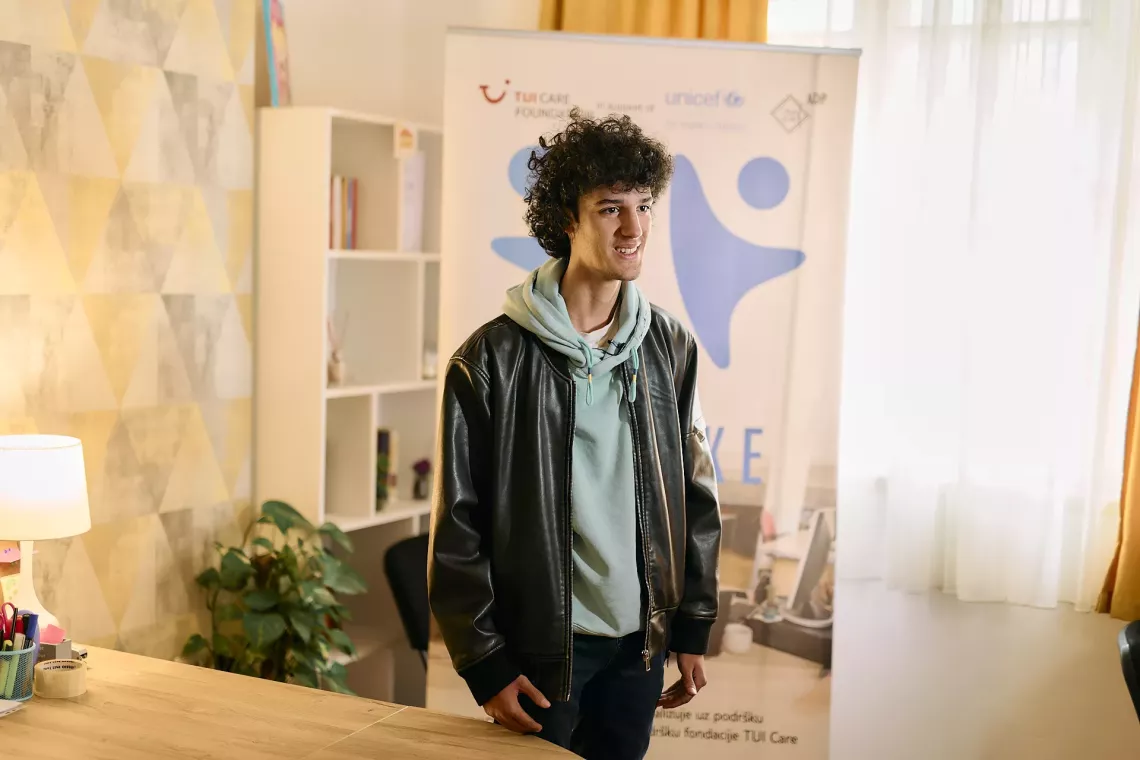
“After the internship, I realized that psychology is a much broader discipline, with many branches and specializations, and there’s a certain level of creativity that I would like to express.”
According to the European Commission’s 2024 report, 23% of young people aged 15–24 were unemployed in 2023, with as many as 72% of them searching for work for over a year. Programmes such as “Prilike” are key in equipping young people for the labour market and fostering a better environment to reduce these alarming statistics.
One of the programme mentors, Ljiljana Radisevic, stresses how crucial it is for young people to have the chance to explore various professions and better understand their potential.
“I’ve noticed that young people have started thinking more broadly about professions such as psychologist or special educator, no longer limiting them to institutions such as schools or hospitals, but considering wider possibilities, like human resources and working with people in general.”
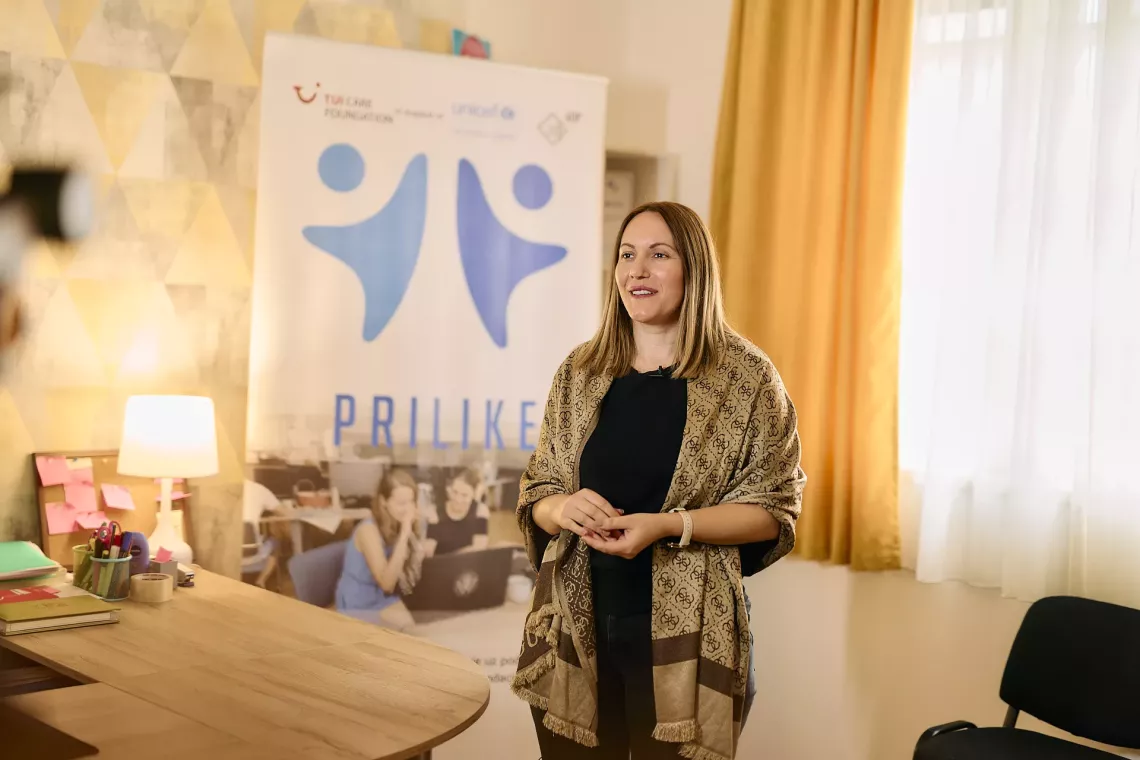
Milena Pajovic, a teacher at Slobodan Skerovic General Secondary School, believes that the programme helps young people apply their theoretical knowledge through practical experience.
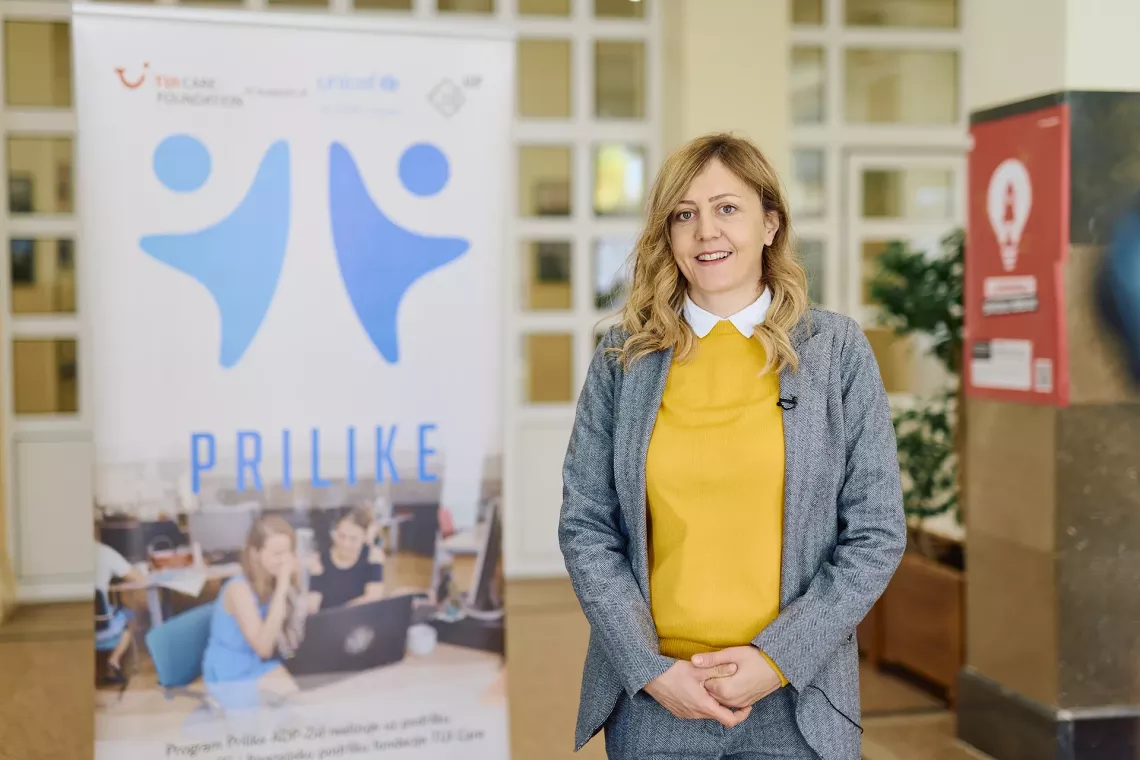
“The ‘Prilike’ programme empowers and encourages young people to use the theoretical knowledge they’ve gained in secondary school in a practical way, since formal education doesn’t provide many opportunities for this. This programme allows them to test out potential careers, helping them either solidify their ideas or redirect their focus to other areas of interest.”
With UNICEF´s support, the program is now piloted in 8 high schools and the aim is to have it introduced in all schools in future.
“To support a smooth school-to-work transition, we need to provide youth with 21st Century skills and create opportunities for them to explore diverse jobs. Practical experiences are key to helping them choose education and career paths best suited to their potential", UNICEF Montenegro Representative Michele Servadei points out.
The “Prilike” programme shows that quality education goes beyond theoretical learning—it includes providing young people with the opportunities to explore their potential, gain practical experience and actively prepare for their future.