Schools to be the last to close and the first to reopen
The WHO and UNICEF welcome the decision by the authorities to keep schools open

- Crnogorski
- English
- Shqip
PODGORICA, 6 December 2020 – The WHO and UNICEF welcome the decision by the authorities to keep schools open in line with the available evidence from the global and regional levels that schools can be safe places which do not contribute to a rise in COVID-19 infections, if they are operated in line with all the preventative measures.
The central issue in decisions on school opening is not whether schools should reopen or not, but rather of how to proceed with safer schools. On one side, we need to understand the public health risks incurred, not only for the children, but for the entire community. On the other side, we cannot ask our children to press the pause button on their lives as we continue responding to COVID-19. Our actions must target the virus, not the children.
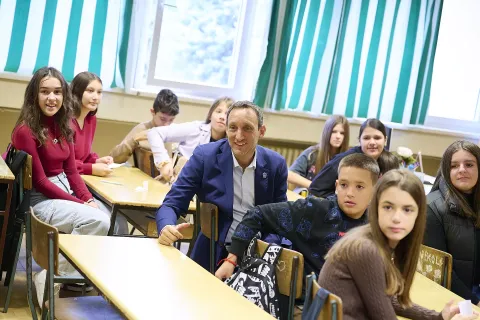
She adds that it is encouraging to see that children, parents, teachers, schools, the Institute for Public Health and the Ministry of Education are ensuring that protective measures are being respected.
The WHO and UNICEF remind that the majority of adolescents are still out of school and that this situation needs to be addressed urgently. Further work is needed to bring back to school thousands of adolescents who are currently learning online and are only able to go to school for consultations and assessments, which do not offer structured learning or peer interaction.
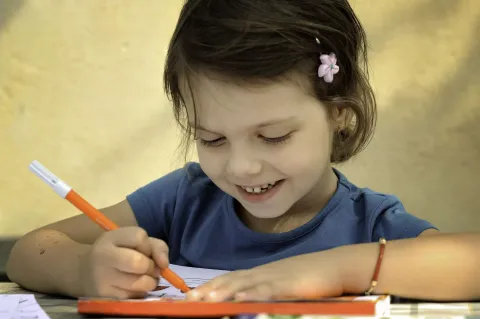
All children, including adolescents, need to be provided with opportunities to go to school in person, to avoid a significant learning loss and a negative impact on their mental health. A learning crisis already existed before COVID-19. Now, there is a risk of an even greater crisis combined with a spike in mental health issues among adolescents. For this reason, UNICEF is calling for schools to be the last to close and first to reopen for all children and adolescents.
Since September, the WHO and UNICEF have been advocating for the decisions on reopening schools and on the ways to organize education in Montenegro to be made by each school in cooperation with health professionals, teachers, parents and students. As the situation is not the same in every school and local community in Montenegro, the same model will not work for every school or every child. A nationally representative survey with school staff, together with regular consultations with health authorities, students, parents and teachers can lead the way to improving the quality of education for every child during the COVID-19 pandemic.

Most parents in Montenegro support UNICEF and the WHO’s appeal to keep schools open. According to nationally representative research conducted by Ipsos with support from UNICEF and the UK Embassy in September, more than half (54%) of Montenegro’s parents prefer children to attend classes in schools during the pandemic. Almost a third (31%) would opt for combined learning at school and online. Thirteen percent would choose only the distance-learning model.
UNICEF and the WHO remind of the need for each school to take into consideration the digital divide when making plans for quality, inclusive education during the COVID-19 crisis. Two-thirds of the world’s school-age children – that is 1.3 billion children aged 3 to 17 years old – do not have an internet connection in their homes, according to the new joint report How Many Children and Youth Have Internet Access at Home published by UNICEF and the International Telecommunication Union (ITU) on 1 December. In Montenegro, 16 percent of families with children up to 18 years old lack access to a computer or a laptop connected to the internet. The digital divide is perpetuating the inequalities that already exist, as children and young people from the poorest households are falling even further behind their peers and are left with very little opportunity to ever catch up.
The WHO and UNICEF underline that further evidence is needed on the key environments and behaviours which are contributing to the spread of the infection in Montenegro. For this reason, the WHO and UNICEF have agreed with the Institute for Public Health to gather evidence on how COVID-19 spreads in Montenegro, through a small-size epidemiological outbreak investigation – also including schools, universities, hospitality sector, private homes, etc. The Institute for Public Health’s analysis of where and how COVID-19 is mostly spread in Montenegro will help raise the quality of the public debate on COVID-19 by making it scientifically more founded. It can also help improve the measures, as they would be based on potentially new insights from the analysis.