Doubts about vaccines most prominent in the south of Montenegro
Key findings of the Multiple Indicator Cluster Survey (MICS) on the rights of children and families in Montenegro for the southern region of Montenegro presented in Tivat

- Crnogorski
- English
PODGORICA, 18 NOVEMBER 2019 – As part of the activities celebrating 30 years of the UN Convention on the Rights of the Child, UNICEF Representative to Montenegro Osama Khogali, Director of the Statistical Office Dr. Gordana Radojević and Deputy Director of the Public Health Institute Dr. Senad Begić, presented the key findings of the Multiple Indicator Cluster Survey (MICS) on the rights of children and families in Montenegro, conducted in 2018, at a regional conference held in Tivat on Monday 18 November.
The MICS is the largest survey after the national census, conducted with the support of UNICEF across the globe every five years, with the aim of collecting statistically reliable and internationally comparable data under a set of indicators in the areas of health, education, child development and the living conditions of children and families.
Surveys help us to learn more about the society we live in. I am convinced that the MICS survey has helped us to identify the positives and, more importantly, the negatives in this society regarding the position of women and children in Montenegro. I am sure that the results we are presenting today will be an additional impetus for continued effort to improve the living conditions of women and children in our society.
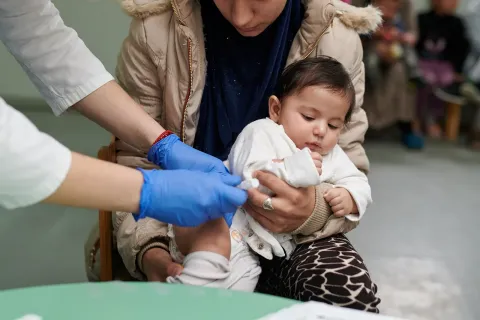
At the regional conference held in Tivat, the key survey findings for the southern region of Montenegro were presented, showing that the situation in the south is more challenging than the one in other regions when it comes to attitudes regarding vaccination of children. Namely, the south is characterized by the largest share of people aged 15–49 who believe that vaccines cause serious side effects in children – one in four persons believe this is the case in this part of the country.

“The fact that 25.8% of respondents in the south believe that vaccines lead to severe adverse effects indicates only that there is a certain amount of misunderstanding of the importance of vaccination and a misperception of vaccines’ safety profile. Although the science sector is clear and although the data is more than accurate and although we know that vaccines are among the safest procedures in contemporary medicine, it is obvious that parents in the south need to be additionally empowered and educated to gain access to the correct facts and make the right decisions in the best interests of their children without having second thoughts,” Begić indicated.
When it comes to healthcare, the MICS data points to another priority for the south: increasing breastfeeding rates. Namely, only one in five newborns are breastfed during the first hour after birth in the south of Montenegro, with the national average amounting to a rate of one in four.
Given that 98% of births take place in hospitals, low breastfeeding rates in the first hour after birth come as a warning that it is necessary for healthcare staff to engage more in supporting mothers to start breastfeeding immediately after giving birth.
In the south, every second child attends kindergarten, which corresponds to the national average.
“The successful cooperation between educational institutions and families ought to continue, so that the share of children attending preschool education increases even further in the future. Every child is entitled to preschool education. For this reason, this has to remain a priority in the reform of the educational system of Montenegro,” Khogali indicated.
Just as was the case with the previous one, this MICS survey included a separate survey for households in Roma settlements.
Data on children living in Roma settlements shows that they face the same challenges as children in other parts of the country, while being additionally deprived because of early marriages, lower rates of attendance of primary and secondary education, higher poverty, etc. Therefore, extra attention must be paid to these children, because all children have equal rights.
Data obtained from the MICS survey is used to assess Montenegro’s progress in achieving the Sustainable Development Goals and the objectives of the relevant national strategy, as well as the country’s progress in implementation of the UN Convention on the Rights of the Child. This survey was last conducted in Montenegro in 2013.
The MICS survey conducted by MONSTAT in Montenegro in 2018 with the technical assistance of UNICEF and the financial support of the Government of Montenegro, UNICEF and UNHCR clearly points to areas in which further work is needed, and these are primarily related to early childhood development, protection of children from violence, education, health and life in a clean environment.