Voices Rising from the Valley
Youth Advocates of Darkhad

- English
- Mongolian
Reaching Mongolia’s Remote Corners
In the far north of Mongolia, the Darkhad Valley rests between mountains and lakes, where winter temperatures often fall below -50°C. The vast distance between settlements and the harsh terrain make it one of the country’s most remote regions. Yet, amid the snow and silence, young voices are beginning to rise — voices that want to shape their future.
In October 2025, UNICEF Mongolia, in partnership with the Department for Child and Family Development and Protection of Khuvsgul Province and the Mongolian Children’s Council, organized a Youth Advocacy Guide Training in Renchinlkhumbe soum. Fifty children from Renchinlkhumbe, Ulaan-Uul, and Tsagaan-Nuur soums came together to learn how to identify local challenges, express their ideas, and turn them into advocacy campaigns that can bring real change.

From Shyness to Confidence
Among them was 16-year-old M. Shinesaran from Renchinlkhumbe soum, an 11th-grade student who loves volleyball and traditional dance. “I am a shy person,” she admits with a smile. “So I wanted to be more open and meet more friends at this workshop. I am already making friends.”
But Shinesaran’s goal goes beyond friendship. She wants to advocate for the completion of her school building—construction that began when she was in fifth grade and still stands unfinished. “I would love to study in the new school before I graduate,” she says. “And it would be great if our soum had a ski resort. Many kids here love skiing!”
Shinesaran’s voice represents hundreds of young people across Mongolia who are learning that advocacy begins with seeing a problem and daring to speak about it—a key principle of UNICEF’s Youth Advocacy Guide.
Speaking Up for Warm Classrooms
Fifteen-year-old U. Munkh-Orgil from Tsagaan-Nuur soum dreams of a school gym that isn’t freezing in winter. “I love volleyball,” he says, “but sometimes it’s too cold to play. The gym is heated by a wood burning stove, but we wish we had a proper heating system.”
He also wants better dormitory facilities—running water and toilets that work all year round. For Munkh-Orgil, advocacy starts with simple, practical needs that affect students every day. Learning how to express these needs clearly and confidently is the first step toward change.


Finding Strength in Collective Action
For 17-year-old M. Munguntsetseg rom Ulaan-Uul soum, the training was transformative. “Grown-ups never listen to us seriously,” she says. “They see us as kids. This training helps us learn skills and strategies to talk to adults and make them understand our opinions.”
The Youth Advocacy Guide was developed in 2018 through workshops and virtual engagements led by young people across Africa. Organized by UNICEF Africa Services Unit and Youth@SAIIA, these sessions brought together around 60 youth from Côte d’Ivoire, Kenya, Mozambique, and Uganda. Because it was created by young people themselves, the guide closely reflects their real needs, priorities, and lived experiences.
The guide uses peer-led facilitation—young people teaching and supporting one another. “It makes the sessions engaging,” says one trainer. “When children lead discussions, everyone feels safe to share ideas.”
From Training to Action
Over 700 children have now been trained nationwide through UNICEF’s Youth Advocacy Guide. Many have already begun transforming their ideas into community projects.
One remarkable story comes from 16-year-old B. Khaliun in Must soum, Khovd province. After completing her training, she and a friend launched the project “Healthy Diet is the Root of Life.” They reached more than 2,000 people—over half of their community—through workshops and local campaigns promoting nutritious eating.
“Before, many children skipped breakfast or ate only instant noodles,” Khaliun says. “Now, we see shops selling healthier options and more families cooking balanced meals.”
Her success shows how local youth-led initiatives can achieve impact on their communities when backed by strong advocacy skills.

Empowering Voices, Inspiring Change
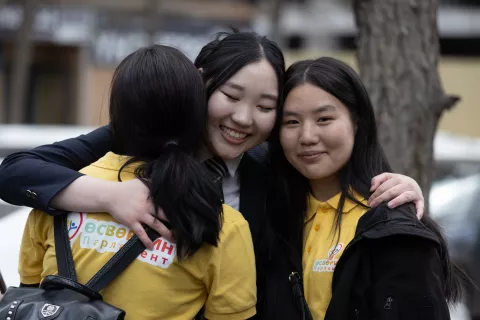
By the end of the training in Renchinlkhumbe, laughter filled the air as new friendships blossomed. Children shared stories, performed dances, and presented their advocacy ideas to local leaders. Some wanted better learning facilities, others dreamed of clean dorms, safe roads, or more cultural activities.
What connected them all was a newfound belief: their voices matter.
As the snow began to fall on the Darkhad Valley, Shinesaran looked around the circle of new friends and said, “Maybe one day, I’ll see our new school built—and know that we helped make it happen.”
Through UNICEF’s partnership with local governments, the Mongolian Children’s Council, these young advocates are not just learning about leadership—they are living it.
In the most remote corners of Mongolia, the seeds of advocacy are taking root, proving that when children are empowered to speak, communities listen—and change begins.