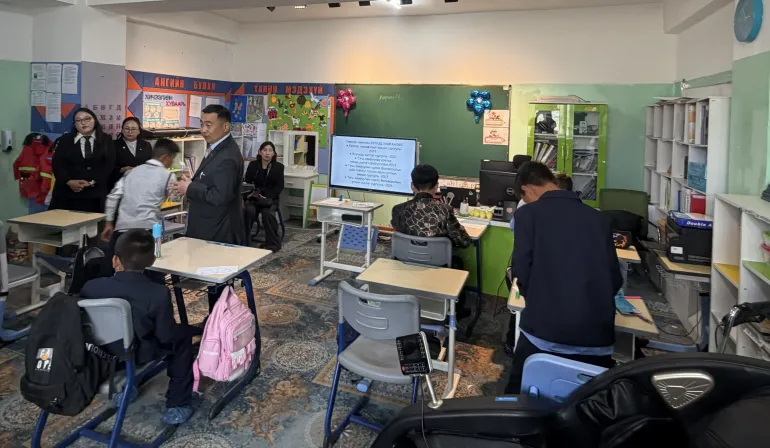
In Mongolia’s northernmost Khuvsgul province, the Sod-Erdem School in Murun soum is creating new opportunities for children with disabilities—not only to learn, but also to communicate, make friends and discover their abilities.
ince opening in 2016, the school has grown into a community of more than 1,200 students. At its Child Development Center, children who need additional support receive tailored educational and developmental assistance from teachers, social workers and other members of the school support team. With support from UNICEF Mongolia, the center has also been equipped with learning and therapeutic materials designed to make the environment more accessible and responsive to children’s individual needs.
For families, the difference can be deeply personal.
“He can talk about his day now”
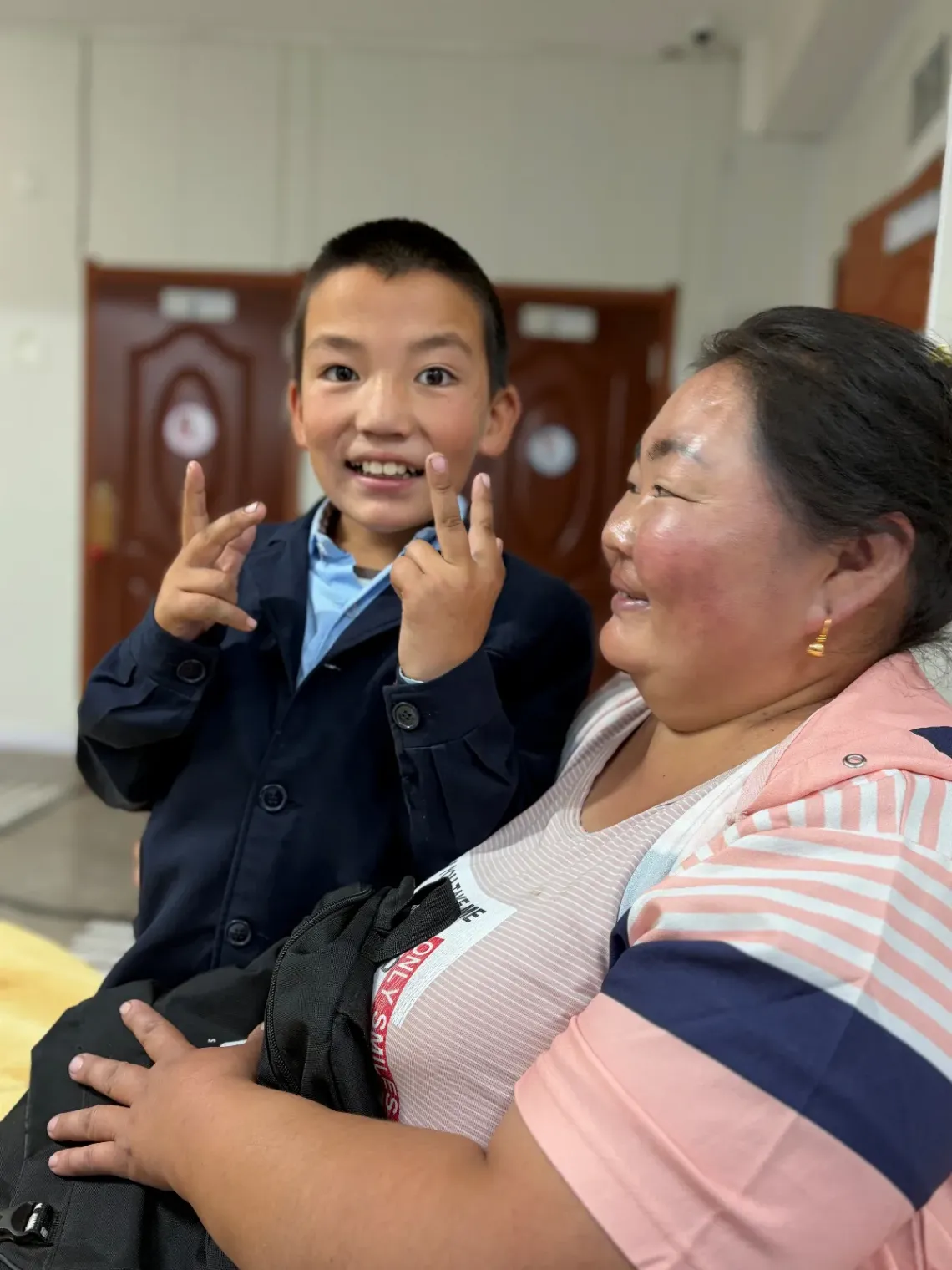
For 9-year-old M. Myagmar-Ochir and his mother, Ch. Enkhjargal, the journey to better learning opportunities began when their family moved from Tsagaannuur soum in Selenge province to Murun.
Myagmar-Ochir had experienced speech difficulties from an early age. At his previous school, he struggled to keep up in class, while teachers did not have the specialized support needed to help him learn. According to his mother, he was unable to read or write.
After enrolling at Sod-Erdem School, Myagmar-Ochir began attending the Child Development Center after school, where teachers and social workers provide support tailored to each child’s needs.
His mother says she has seen a remarkable change.
“He now can communicate with us. He can talk about his day, tell me what he wants. Before, he could not even say a few words. I am amazed!”
For Myagmar-Ochir, the center has become more than a place for additional learning. He enjoys coming every day, has made friends and discovered a love for drawing.
“He loves coming to the center every day. He is even making friends. He loves to draw. He is drawing pictures and he is getting good at it. I am so happy,” his mother says.
A place to discover new abilities
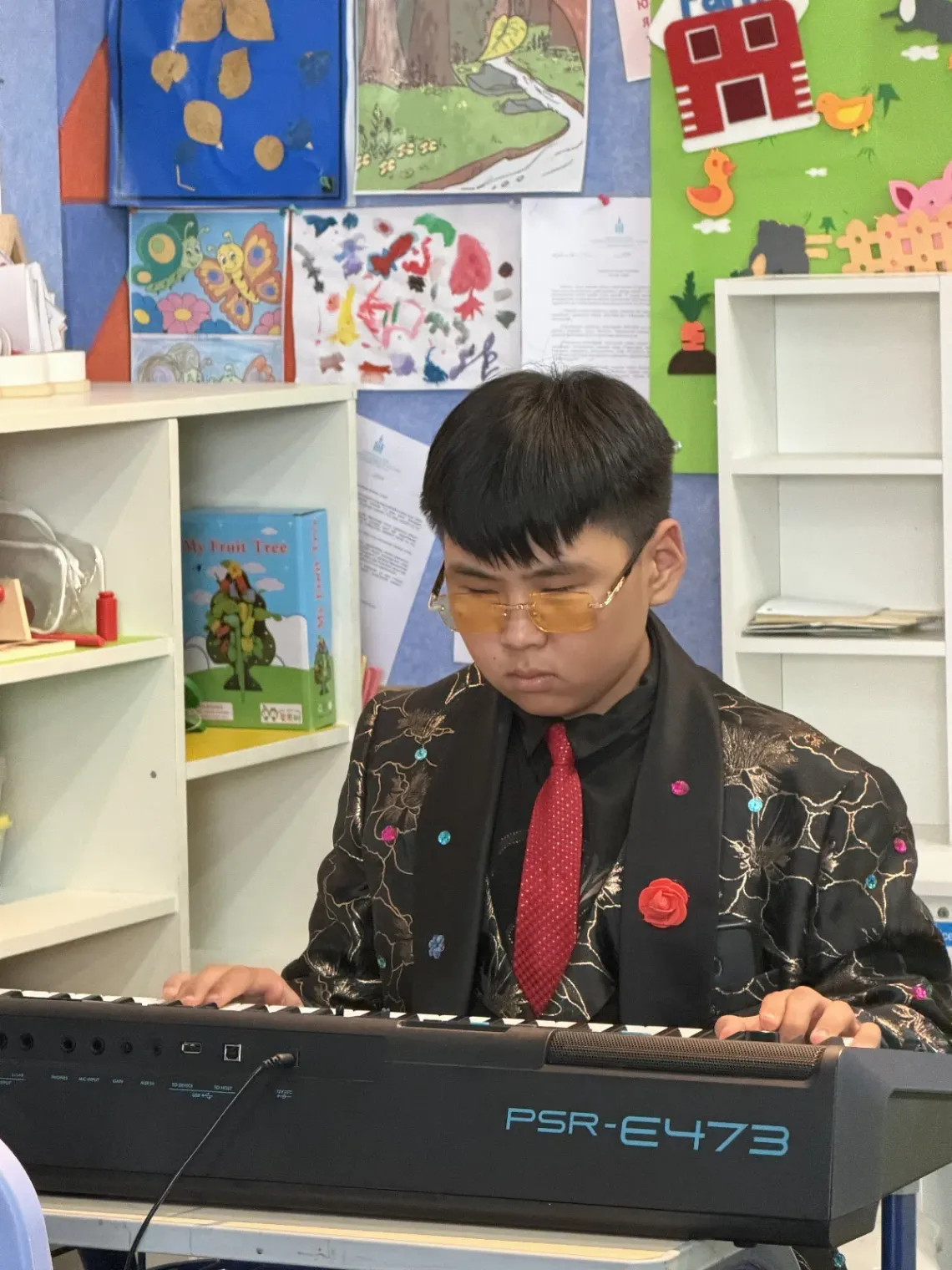
For another family, the center is helping 8th-grade student B. Gantulga pursue something he loves.
Gantulga has 90 percent vision loss and has undergone several surgeries. While he continues to require specialized medical care, the Child Development Center has given him a place where he can learn, socialize and develop his interests.
He loves music and has been learning to play different musical instruments at the center.
His mother, D. Narantsetseg, says she is grateful that her son has access to a supportive space within his school where he can meet other children and develop his interests.
For children like Gantulga, opportunities to participate, connect with peers and explore their interests are an important part of growing with confidence and a sense of belonging.
Support that meets every child where they are
At Sod-Erdem, children who attend the Child Development Center continue to participate in regular classes alongside their peers, while receiving additional support when they need it. The school brings together teachers, a social worker, psychologist, school doctor and other staff to understand each child’s learning needs and provide appropriate support.
“Each child has their own pace and way of learning,” says Tserenkhand, the school’s special education teacher. “Our goal is to provide personalized support to ensure they don't just keep up but excel in their education.”
The center also helps children participate in school life beyond the classroom. They take part in art performances and other extracurricular activities alongside their peers, giving them opportunities to express themselves and showcase their talents.
Small changes, meaningful impact
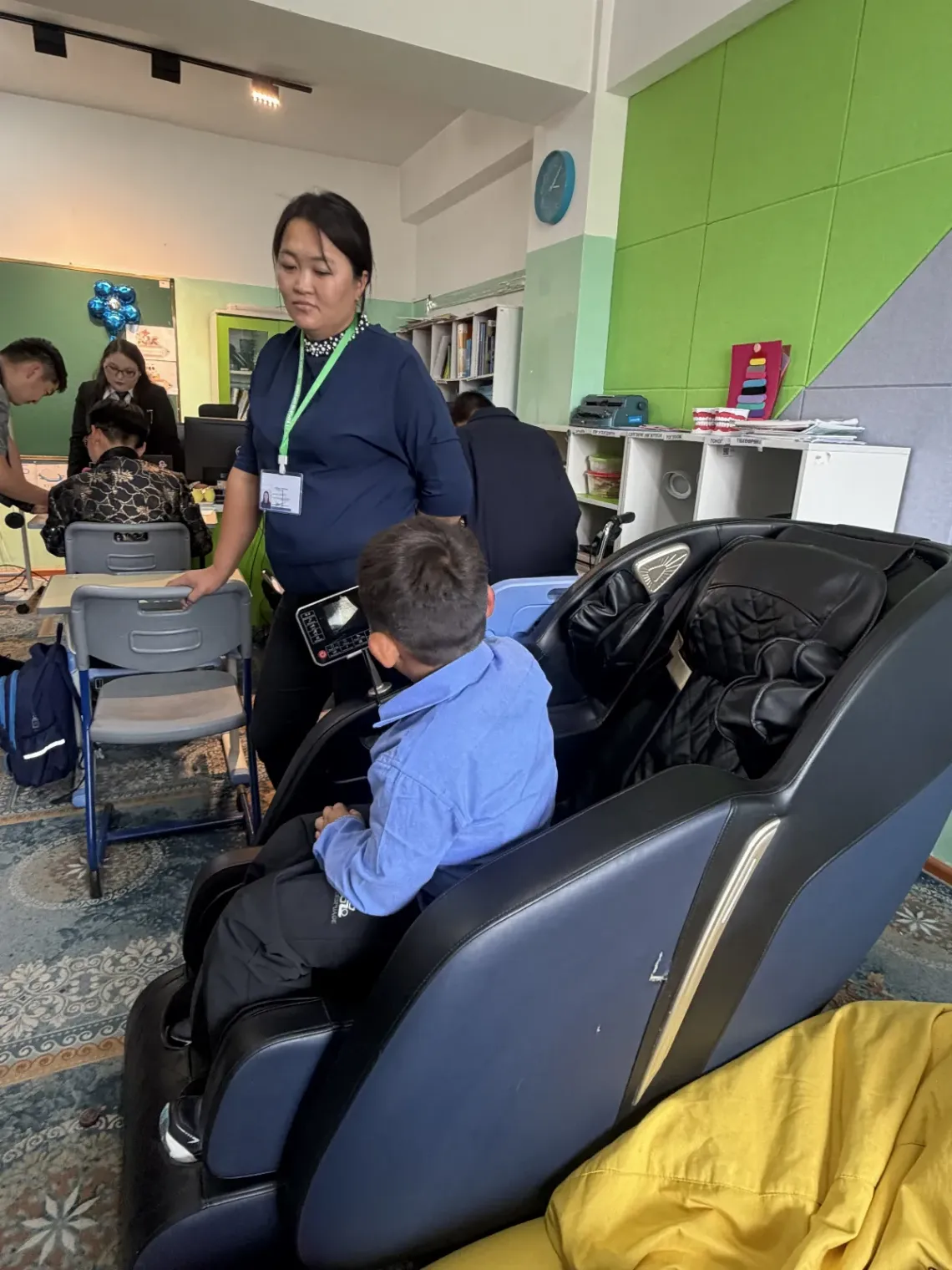
The learning environment has also been made more accessible through equipment and materials provided with UNICEF support. Adjustable furniture and smart TVs help children engage more comfortably with lessons, while other equipment supports children with different physical and sensory needs.
“These items have made a big difference,” says Tserenkhand. She notes that the massage chair, in particular, provides comfort and relief for some children with mobility challenges, helping them to participate more comfortably in their lessons.
For families such as Enkhjargal’s, however, the most meaningful changes are seen in everyday moments: a child being able to express what he wants, talk about his day, make a friend or discover something he loves.
At Sod-Erdem School, inclusion is not only about ensuring children have access to education. It is about creating a place where they can learn at their own pace, participate with their peers, build confidence and discover their potential.
For Myagmar-Ochir, that means finding his voice. For Gantulga, it means finding joy in music and friendship. And for their families, it means seeing new possibilities for their children’s future.