With support from the United States of America, Moldova introduces its first professional eye-tracking system for the early assessment of children’s visual function
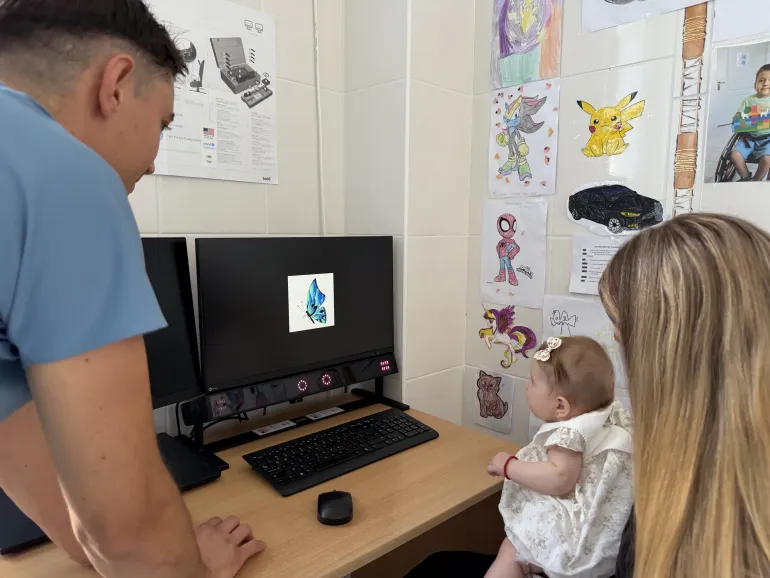
Chișinău, 2 September 2026. The first professional eye-tracking system in the Republic of Moldova designed to assess children’s visual behaviour and attention has been made available to the Republican Centre for Rehabilitation of Children (CRRC). The Tobii Pro Spectrum system, valued at approximately MDL 800,000, was procured with support from the United States of America as part of Phase II of the UNICEF project “Creation and Development of Early Intervention Services for Children with Developmental Disorders and/or Disabilities”, implemented by Lumos Moldova.
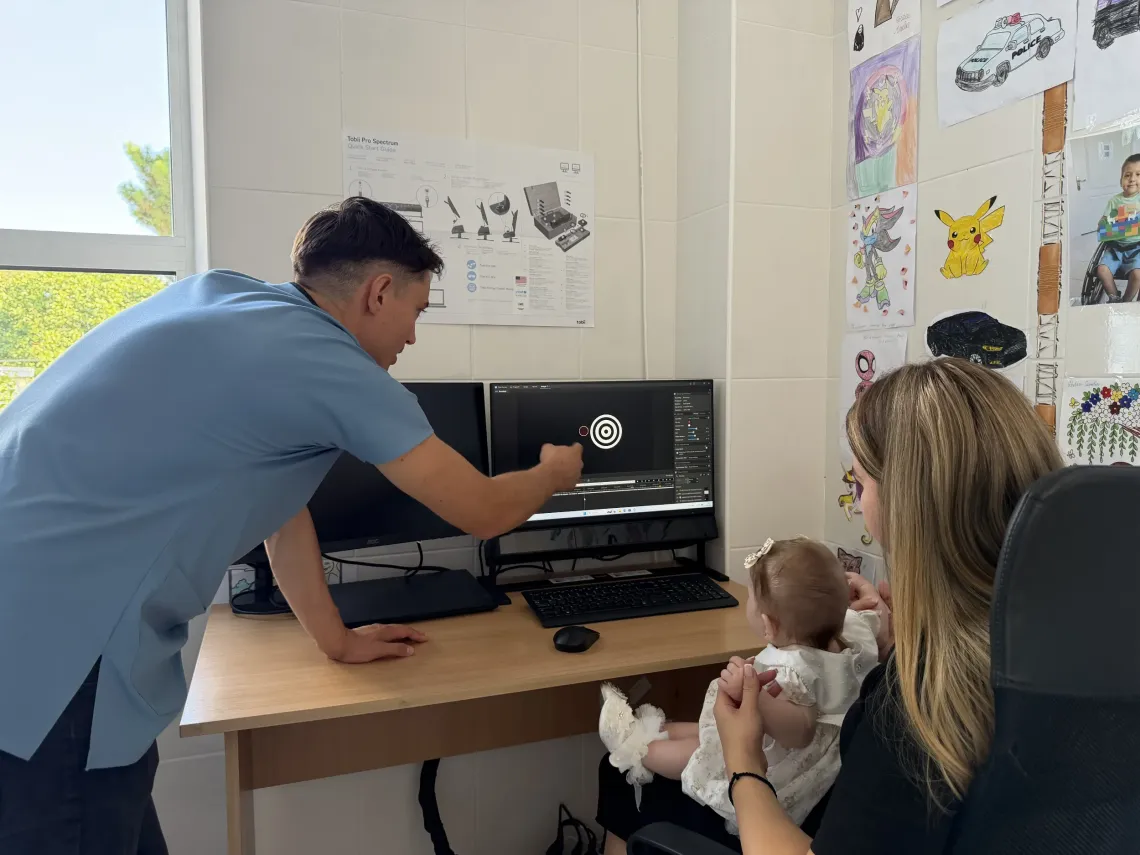
The new technology enables specialists to objectively record and analyse how a child looks at and explores different visual stimuli, including gaze direction, fixations and eye movements. The data obtained can contribute to the early identification of deviations from expected visual parameters and help guide children towards further assessments and specialized services when needed.
The assessment is non-invasive and does not require the child to wear glasses, a headset or sensors. The system allows for rapid calibration and can track the child’s gaze even when the child moves their head or changes position, making it suitable for assessing infants and young children. The technology can also provide information about visual attention, perception and certain early cognitive processes.
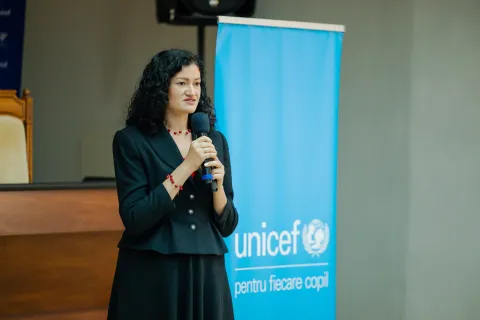
“Identifying difficulties as early as possible is essential to ensure that a child receives the support they need at the right time. This technology provides specialists with an objective and non-invasive method to better understand a child’s visual behaviour and attention and to identify situations where further assessments or early intervention are required. With support from the United States of America, we are helping strengthen the capacity of specialized services and collaboration between institutions so that children can benefit as early as possible from assessment and support tailored to their needs”, said Angela Capcelea, Health Specialist at UNICEF.
Currently, consultations and assessments using the new system are available to children aged between 3 months and 5 years who are beneficiaries of rehabilitation services provided by CRRC. The services are also accessible to refugee children in the Republic of Moldova when there is an indication for such an assessment. The assessment is relevant for children with visual impairments, disabilities, developmental disorders, attention and learning difficulties, as well as children enrolled in rehabilitation programmes.
If testing indicates that further investigations are required, the child will be referred for a specialized ophthalmological assessment. In this way, information obtained through eye-tracking technology can complement the child’s functional assessment and help guide them towards specialized rehabilitation and early intervention services.
“Aligning assessment, rehabilitation and early intervention services in the Republic of Moldova with European standards requires the implementation of modern diagnostic and intervention methods, such as Tobii Pro Lab, early diagnosis and the development of individualized rehabilitation programmes. These tools contribute to the early identification of difficulties and to optimizing interventions according to each child’s individual needs. Achieving these objectives requires an integrated approach and interinstitutional collaboration between medical, social and educational services and non-governmental organizations”, said Ecaterina Gîncotă, Director of the Republican Centre for Rehabilitation of Children.
Starting in September 2026, through institutional collaboration with the Mother and Child Centre, the service is expected to be expanded by referring to CRRC children who require assessment using this technology. Cooperation between medical institutions, health professionals and partner organizations aims to expand children’s access to modern assessment and rehabilitation methods and to strengthen referral mechanisms to specialized services.
“In Phase II of the UNICEF project ‘Creation and Development of Early Intervention Services for Children with Developmental Disorders and/or Disabilities’, implemented by Lumos Moldova, in addition to expanding the network of early intervention services across the country, we continue to contribute to strengthening national-level institutions that are part of the national early childhood intervention system. This time, we were able to procure this professional eye-tracking system, which will be used for the early identification of risks associated with the development of visual impairments and, consequently, to give specialists the opportunity to intervene in a targeted manner with the aim of reducing or even eliminating the identified risks through early intervention programmes. This is the first procurement under the project intended for the Republican Centre for Rehabilitation of Children, and once the equipment has been installed, the Centre’s specialists who will use it will also be invited to take part in training to ensure that the system’s capabilities are used to their full potential”, said Marcel Straton, Director of Lumos Moldova.
The introduction of Moldova’s first professional eye-tracking system at national level represents an opportunity to further develop early intervention and paediatric rehabilitation services in the Republic of Moldova. By using the system, specialists will be able to obtain objective data on children’s visual behaviour and attention, contributing to the early identification of risks, referral to the necessary services and the development of interventions tailored to each child’s individual needs.
Media contacts
About UNICEF
UNICEF promotes the rights and wellbeing of every child, in everything we do. Together with our partners, we work in 190 countries and territories to translate that commitment into practical action, focusing special effort on reaching the most vulnerable and excluded children, to the benefit of all children, everywhere.
For more information about UNICEF and its work for children, visit www.unicef.org
Follow UNICEF on Twitter, Linkedin and Facebook