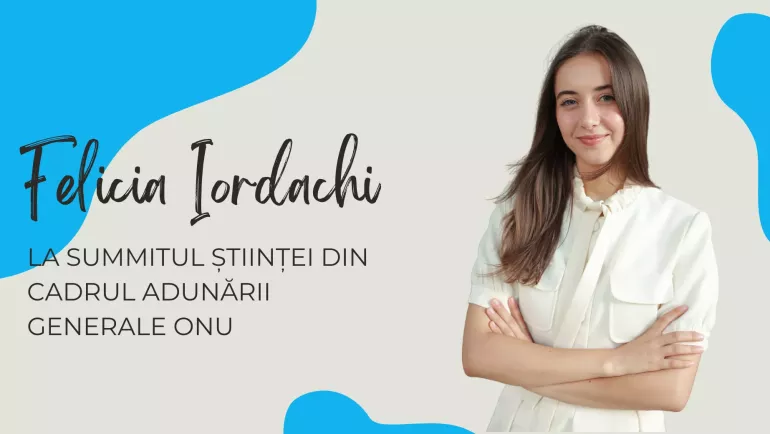
Felicia is a 19-year-old from Chișinău who is deeply passionate about biomedical sciences, a field that captured her interest since the 8th grade and has become a central part of her journey. During high school, Felicia focused on scientific research, volunteering as a researcher both in the USA and back home in Moldova. Recently, she represented the Republic of Moldova at the International Science and Engineering Fair (ISEF) with a research project in the field of bioinformatics, earning 4th place in the Biomedical Sciences category. This achievement propelled her directly onto the stage in New York at the Science Summit within the UN General Assembly.
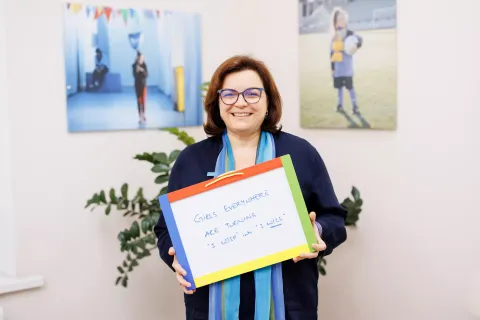
Felicia demonstrates that young people, including girls, can have a significant impact on the community when they have access to support and resources to pursue their passions.
We invite you to read Felicia's reflections following her participation in such a symbolic event for her and for girls across the country.
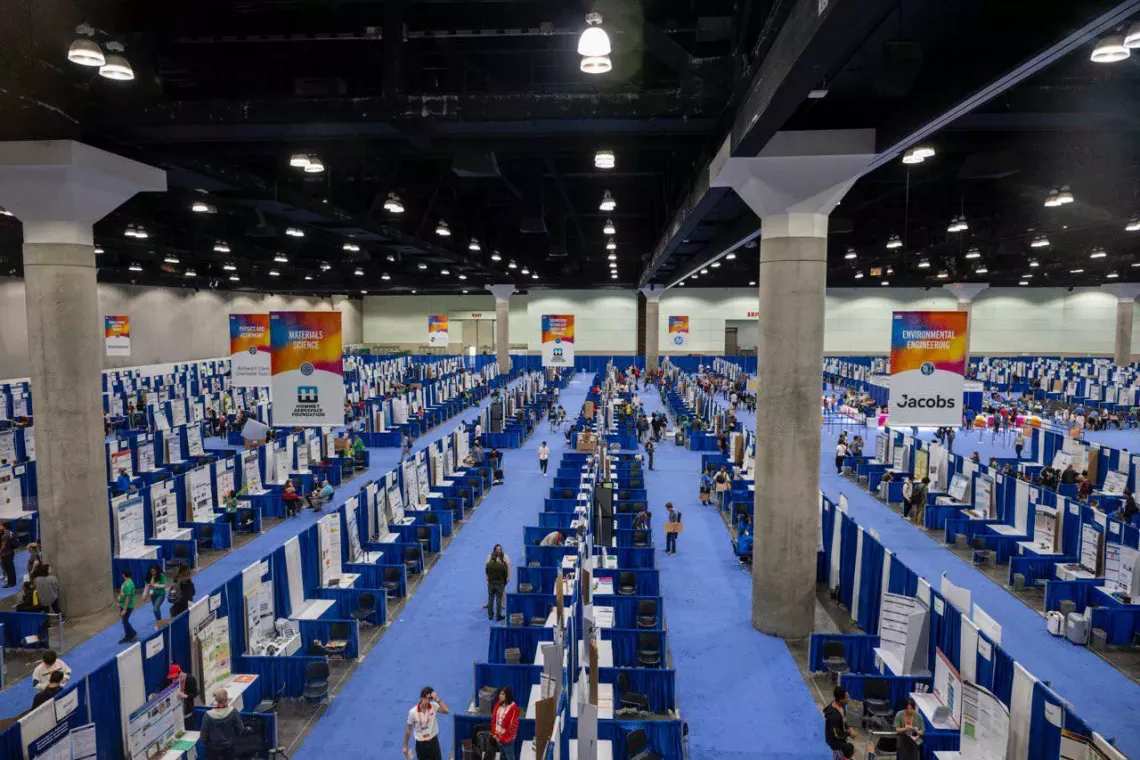
Probably one of the most beautiful experiences I've had so far was being in a room with over 2,000 young people who shared the same passion for science and the same strong desire to change the world around them. I lived this reality in May of this year at ISEF, the largest international science and engineering competition.
Although we were there to present the discoveries we had been working on for months, I was surprised by how many non-scientific conversations could be heard in every corner of the conference center. Everyone present had a common vision – science is not an end in itself, but a means through which we can contribute to improving society. Thus, the discussions I had with young researchers from all over the world quickly shifted from pure science to questions about global issues:
Who is responsible for managing the climate crisis?
What role does research play in protecting ecosystems?
How can artificial intelligence be regulated to be used ethically, especially in health and education?
I had the privilege of reflecting more deeply on these questions in September, when I participated from September 20-27, 2024, in the Science Summit within the United Nations General Assembly in New York. I had the opportunity to represent the Republic of Moldova at the Summit, both as a participant and as a speaker in the Youth Parliament session, dedicated to young researchers within the Summit.
I aimed to bring home the main topics addressed during the event, but especially to reflect on the involvement of young people in implementing major global initiatives of great importance for the entire world.
What is the Science Summit within the UN General Assembly?
The Science Summit within the UN General Assembly is an annual event that brings together leaders and innovators from around the world to discuss how science and technology can help solve current global challenges. Whether it's climate change, global health, or the energy crisis, the summit aims to find concrete solutions through which science can contribute to achieving the Sustainable Development Goals and implementing the UN's 2030 Agenda.
Additionally, the Summit seeks to bridge the gap between science and politics, ensuring that discoveries and research progress are used to create more effective and inclusive global policies in practice.
In this regard, the meetings held during this Summit were not just formal sessions but opportunities to openly discuss both big and small ideas about how each of us, regardless of age, field of activity, or experience, has a role to play in building a better future. I felt inspired by everyone present and returned home with an even greater desire to contribute to the change I want to see in the world.
At the end of the Summit, all the conclusions from the plenary sessions were compiled into a report and presented at the General Assembly at the UN headquarters to ensure that recommendations regarding the involvement of science in solving global sustainability issues are integrated into global political decisions.
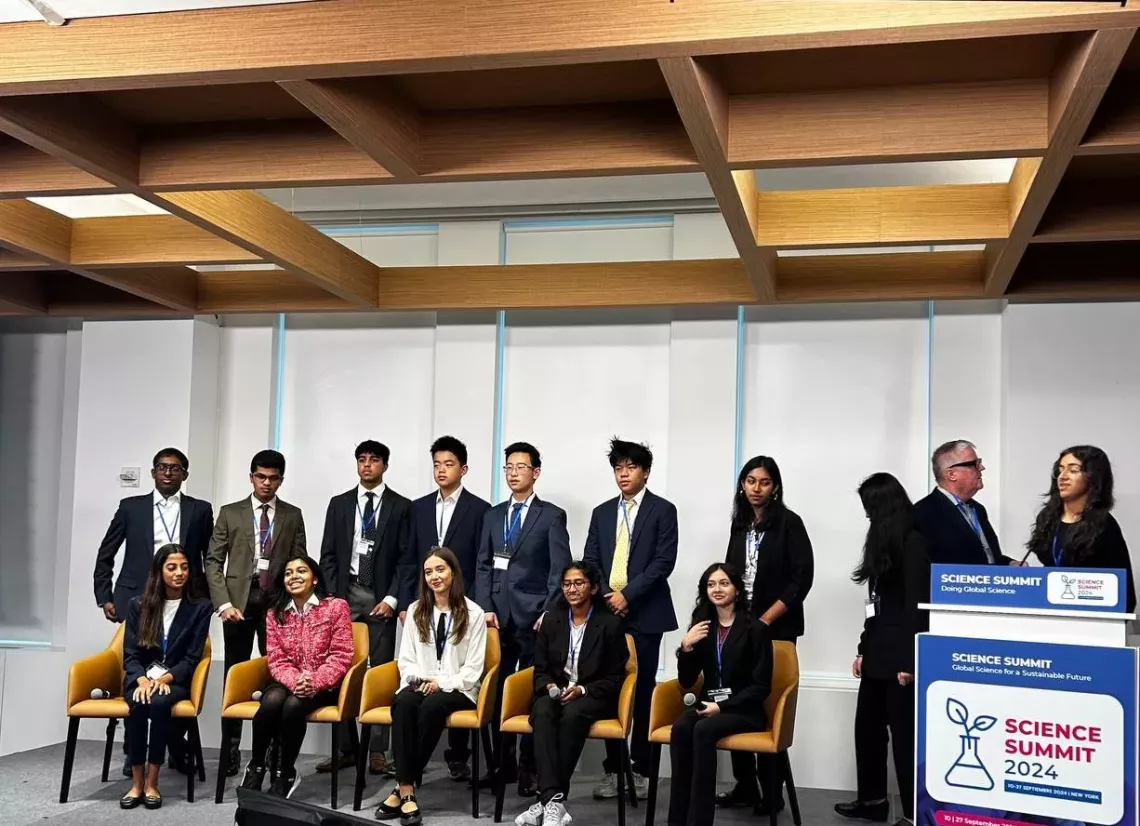
Science: The Catalyst for Change in the 2030 Agenda
Arriving in New York a few days before delivering my speech at the Youth Parliament, I wanted to make sure I didn't miss any opportunity to participate in the events within the Summit.
Here are some of the discussions I participated in, along with the conclusions I drew.
“The Unique Health Needs of Women and the Sustainable Development Goals (SDGs), a Call to Action”
This session focused on the need for the development of research in women's health, highlighting existing disparities and the need for greater representation of women in health-related decisions. Strategies were discussed to promote preventive healthcare and ensure that the specific needs of women are recognized and addressed globally.
Among the leaders of this discussion were Carolyn Harris, a member of the UK Parliament, Dr. Ru-Fong Joanne Cheng, representative of the Women’s Health Innovations team at the Bill & Melinda Gates Foundation, and Dr. Aisha K. Brooks, a captain in the U.S. Public Health Service.
Perhaps the most interesting part of the discussion was the opportunity to observe the reflections of these vocal women in the healthcare field on the fight to expand primary healthcare services, aimed at providing the necessary care to pregnant women and their children up to the age of 3.
“Collaborative Solutions: Financing the Landmark Initiative of the 16th Conference of the Parties of the UN Convention to Combat Desertification (UNCCD COP16) for Food Security and Sustainable Development and its Implications for the UN Future Summit”
This panel of discussions brought together experts in food security to discuss challenges and solutions in sustainable development. The first discussion addressed the importance of international collaboration in the face of the global food crisis. Later, participants explored topics such as digital agriculture and the financial impact of innovations in agriculture.
Among the speakers at this event were Professor Michael Kremer, Nobel Prize Laureate in Economics, His Royal Highness Prince Abdul Aziz Talal bin Abdul Aziz, the Minister of Environment, Water, and Agriculture of Saudi Arabia, and the Minister of Education of the Republic of Malawi.
The Voice of Young Researchers
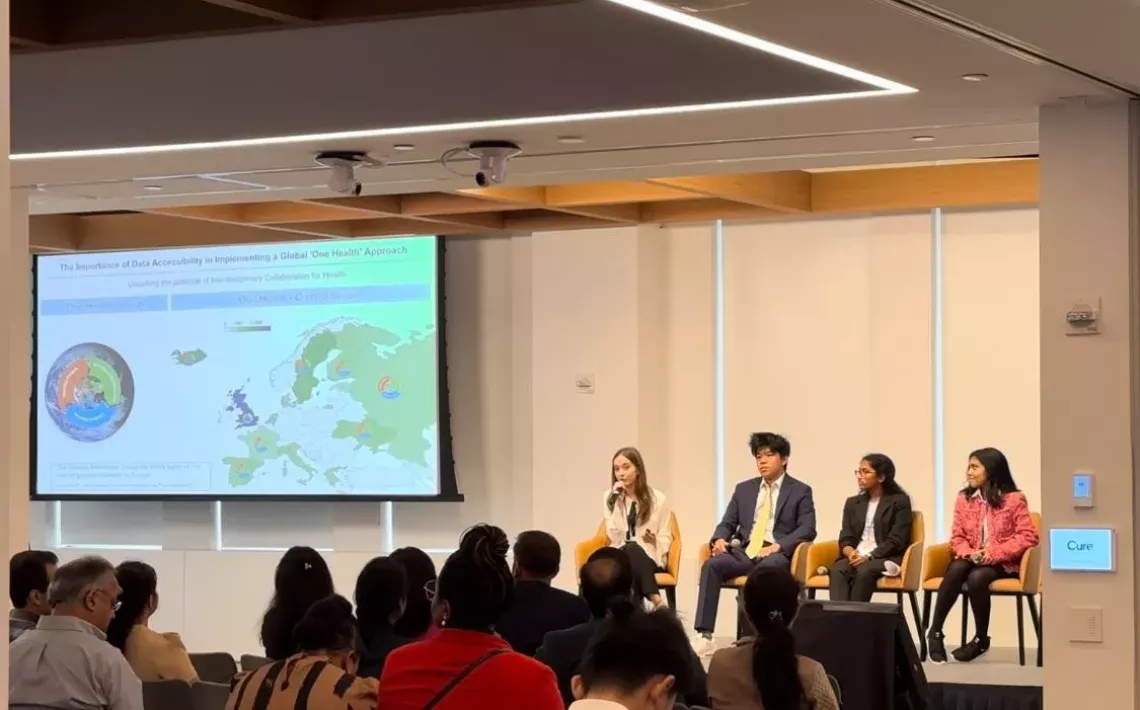
But the most memorable panel of that week for me was the Youth Parliament, where young researchers from all over the world — including Canada, the USA, Kuwait, and, of course, Moldova — gathered to discuss the essential role of young people in shaping scientific progress towards a more sustainable future. Each participant had the opportunity to present aspects of their research, highlighting what global policies could support them in making significant changes.
In my presentation, I talked about the One Health approach to global health issues. This concept proposes exploring the intersection between human health, animal health, and environmental health, and has become a strong focus of the UN Health Agency, particularly in global recovery after the COVID-19 pandemic.
Specifically, the topic I focused on was one of the key elements enabling the exploration of the One Health approach: the practice of openly sharing biological data globally.
The lack of data sharing in low- and middle-income countries leads to a research diversity deficit, and genomic data, which is essential for understanding diseases, is often limited to a few regions. The consequences of these shortcomings in data collection and sharing become even more pronounced when we reach the point where the lack of data prevents us from making informed decisions in creating the necessary policies and reforms in society. This issue is also closely addressed by the UNICEF team in Moldova concerning data that is essential for informing strategies, policies, and actions on cross-cutting issues affecting children, as part of UNICEF’s Country Program, in light of the Priorities in Children's Education. From this perspective, I was even more motivated to encourage the Youth Parliament participants at the UN General Assembly Science Summit to engage in a constructive debate on solutions for improving data collection and sharing.
I emphasized the need to promote greater openness and inclusion in scientific research through open access data policies, so that scientific practices do not become a privilege, but a norm for researchers everywhere, regardless of the level of local investment in the sciences in the countries where they work.
My passion for this topic undoubtedly stems from my personal experience as a young researcher from Moldova. Given the minimal investments in local research, the open-access datasets available online are often the key to maintaining the spirit of research at home. Free access to international databases, such as the Gene Expression Omnibus, allowed me, as a young teenager, to carry out small independent research projects even with limited resources in terms of research materials. For this reason, I believe it is my duty to continue advocating for open data sharing in science, so that as many young researchers with limited resources as possible can follow their curiosity and passion for science.
Conclusions and Final Thoughts
As for my personal experience...
It was incredible to spend a week among such diverse people, all deeply engaged in such varied fields — from science to politics, and even journalism. The opportunity to be in New York during the busiest month for global decisions — the month when the UN General Assembly and its related events take place — and to participate in discussions on how we can use science to improve the world, made me feel that, indeed, the voices of young researchers, especially young women, are being heard.
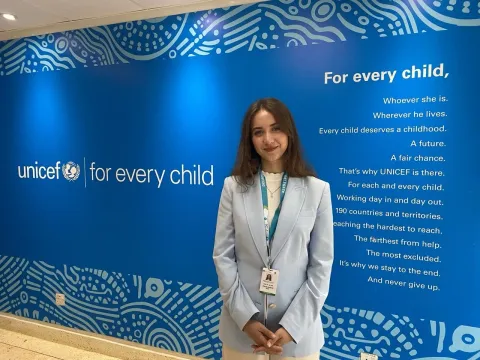
With the support of the UNICEF team in Moldova during this unique experience at the Science Summit at the UN General Assembly, I also realized that the National Youth Strategy 2030 of UNICEF’s Country Program, which aims to improve the ways adolescents can participate in shaping society, is continuously expanding. I felt proud and hopeful to see that young women passionate about science have the support they need at home to fulfill their dreams of contributing to the progress of society.
This experience showed me that, even though it sometimes seems like important decisions are made far from us, young people still have a voice and can make a significant contribution to the change the world needs.