Sahel crisis refugee outflow to Mauritania up by more than 40% in 2024, pushing children into greater vulnerability – UNICEF.

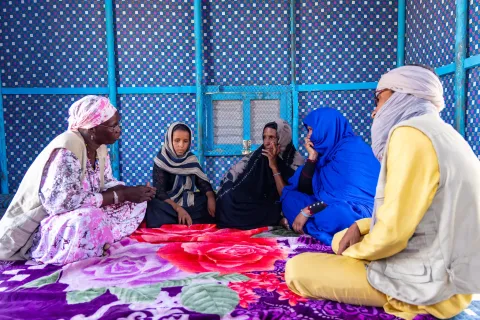
HODH CHARGUI, MAURITANIA, 14 December 2024 – On a visit today to families and children in Mauritania who have recently fled insecurity in Mali, UNICEF’s Deputy Executive Director, Ted Chaiban, expressed concern at the worsening crisis and the growing needs of children in refugee sites and host communities.
So far in 2024, an estimated 108,000 new arrivals from Mali have been recorded in Mauritania, 83% of whom are children and women. This means the Malian refugee population in Hodh Chargui now totals 260,000, including 110,000 settled in M’berra camp.
“The Sahel is at a critical juncture,” said Ted Chaiban. “Children across the region face a cascading crisis—one that threatens not only their survival but the stability of their communities and the future of the entire region. Addressing this challenge requires bold action, meaningful investments, and a shared commitment to breaking the cycle of vulnerability and building resilience.”
The displacement of Malian refugees to Mauritania began in 2012, but numbers had remained relatively stable until last year, when a re-escalation of the conflict in 2023 led to the arrival of more new refugees. This trend has continued into 2024, with the influx of refugees exceeding the capacity of the M’berra refugee camp and pushing many to seek refuge in host communities, placing immense strain on local resources such as education, healthcare, water, and child protection.
“The generosity of the Mauritanian government and communities is a beacon of hope, but it cannot sustain the growing needs alone,” said Mr. Chaiban. “This is a regional challenge that requires a regional and global response. The resilience of the Sahel depends on our ability to act decisively now.”
The Sahel crisis continues to deepen, leaving millions of children and families across the region in an increasingly precarious situation. According to data from ACLED, 876 attacks were recorded in the central Sahel (Burkina Faso, Mali, Niger) so far in 2024, leading to 3,913 deaths.
Conflict, mass displacement, and climate shocks have combined to create one of the most complex humanitarian emergencies in the world, with children disproportionately bearing the burden. During a visit to Mauritania, Ted Chaiban underscored the urgent need for a unified global response to address the immediate humanitarian needs while laying the groundwork for long-term resilience across the Sahel.
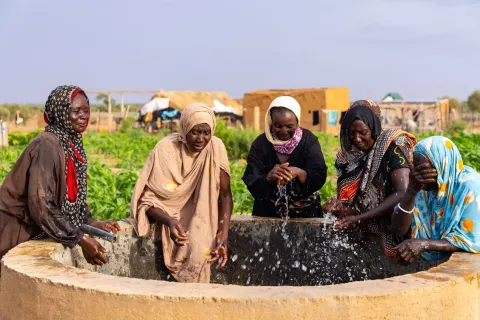
Programmes focus on providing safe water, rehabilitating schools, delivering health and nutrition services, and ensuring child protection.Among these, the BMZ-funded Sahel Resilience Programme, with its collaboration between UNICEF, WFP and GIZ, stands out with its holistic approach, addressing community needs through the triple nexus of peace, humanitarian action, and development. In Mauritania, these efforts aim to reduce the strain on host communities while fostering social cohesion and stability.
Despite ongoing efforts, significant gaps remain. The needs outlined for Mauritania in UNICEF’s Regional Humanitarian Action for Children Appeal (HAC) exceed $10 million, yet only 25% of the required funding has been secured. This critical shortfall reflects the broader funding challenges across the Sahel region, jeopardizing efforts to address both immediate needs and long-term challenges.
“Mauritania’s hospitality is a powerful reminder of the human spirit’s capacity for compassion,” said Mr. Chaiban. “But it’s not enough. The international community must step up—not just with short-term aid, but with sustained investments that create opportunities, strengthen communities, and ensure a stable future for the Sahel’s children.”
Contacts presse
À propos de l'UNICEF Mauritanie
L’UNICEF, un des principaux organismes d’aide humanitaire et de développement, travaille partout dans le monde en faveur des droits de chaque enfant. Les droits de l’enfant commencent avec un hébergement sûr, une bonne nutrition, la protection contre les catastrophes naturelles et les conflits et durent toute la vie : soins prénataux pour une naissance en bonne santé, eau propre et assainissement, soins de santé et éducation. L’UNICEF s’efforce depuis près de soixante-dix ans d’améliorer la vie des enfants et de leurs familles.