Toll-free line tackling social cash transfer complaints
New reporting system empowers communities to speak out against exploitation

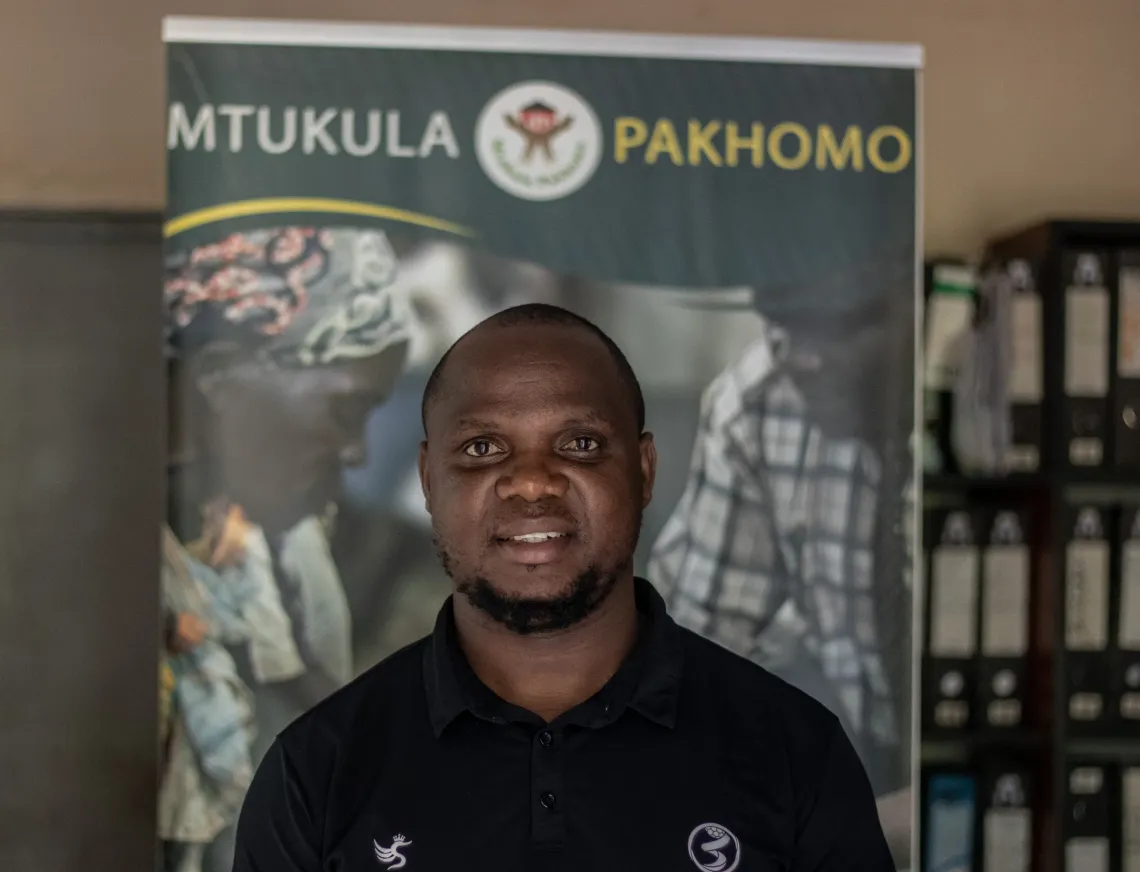
In Nsanje District, Abdul Razaki-Duwa has long grappled with a troubling reality: community leaders, entrusted with protecting the vulnerable, often exploit them instead. As the district’s social welfare officer, Duwa has seen how some leaders pressure beneficiaries of the Social Cash Transfer (SCT) programme to surrender part of their cash assistance—a practice known as “forced sharing.”
“Four out of every five cases I handle involve this kind of exploitation,” Duwa says. “The very people meant to protect the vulnerable become the ones exploiting them.”
To address this, the government introduced a toll-free line—351—under the National Social Protection Call Centre. This initiative, part of the Harmonised Grievance and Redress Mechanism (HGRM), provides a safe, anonymous way for people to report grievances across social protection and other development programmes.
The impact has been significant.
“Since we rolled out this system and included the call centre option, I have noticed a real change,” Duwa notes. “Cases of forced sharing are finally starting to reduce.”
In the past six months, Duwa’s office has handled 124 cases, 28 of which came directly through the call centre.
Reports now arrive instantly via phone or email, enabling faster response times.
“We aim to resolve each case within 14 days,” he says. “But sometimes communities shield perpetrators out of fear of being removed from the beneficiary list.”
In Lilongwe, Tanyada Sadwala is one of 10 full-time operators at the call centre, which receives more than 100 calls daily from across Malawi.
“Most calls are about payment delays, but many involve committee members demanding money from beneficiaries,” she explains.
Operators like Sadwala assess each complaint, resolving what they can on the spot and referring more complex cases to district officers like Duwa.
“Before, it could take months to resolve a single issue,” she says. “Now, help is just a phone call away.”
The system has not only improved efficiency but also restored dignity to the process.
Natasha Mtika, Chief Social Welfare Officer for SCTP case management at the Ministry of Gender, Children, Disability and Social Welfare, says the call centre has transformed how people engage with social protection services.
Previously, people felt they couldn’t speak up, and many suffered in silence. Now, beneficiaries feel safe discussing sensitive issues like sexual harassment and abuse, knowing they won’t be judged or discriminated against.
The call centre is a cornerstone of the HGRM, established by the Ministry of Finance, Economic Planning and Decentralisation. It is supported by UNICEF through the Social Protection for Gender Empowerment and Resilience (SP-GEAR) programme, funded by the European Union and the Embassy of Ireland. UNICEF also helps raise awareness and build district-level capacity to implement standard procedures for addressing grievances.
Complementing the national call centre are community-based Harmonised Grievance and Redress committees, which provide additional channels for addressing complaints and ensuring accountability.
For Duwa, the system represents more than just a reporting tool—it’s a turning point.
“This isn’t just about resolving complaints,” he reflects. “It’s about restoring trust. When people know they can speak up and be heard, it strengthens the entire programme. That’s the kind of change we are seeing.”