Regina anchors her husband and six grandchildren
She owns productive assets to sell during rainy days

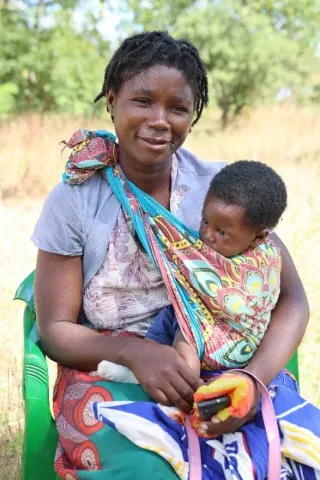
The prolonged dry spell that scorched parts of Southern Malawi in January and February has not spared 62‑year‑old Regina Benard of Kamulupa Village, T/A Nkapita in Zomba. Yet, even as her maize crop wilts under the unforgiving sun, Regina remains calm. She has built a safety net—one she never imagined possible a year ago.
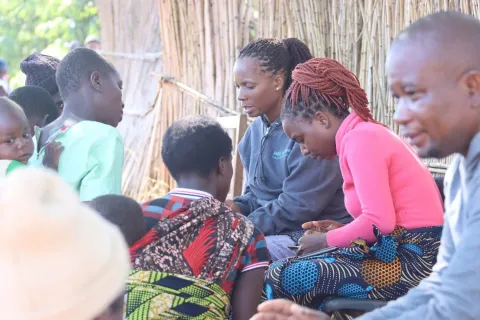
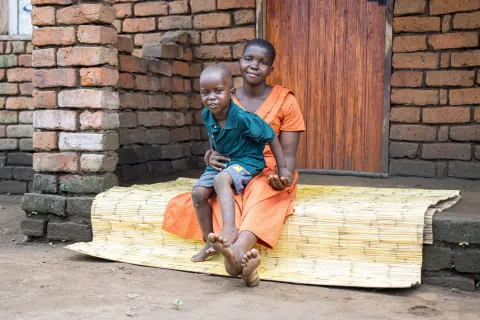
Regina cares for six grandchildren and a husband living with a disability. For years, the family survived hand‑to‑mouth. But things began to change when she enrolled in the Social Cash Transfer Programme (SCTP) and joined a village savings and loan association (VSLA) through the Social Protection for Gender Empowerment and Resilience (SP‑GEAR) programme, also known as Amai Titukuke.
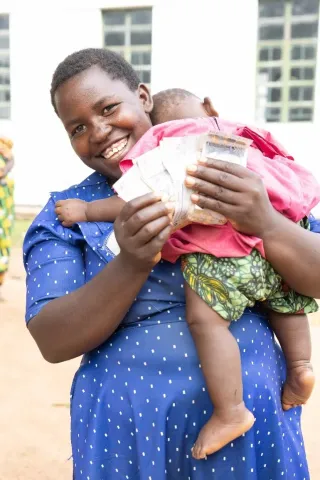
“Since joining the programme in January 2025, I have accessed a total of K306,000 in assistance,” she says with pride. “I also bought shares in my VSLA and accessed loans.”
With the cash transfers and savings, Regina invested in a garden along the banks of the Shire River, where she grows vegetables year‑round. Most customers buy directly from her garden, and only occasionally does she take produce to Masaula market.
Her business has allowed her to afford fertilizer to complement pig manure in both her vegetable garden and maize field—something she could not manage before joining Amai Titukuke.
Her weekly sales now range between K60,000 and K70,000. In 2025, she bought a pig that gave birth to seven piglets. She sold five of them for K60,000 each, earning K300,000. The pig is pregnant again.
“She may have more than seven piglets this time,” Regina says, smiling. “I will sell them again. You know, I added the K300,000 from the piglets to the K450,000 I made from the garden and bought a cow for K750,000.”
The cow, she explains, is not for sale. It is an investment—an asset to breed and grow her herd.
“That is why I am not worried about a poor harvest this year,” she says. “If the maize fails, I will still make enough from my businesses to buy maize and other food for my family.”

Zomba District Assistant Community Development Officer for T/A Nkapita, Mphatso Kanyenyeu, says Regina’s story reflects the transformation the programme aims to achieve.
“Regina is one of the beneficiaries of the Social Cash Transfer Programme and the Amai Titukuke project who is becoming more resilient to shocks,” he says. “She is investing, and we can see how her life is changing. Buying a cow for K750,000 is not a small achievement in rural areas. Even buying and selling pigs is a significant step for an elderly woman.”

The SP‑GEAR programme is funded by the European Union and the Government of Ireland through UNICEF. It supports the Government of Malawi in empowering the poorest and most vulnerable girls and women to build resilience and secure sustainable livelihoods.
For Regina, the impact is already clear. What began as a small boost has grown into a lifeline—one that now anchors her family through drought, uncertainty, and the rising cost of living.
“I used to worry all the time,” she says. “Now I know that even when the rains fail, my family will not.”