Grievance committees help Nsanje families resolve tensions over social cash transfers
Community-led grievance mechanisms turn tensions into solutions

When Social Cash Transfer Programme (SCTP) payments arrived in Parafini Village, 51‑year‑old Christopher treated the money as his personal income. He often spent it away from home, believing that as head of the household, he owed no explanation to his wife.
That changed the day he was summoned by his community’s Harmonised Grievance and Redress Mechanism (HGRM) committee. The counselling he received, he says, reshaped his understanding of leadership and responsibility.
“When they explained how the funds were meant to benefit the whole family, I realised it wasn’t wise to keep the money to myself anymore,” he says.
The HGRM was introduced to standardise grievance handling across social protection programmes and strengthen accountability between communities and implementing agencies. In Nsanje, the system has become a crucial bridge between households and the SCTP.
Mlonda Cluster HGRM Committee chairperson Austin Nyakamela says they handle an average of 10 SCTP‑related complaints each month. Nsanje has 220 cluster committees across nine Traditional Authorities, each with 10 trained members who receive and resolve complaints related to SCTP and other social protection programmes at community level. Only unresolved cases are referred to the district social welfare office.
“We always receive complaints related to marital issues,” Nyakamela says. “Most cases involve family tensions over cash transfer funds, men leaving their wives for other women and parents neglecting children’s education needs. We remind parents that children are part of the SCTP and their needs must be prioritised.”
Christopher’s case, he adds, was handled confidentially, like all others. “He used to give his wife very little or nothing. He spent the money with another woman. Through counselling, he understood his role clearly.”

Committees seeing results
Committee members say the training they received has helped them manage sensitive cases with professionalism.
“We were told to handle all matters confidentially,” says Gladys Bosco of Thangazi Cluster. Her committee frequently deals with divorce‑related disputes, especially when men continue receiving SCTP payments registered under former spouses.
“We are proud of ourselves for providing advice that has produced tangible results. We have seen beneficiaries educating their children because of our counselling,” she says.
Restoring trust and fairness
Nsanje District Social Welfare Officer and HGRM focal person Abdul Razaki‑Duwa says the mechanism was introduced to address bias and delays that arose when complaints were handled solely by local leaders.
“The HGRM is independent. It provides the first point for submitting grievances, which can be escalated if not resolved,” he explains.
Since January 2025, the district has received and resolved more than 124 cases.
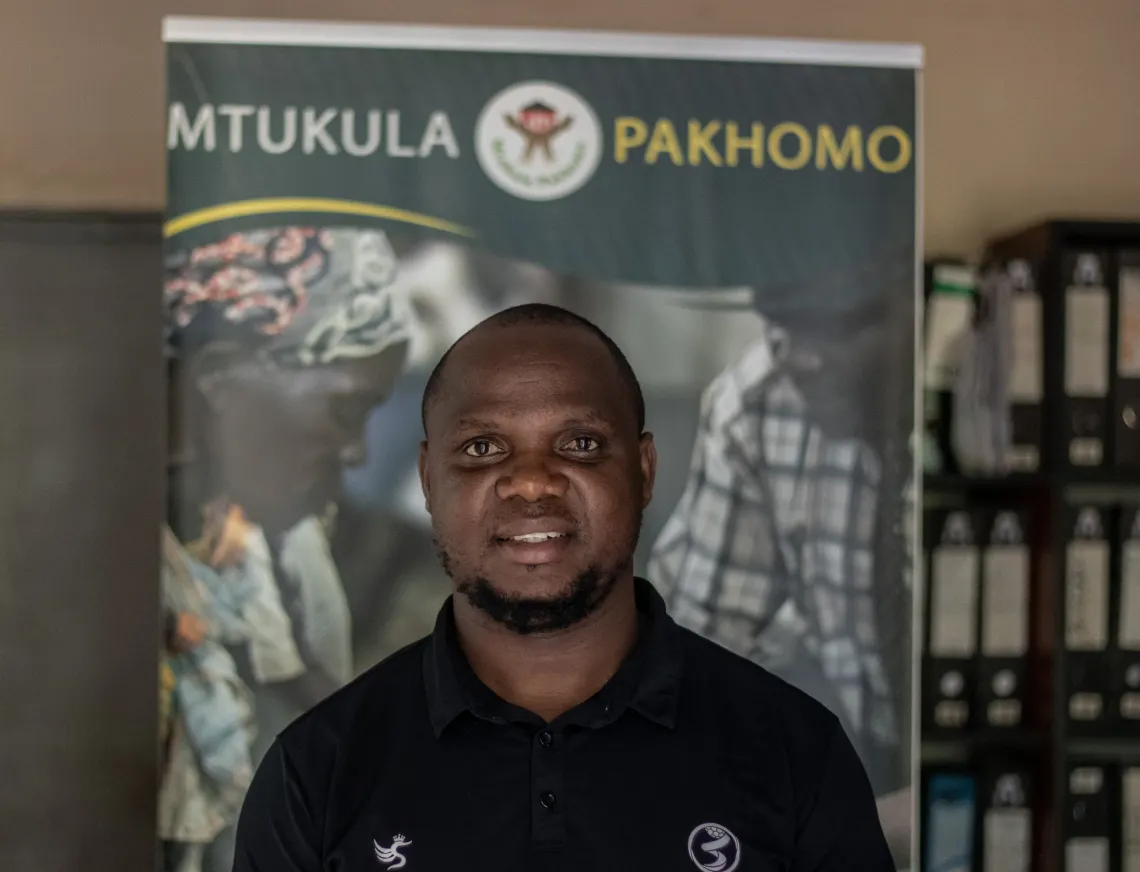
For beneficiaries like Christopher, the combination of SCTP support and the HGRM system has been transformative.
“If not for the committee, issues wouldn’t have been sorted out,” he says. “Helping us through such programmes is alleviating our pain. This support is reducing our poverty distress.”
UNICEF, through the Social Protection for Gender Empowerment and Resilience (SP-GEAR) programme funded by the European Union and the Embassy of Ireland, has supported Nsanje to fully roll out the HGRM and strengthen its functionality.