A Lifeline During the Lean Season: Cash Top-Up boosting children’s nutrition in Mwanza
How lean‑season cash support is helping families nourish young children and rebuild resilience in Mwanza

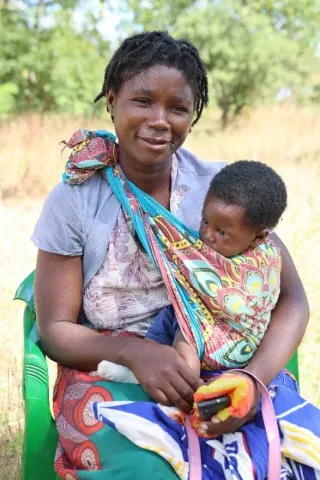
In the quiet hills of Lipenga Village, Traditional Authority (TA) Kanduku, Mwanza district, 28-year-old mother Lucy Selevasio looks at her 8-month-old daughter with hope, shortly after receiving a K111,000 cash top-up from a Wealthnet’s KakuPay agent.
The day before, she would not have imagined adding groundnuts and milk to her baby’s porridge — foods she struggles to afford regularly during the lean season from October to March.
“Before this support, my family mostly ate what we could find,” she says softly. “The baby was no exception. She normally eats salted porridge once in the morning, just like my other two children. Now I am going to buy a tray of eggs, groundnuts, and milk to make her porridge nutritious.”
For many vulnerable families in southern Malawi, such as Lucy’s, the months from January to March are among the most difficult of the year. Food stocks from the previous harvest are depleted, prices rise sharply, and households often struggle to maintain nutritious diets, especially young children.
To help protect children during this critical period, UNICEF support the Government of Malawi in implementing the s nutrition-sensitive social protection cash transfer top-ups initiative is supporting vulnerable households from the Social Cash Transfer Programme (SCTP) in the Neno and Mwanza districts to improve dietary diversity and prevent malnutrition among children under two.
A total of 279 children in Neno and 242 in Mwanza are benefiting from the program. T
Each child receives a monthly transfer of MWK 37,000, provided as a lump-sum payment of MWK 111,000 to cover the three-month lean period. A total of K30,969,000 ($17,963) has been disbursed.
The initiative is funded by the Government of Ireland and receives technical support from UNICEF. It is implemented in collaboration with District Councils and government ministries, including the Ministries of Gender, Children, Disability and Social Welfare, the Ministry of Health - , , and Finance and Economic Affairs .
But beyond the cash itself, the programme delivers something equally important: knowledge and health support.
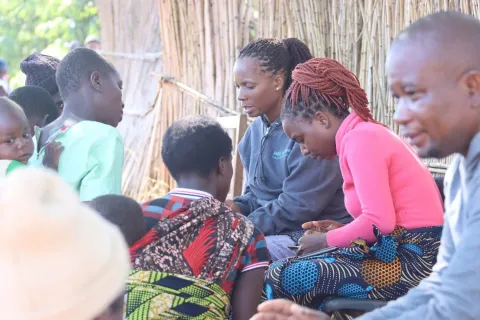
At designated touch points during implementation, caregivers receive Social and Behavior Change (SBC) messaging focused on child feeding practices, hygiene, and nutrition. Children are also screened for malnutrition and referred to further health services as needed.
Grace Henderson from Mulongolora Village, Mwanza, is one of the caregivers who have gathered under a temporary shelter while health workers conduct nutrition demonstrations and screen children using Mid-Upper Arm Circumference (MUAC) tapes. The caregivers listen attentively as facilitators discuss meal diversity, breastfeeding, hygiene, and early signs of malnutrition.
For her, the SBC has changed both how she will feed her child and how she thinks about nutrition.
“Health workers explained the importance of giving children different types of food,” she explains. “I learned that even small children need foods like eggs, beans, vegetables, and fish to grow well.”
Grace says she will buy maize flour, beans, cooking oil, vegetables, and small fish from the local market. She believes her 6-month-old son has a chance of staying energetic and active after the exclusive breastfeeding period.
A Senior Health Surveillance Assistant (HSA) in the Kunenekude Catchment Area, Mwanza, Martick Matemba, notes that many families face difficult choices during the lean season, often prioritizing food quantity over nutritional quality.
“Children under two are especially vulnerable because this is a very important stage for growth and brain development,” Martick explains. “When families do not have enough resources, children may not get balanced diets. This monetary support will help households improve the foods children eat while also connecting them to nutrition services.”
“Cash alone is often not enough. By combining regular cash transfers, lean season cash top-ups, and social and behaviour change interventions, we equip families with both the resources and knowledge they need to improve child nutrition, adopt positive feeding practices, and build resilience against seasonal shocks," George Juwawo, Social Policy Specialist, UNICEF Malawi.
Mwanza District Social Welfare Officer, Mary Msindwa, says the program is beneficial to the district, given that Mwanza was among the districts affected by El Niño, which left many families food-insecure.
She says combining SBC with cash distribution will ensure that the initiative serves its intended purpose.
As Malawi continues to face recurring climate shocks, food insecurity, and economic pressures, integrated social protection programs are increasingly important for protecting vulnerable children from malnutrition and poor health outcomes.
For families in Neno and Mwanza, the cash transfer top-up is doing more than ease hunger. It is helping caregivers provide nutritious meals, access health services, and give young children a healthier start in life.
As Lucy balances her daughter on her back with a chitenje (wrapper), her face radiates with renewed hope.
“My wish is for my child to grow up healthy and strong,” she says. “This support will help us move closer to that future.”