Protecting Children’s Nutrition Through Cash Transfers in Neno and Mwanza
Supporting caregivers with cash, knowledge, and health services to safeguard children’s nutrition in Neno and Mwanza

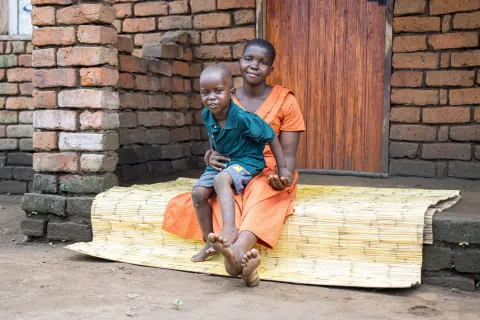
The cold hills of Kundembo Village in Traditional Authority (TA) Dambe, Neno District, do not deter 35-year-old Mariana Daniele from walking nearly four kilometers from Chimbalanga II Village. Her concern is greater than the long distance: she worries constantly about the health and nutrition of her 19-month-old daughter, who has asthma.
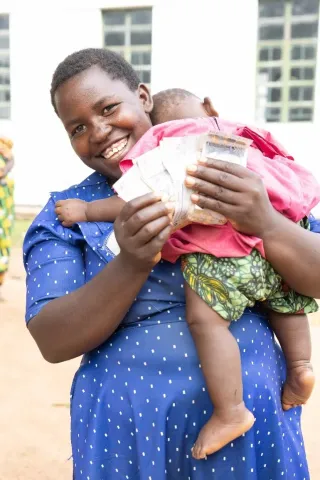
When officials from the Mwanza District Council and UNICEF inform her that she has been selected for the Nutrition-Sensitive Social Protection Cash Transfer Top-Ups program to receive nutrition support cash through the KakuPay mobile wallet, Mariana’s face lights up with relief and hope.
A mother of six, Mariana has no stable source of income and depends on her polygamous husband, who struggles to support both families under his care.
“October through April are the hardest months for us,” she explains. “We rarely eat nutritious food. Even my baby’s porridge has only salt. With the K111,000 I received today, I will buy sugar, soya pieces, and groundnuts to make her porridge more nutritious.”
Becoming a mother at 16 trapped her in a cycle of poverty that has been difficult to escape. Accessing health care is another challenge. Nsambe Health Centre, where she takes her daughter for asthma treatment, is about a three-hour walk from her village.
“When my baby becomes unusually quiet like this, I know an asthma attack may be coming,” she says softly. “I will use some of this money to hire a kabaza (motorcycle taxi) to the health center instead of risking the long walk.”
The initiative is funded by the Embassy of Ireland and receives technical support from UNICEF. It is implemented in close collaboration with District Councils and key government ministries, including the Ministry of Gender, Community Development and Social Welfare; the Ministry of Health through the Department of Nutrition and the Ministry of Finance and Economic Affairs.
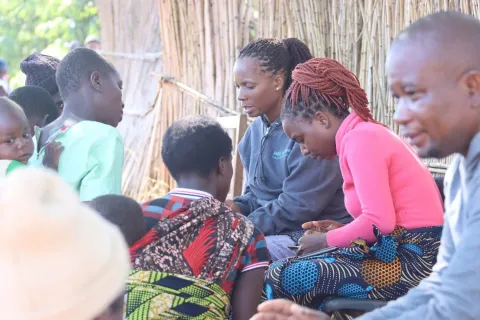
Designated points, caregivers receive Social and Behavior Change (SBC) messages on child feeding, hygiene, and nutrition. Children are also screened for malnutrition and referred for medical support as needed.
In Mwanza District, 23-year-old Bridget Jemusi from Moffat Village, TA Kanduku, Mwanza, says the program has already transformed how she thinks about feeding her six-month-old baby. The child was referred to a feeding program after being screened twice within two weeks and found to have a Mid-Upper Arm Circumference (MUAC) of 12.1 centimeters, placing the baby at risk of malnutrition.
“After the screening, health workers explained the importance of feeding children a variety of foods,” she says. “I learned that even young children need eggs, beans, vegetables, and fish to grow well.”
According to the Global Nutrition Report, 35.5 percent of children under age five in Malawi are stunted due to chronic malnutrition, a rate higher than the African regional average of 30.7 percent.
The programme supports 279 children in Neno District and 242 children in Mwanza District. Beneficiaries were selected from households already enrolled in UNICEF’s Social Cash Transfer Programme (SCTP), which targets some of the most vulnerable families in both districts.
For 29-year-old Nataliya Josiya from Sam Village under Group Village Head Kunenekude in TA Kanduku, Mwanza, the support could not have come at a better time. Although the lean season has ended, her family harvested only five bags of maize this year, far below the 15 bags her household of five needs annually.
“I will use part of the money to buy two bags of maize, soya pieces, groundnuts, eggs, and cooking oil,” she explains. “My family has not been eating a balanced diet because we cannot afford all six food groups that health workers recommend.”
Looking proudly at her 23-month-old son, Precious, she adds: “He will now eat nsima with vegetables and eggs. The cooking oil and groundnuts will make his porridge more nutritious.”
Martick Matemba, Senior Health Surveillance Assistant (HSA) for the Kunenekude catchment area in Mwanza, reports that malnutrition cases among children under age two increased significantly during the January to May 2026 lean season.
“During that period, we referred 22 children under age two to Kunenekude Health Centre for the Supplementary Feeding Programme (SFP) and the Outpatient Therapeutic Programme (OTP),” explains Matemba.
“When a child’s MUAC falls below 11.5 centimeters, we immediately enroll them in a four-week feeding program. The money these mothers received today will greatly strengthen those efforts.”
According to Matemba, the Kunenekude catchment area alone has about 1,620 children under the age of two.
In the Kundembo catchment area of Neno District, Senior HSA Joseph Gannet says the area records some of the highest rates of malnutrition in the district due to its remoteness and widespread poverty.
“We registered 58 cases of malnutrition, and 39 came from this catchment area alone which has 169 children under the age of two,” says Gannet. “Many families introduce babies to nsima and vegetables only after six months, and even the porridge often contains nothing but salt.”
Stanley Mwase, UNICEF’s Nutrition Specialist for the program, says the initiative targets children under two because interventions at that stage of life have the greatest long-term impact.
“Good nutrition during the first two years is critical,” explains Mwase. “It shapes a child’s physical growth, brain development, cognitive ability, and future productivity. Early intervention can change the course of a child’s life.”
He says the programme’s long-term goal is to improve the nutritional status of vulnerable children while strengthening household resilience against hunger and poverty.
For mothers like Mariana Daniele, the support represents more than financial assistance. It is a chance to protect their children from hunger, illness, and a future shaped by deprivation — offering hope that the next generation can grow healthier and stronger despite the hardships they face.