Solar-powered water brings hope to Machinga community in Malawi
“Now, with safe water close to home, we see fewer illnesses," Che Joliji

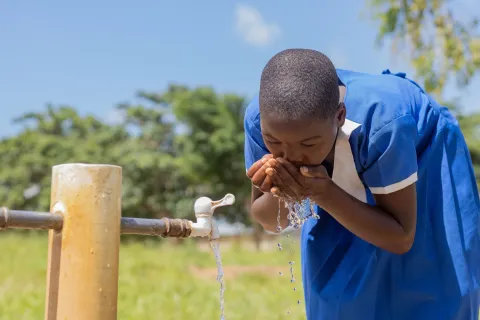
In the heart of Joliji Village, Machinga, a groundbreaking solar-powered water project has brought life-changing relief to a community which had been long plagued by water scarcity and waterborne diseases. The initiative, funded by the Spanish National Committee through UNICEF, has become a beacon of hope for villagers and students at Mpalangwazi Primary School.
For years, the community relied on unsafe water sources, including open wells and swamps, which often led to outbreaks of diarrhea and other preventable diseases. But with the installation of six solar-powered water points, clean and treated water is now flowing directly to the school and surrounding villages, transforming daily life for over a thousand people.
The impact of the new water system cannot be overstated. Village Head Che Joliji expressed deep gratitude for the initiative, highlighting how it has improved both health and education outcomes.
“We used to face endless challenges,” said Che Joliji. “Our children frequently fell sick with diarrhea because of drinking unsafe water. Mothers spent hours fetching water from distant wells, and students were often late for school. Now, with safe water close to home, we see fewer illnesses and more children attending school on time.”
The clean water points have also eased the burden on families, enabling them to complete household chores more efficiently. Parents can now prepare their children for school without the added worry of sourcing clean water.
At Mpalangwazi Primary School, where more than 1,000 students are enrolled, the water system has revolutionized daily operations. Previously, the school had no access to safe water due to the rocky terrain, which made drilling boreholes nearly impossible.
“We had never had a borehole because of the area’s rocky nature,” explained headteacher Charles Makanjira. “The nearest water source was far away, forcing students and teachers to compete with villagers for access to water. It disrupted classes and reduced learning hours.”
Makanjira revealed that the lack of safe water had caused the school to miss out on key opportunities.
“We lost our status as a MANEB Examination Centre and a potential Teachers Development Centre (TDC) because of the water issues,” he said. “Students had to travel long distances to sit for exams, and many dropped out due to the hardships. With this project, we are hopeful that these opportunities will return, and enrollment will continue to grow.”

The system has brought visible improvements, with teachers reporting better punctuality among students and a more conducive learning environment.
Students and community members have shared how the project has transformed their lives.
Maria George, a student at Mpalangwazi Primary School, described the difficulties she used to face.
“Before, we woke up very early to fetch water from dirty wells,” Maria said. “Sometimes, we had to drain the well and wait for it to refill before we could collect enough water. This made us late for school and tired before lessons even began. Now, with clean water at school, we can focus on learning without worry.”
Eleven-year-old Racheal Makanjira echoed similar sentiments.
“It used to be so hard,” she said. “We would rush to fetch water at dawn, do our chores, and then run to school. Often, we arrived late and missed important lessons. Now, everything is easier. We get water quickly and start school on time.”

Building Sustainability
UNICEF has gone beyond providing infrastructure to ensure that the community is equipped to manage and maintain the water system. Training sessions were held to establish water point committees, with clear roles and responsibilities for maintenance.
The project’s benefits extend beyond health and education. The water points have reduced the time and distance villagers spend fetching water, freeing up hours for productive activities.
“Now, we can prepare our children for school without worrying about water,” said villager Gladys Lingson. “Cases of diarrhoea have dropped, and life has become much easier. We are so thankful for this project.”