Solar-powered safe water transforming lives in Karonga
Clean, dependable water reshaping daily life for Karonga’s families

When the rains failed or floods swept through Karonga District, water was never guaranteed—it was gambled for. Rivers doubled as drinking points for families and livestock alike, rain puddles became lifelines, and long walks in the dark were routine for women and children desperate to secure a bucket of water.
Along with the water came disease: diarrhoea, cholera, and constant fear, particularly for young children and expectant mothers.
Today, that story is changing.
Through a UNICEF-supported intervention aligned with Malawi’s 2025 Humanitarian Response Plan, communities in Karonga District are experiencing a quiet but profound transformation.
New solar-powered water supply schemes constructed at Chikutu and Thawiro health posts and surrounding villages are now providing over 2,000 people with safe, reliable and sustainable access to clean water, strengthening public health, restoring dignity and building resilience in communities long battered by recurring emergencies.

At Chikutu Health Post, Senior Health Surveillance Assistant Jailos Mwandosya has witnessed the change firsthand. Just a year ago, the health facility struggled to maintain basic hygiene standards.
“People in the community, including HSAs, were experiencing diarrhoea and cholera because of unsafe water,” says Mwandosya. “We walked long distances to fetch water just to cook, clean, or help patients.”
For pregnant women seeking care, the situation was especially dangerous. Accessing clean water often meant leaving the facility or asking guardians to fetch it from far-off sources.
“Now that water is close by, it has helped greatly, especially for pregnant women,” he explains. “They no longer have to walk long distances to fetch water.”
The impact on child health has been immediate and measurable. Cases of diarrhoea among children under five have dropped sharply, and hygiene practices within the facility have improved.
“We now mop and clean our working spaces freely,” Mwandosya says. “Personal hygiene has greatly improved—people bathe more often, wash clothes regularly, and clean their surroundings. Almost everyone here is now disease-free.”
Beyond the clinic walls, the new water points have restored a sense of safety and dignity for families like that of Wanangwa Fumbo, a 42-year-old mother from Mwangolela village. For years, her days began and ended with the search for water.
“We used to draw water from rivers and rainwater puddles,” she recalls. “Even when boreholes were installed, water would run out because so many people depended on them.”
The introduction of nearby water taps has been life-changing.
“This means a lot to my family,” Fumbo says quietly. “My children no longer get sick so often. Mornings and evenings are now spent quietly with my family. Before, that was the time I would be out searching for water—scared and alone in the wee hours of the night.”
With water now within reach, she can cook, clean, and care for her family without fear. “I feel safe and secure now,” she adds.

The ripple effects extend to education. At a nearby school, 13-year-old learner Veronika Mulalo describes how access to clean water has reshaped her daily life.
“We used to fetch water from the river, and it was in poor condition,” she says. “Now the water is clean, and we are happy.”
Classrooms, toilets, and offices are easier to clean, improving sanitation and learning conditions. More importantly, Veronika no longer misses lessons or arrives exhausted.
“I don’t lose my energy fetching water anymore,” she says with a smile. “I use that time to improve my netball skills and play soccer with my friends.”
Teachers note that attendance has improved, though they stress that water extensions are still needed to meet growing demand.

Sustainability has been central to the project’s design. Community ownership is embodied by Water Point Committee members like Godwin Mukonda, who received plumbing training to maintain the system.
“I monitor the tanks and taps to make sure there are no leaks,” Mukonda explains. “If there is a problem, I can stop the system using the solar switch.”
For him, water conservation is a responsibility shared by all. “Water is life to a living human being,” he says. “It is important not to waste it.”
While challenges remain, such as the need for spare parts and additional taps, the progress is undeniable. Communities no longer rely on unsafe sources or compete with livestock for survival.
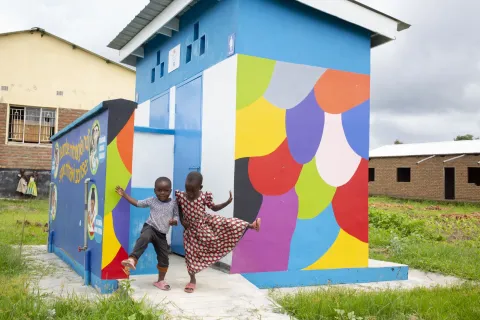
Together, these interventions—from Karonga’s health posts to a Community-Based Child Care Centre in Dedza District, where new sanitation facilities now benefit more than 50 young children—have reduced disease risks, saved time for women and children, and strengthened community resilience against floods and outbreaks.
For UNICEF, the credit goes to the Austrian National Committee for its generous support, which has delivered immediate relief while laying the foundation for long-term well-being.
In villages once defined by scarcity and fear, clean water is no longer a distant hope. It is flowing—quietly, steadily—into homes, clinics, and classrooms, carrying with it health, dignity, and the promise of a more resilient future.