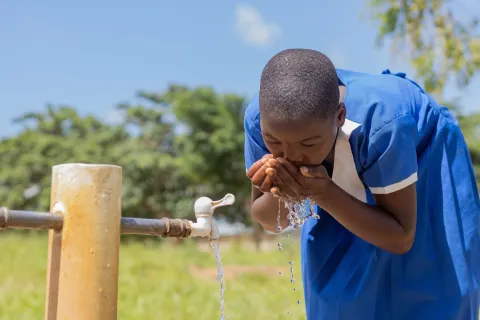
Solar-powered water system transforms healthcare at Chikuluma Health Post
“With the water system at the clinic, I feel more at ease bringing my children for treatment,” Rose

In Traditional Authority Liwonde in Machinga District, southern Malawi, a transformative change has taken place at Chikuluma Health Post. A solar-powered water system set by UNICEF with funding from the United Nations Central Emergency Fund (CERF) has improved the lives of women and families in this rural community.
Dyman Saidi, chairperson of Chikuluma water system committee has noticed the difference. "The arrival of clean, reliable water is a blessing for us," he says. "Before the system, we had to fetch water from the Masanje river, and the water wasn’t safe. Now, the health centre has constant access to clean water, which makes a difference in the lives of people that use the facility."
The solar-powered water system has not only improved access to water at the health centre but also boosted the overall quality of healthcare in the area. This is significant for vulnerable groups, such as pregnant women and children under five, who rely on clean water for medical care and hygiene.
For 20-year-old Emily Yusufu from Chikuluma Village, the water system has been a life-changer. As a young mother of two children, Emily explains how much easier her life has become. “Knowing that the health centre has access to clean water makes me feel more secure, especially when I need healthcare services."
Her thoughts are echoed by 23-year-old Rose Lyton, a mother from Chithumba village. "Before, we used to go to the river for water, but it was not always clean," Rose says. "Now, with the water system at the clinic, I feel more at ease bringing my children for treatment, knowing the water is safe and clean."

For Estere Time, a 35-year-old mother of six from Chikuluma Village, the benefits extend beyond the health centre. "Having water at the clinic means that pregnant women and mothers with young children no longer have to worry about the safety of the water they use," Estere explains. "It’s also made it easier for the clinic staff to keep things clean and reduce the chances of infections."
Moses Mphatso, a health surveillance assistant at Chikuluma Health Post, has seen the impact of the water system. "The new system has made it easier for us to provide proper care," Mphatso says. "In the past, we struggled with hygiene due to lack of clean water, but now we can disinfect equipment and maintain a clean environment for mothers, babies, and other patients."

The benefits extend beyond the clinic. The surrounding community now has easier access to clean water, which has saved many hours that women previously spent collecting water from distant sources. "I used to spend hours fetching water, but now I have more time for other tasks," says Emily Yusufu. "