Social Cash Transfer Programme “Mtukula Pakhomo” helping families prevent the spread of Cholera
Cash transfers are key in health emergencies

In Nsamala village in Balaka district, the Social Cash Transfer Programme (SCTP), locally known as “Mtukula Pakhomo”, is enriching lives through Cholera prevention initiatives. No one illustrates this better than Titha Kwadelanji and Violet Mussa.
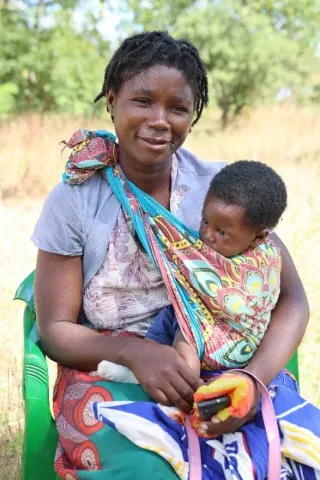
Titha Kwadelanji a mother of six, from Kambadi village takes Cholera preventive measures seriously to keep her family safe and healthy. Kwadelanji, says Mtukula Pakhomo has saved her life in more ways than one.
“We were in the middle of the cholera outbreak when I received my first Mtukula Pakhomo cash. I used some of it to buy pails, a hand-washing basin and soap. I also used some of the money to refurbish my toilet. Having and using a toilet is very important in Cholera prevention,” she says. “A lot of people lost their lives to Cholera because they couldn’t afford to buy some of the things that I bought. I am very lucky because I received Mtukula Pakhomo,” she adds.
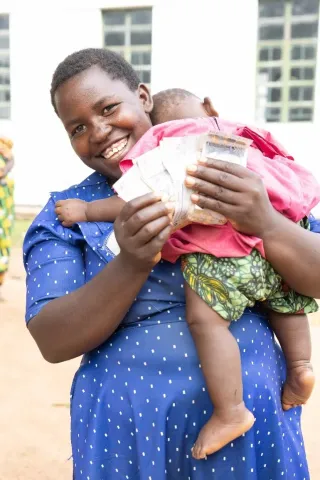
Violet Mussa from-Molosi village, who has also benefited from Mtukula Pakhomo says for her, prevention is better than cure that is why she uses some of the cash that she received to purchase a bucket with a tap, a basin, soap and rebuild her toilet which collapsed due to Cyclone Freddy. “I realised that if cholera affects my household, I will not be able to care for my children. When the caregiver falls sick, a lot of things go wrong so it is important that we all stay healthy,” she says.
UNICEF, with support from the Embassy of Ireland, is working with the Malawi Government to support 10,000 households with Mtukula Pakhomo funds in the Balaka district. The cash is meant to help families reduce poverty, improve nutrition, and promote school enrolment. However, with the ongoing Cholera outbreak, which has claimed almost 2,000 lives, Balaka District Social Welfare Office, and the Malawi Red Cross Society (MRCS) who are implementing the programme on behalf of UNICEF, have incorporated Cholera preventative messaging in their routine work with Mtukula Pakhomo beneficiaries. Red Cross is working with volunteers and health surveillance assistants to stop the further spread of Cholera by disseminating prevention messages at key events like funerals and weddings.

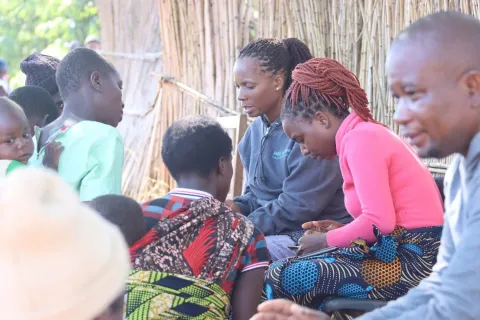
The Malawi Red Cross Society works with the District Social Welfare to disseminate cholera prevention messages at all Mtukula Pakhomo payout points. “We target the pay points because the majority of the people who come to cash out are women. Targeting them means that the knowledge gained will be translated into action,” says George Semele, MRCS District Coordinator for Balaka. Mtukula Pakhomo beneficiaries are also targeted owing to their vulnerability to such diseases. They are already struggling with poverty, cannot afford proper nutrition and maintain minimum sanitation standards making them vulnerable to infectious diseases such as cholera,” says Mphatso Chisepa, Balaka Social Welfare Officer. “Targeting them makes a lot of financial sense,” she adds We also encouraged them to invest in small-scale businesses so that they should have cash for purchasing things like soap,” she says.
In addition to message dissemination, The Malawi Red Cross Society has also established oral rehydration points (ORPs) where Cholera suspected patients get first aid treatment specifically rehydration with ORS before being referred to health facilities for more specialized care.
Although Cholera cases are now on a downward trend, Malawi, has struggled with the Cholera outbreak for close to a year during which more than 58,000 people have contracted the disease and more than 1,700 succumbed to the same.