Piped water turns the tide for Msambira Primary School in Malawi
“We no longer hear of people quarreling at the borehole,” Dickson

For generations, the thought of clean, running water at Msambira Primary School and its surrounding villages seemed like a distant dream.
Situated in the remote corners of Machinga District, southern Malawi, the school and community depended on a single borehole and unsafe open water sources, sparking daily struggles for survival and disrupting lives in ways that rippled through education, health, and relationships.
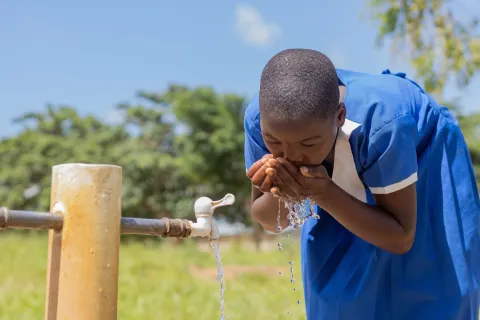
But everything changed with the installation of a solar-powered water system, funded by the Spanish National Committee through UNICEF Malawi. Now, six gleaming water points deliver safe, treated water directly to the school and four surrounding villages.
In just a month, this life-changing intervention has transformed education and hygiene for hundreds of students and community members, restoring hope and dignity.
At the heart of Msambira Primary School’s challenges was the borehole—a lifeline stretched to its limit. It served nearly 500 people from seven villages under Group Village Headman Nchelera, resulting in long queues, mounting frustration, and conflicts between community members and students.
“We would leave home thirsty, stay in class thirsty, and return home just as thirsty,” recalls Laika Gray, a 12-year-old Standard 4 student. “Sometimes, the community members chased us away, claiming we were too many and wasting their time.”
The water scarcity also impacted hygiene practices. Without access to safe water, learners could not wash their hands, their clothes, or even themselves properly. Teachers faced similar struggles, unable to maintain basic hygiene before and after lessons. Cases of waterborne diseases like diarrhea were high, with some parents even hesitating to send their children to school.

In August 2024, a glimmer of hope emerged. UNICEF with funding from the Spanish National Committee broke ground on a solar-powered water project, and by September, the taps began to flow. For the 400 students at Msambira, this was no ordinary infrastructure—it was a beacon of opportunity.
“The impact has been extraordinary,” says Maria Maulana, the headteacher at Msambira Primary School. “Students now arrive on time, freshly bathed, and dressed in clean clothes. The long queues at the borehole are a thing of the past.”
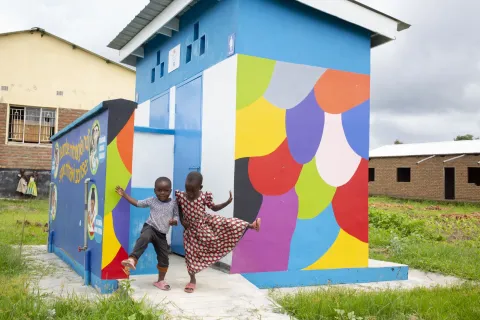
The presence of piped water has also sparked a wave of health consciousness among learners. Hygiene education, paired with access to water, has resulted in students regularly washing their hands after using the toilet, before eating, and even before enjoying seasonal fruits like mangoes.
“Before, we would eat unwashed mangoes because we had no choice. Now, we wash everything before we eat it,” says Sinoya Yassin, a 14-year-old Standard 4 learner.
For the community, the changes are equally profound. With additional taps distributed across four villages, the pressure on boreholes has eased dramatically. Parents and guardians no longer worry over long waits or conflicts at the water points.
“We no longer hear of people quarreling at the borehole,” says Dickson Komazinja, chairperson of the Water Committee. “The taps have brought harmony to our villages and a renewed sense of cooperation.”
For Laika Gray, the dream of becoming a teacher now feels within reach. “This water has made school a better place. I can focus on my studies without worrying about water,” she says with a smile.