Locals fight cholera with hygiene campaigns
Uniting to end cholera

Beside the village of Ndirande, Chikwawa, in Southern Malawi, the mightily Shire River rises and falls with severe storms and rains
On occasion, it also floods the surrounding area. And with floods come water borne diseases, chief among them, cholera.
In March, Malawi’s health ministry reported that cholera had broken with Chikwawa being one of the worst hit districts. To date, 1082 cases and 44 deaths have been recorded.
But in Ndirande, Blantyre and other nearby districts, which had reported several cases, With financial assistance from the Global Thematic Fund, UNICEF is working with the Centre for Development Communications to inform the community on the need for hygiene to prevent cholera infection.
Regson Namatumba, project officer for the organization, explained the centre was reaching people using behaviour change interventions.

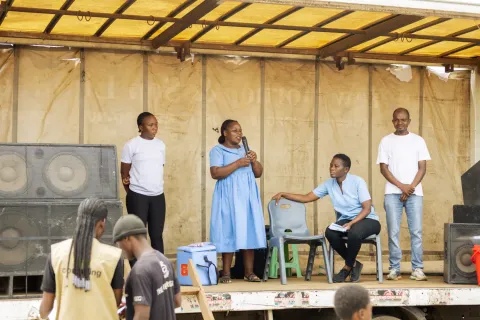
“We are responding through interpersonal communication, community dialogue, and also community mobilisation where we are using a mobile van,” he said.
He added the community also formed the Nthundu Radio Listening club, equipped with vital information and skills to disseminate information among the community.
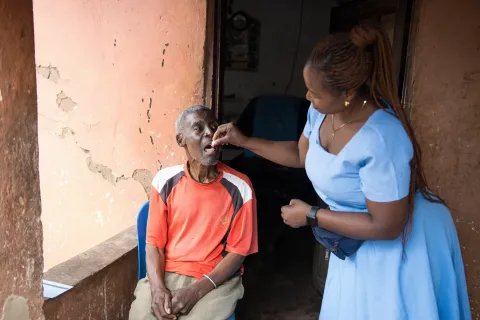
“The radio club members go around the villages to sensitise the communities on cholera prevention,” he said.
He noted that radio listening clubs were trained to conduct research in their locations on whether the communities were adhering to cholera prevention.
Namatumbo explained that the impact of the group’s effort is visible as local villagers had started building toilets and rubbish pits.
“We also use community dialogue using cinema where the village headmen and the health surveillance assistants in that area watch the cinema together with the community.”

UNICEF continues to facilitate Social Behaviour Change (SBC), targeting five districts of Chikwawa, Nsanje, Salima, Phalombe and Mulanje, hit hardest by the floods. UNICEF SBC Specialist Blessings Mtuwa Nkhata, explains; “Through the National Social Mobilization Committee (NSMC) and civil society organizations, 230,000 people in the five districts were engaged to promote locally owned solutions to prevent cholera
Local community member Foster Kitchen said he worked with community member to build a pit latrine.
“The messages from our health partners in our village have contributed a lot in encouraging us to dig pits and toilets to prevent the spread of cholera,” he said.
Thom Falera, a local Health Surveillance Assistant, whose area covers more than 3,200 people, said the area registered seven cases of cholera.
“That is why we have worked hand in hand with chiefs, radio listener clubs and other leaders to encourage villagers to build toilets,” he said