Learners bear the brunt of cholera
UNICEF supports the cholera response in Malawi

As noon arrives in Machinjiri, the largest township in Blantyre City, a hustle and bustle permeates the area. This city has suffered the most from the deadliest cholera outbreak in Malawi's history. Junior learners, returning from school, buy snacks and drinks from roadside markets, while seniors quickly grab their food before afternoon classes. This practice of open roadside food sales has emerged as a primary means of cholera transmission.
Cholera has claimed more than 1,750 lives and infected approximately 58,600 patients since the nationwide outbreak was detected in March 2022. South Lunzu Health Centre in Blantyre has reported 13 deaths, including two students, out of about 600 cases during the cholera crisis. In response to the outbreak, the Ministry of Education postponed the opening of schools by two weeks in the hardest-hit cities of Blantyre and Lilongwe.
"One of the deceased pupils was in Standard Three, and the other was a Form One student. More shockingly, 146 of the confirmed cases were schoolchildren aged six to 19," states Susan Muyaya, Senior Health Surveillance Assistant. "Schools bear a considerable responsibility to teach children preventive measures and hygiene, including consistently washing hands after using latrines and before eating."

Umali Asibu, a resident of the community, finds it distressing that a quarter of the confirmed cholera cases were young students like his 19-year-old son, Ishmael, who sadly succumbed to the disease last month. Asibu lives in a densely populated area near a stream that has turned into a dumping ground. Before the disease could spread to nearby settlements, health workers worked with local leaders to control the cholera outbreak.
Asibu pleads, "It's surprising that 146 cholera patients at our health centre are learners like my late son. Schools should not only teach about sanitation and hygiene but also practice these values, as children are influenced by what they see in the world around them."
Umali Asibu, a truck driver, laments the poor sanitation he observed at a school during one of his recent trips. He recalls, "During a trip to collect dambo sand, I needed to use a toilet and ended up using a filthy one at a public school in Bangwe township. This not only exposes students to cholera but also highlights the poor sanitation that promotes such preventable diseases."
Asibu advocates for a ban on the sale of cold, ready-to-eat food in schools and local councils to curb the cholera outbreak, which has continued for over a year. He suspects that his late son contracted the cholera bacteria from a snack known as 'zibwente,' made from boiled Irish potatoes coated with baking flour, which he bought on his way home from school.
The family's tragedy occurred one morning when Ishmael began showing symptoms of cholera. Despite initial treatment at a private clinic, his condition deteriorated, and he was admitted to South Lunzu Health Centre. Despite healthcare workers' efforts, Ishmael succumbed to cholera.
This loss has inspired Asibu to install in-house toilets to safeguard his family, which has been using a neighbour's pit latrine since their own was destroyed by Cyclone Freddy in March of this year. He says, "Until it struck my son, I thought cholera was just talk. If today I met the ministers responsible for health and education, I would urge them to unite to make schools safe for children, with or without cholera.
We cannot make Malawi cholera-free unless schools are safe, and children learn the importance of sanitation and hygiene.

With support from various partners, including the European Civil Protection and Humanitarian Aid Operations, the United Nations Central Emergency Response Fund, the United States Agency for International Development and Bureau for Humanitarian Assistance, UNICEF is aiding schools with water, sanitation, and hygiene supplies.
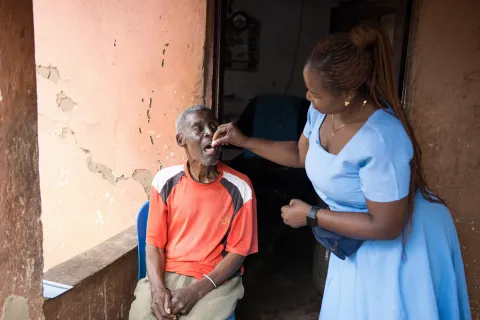
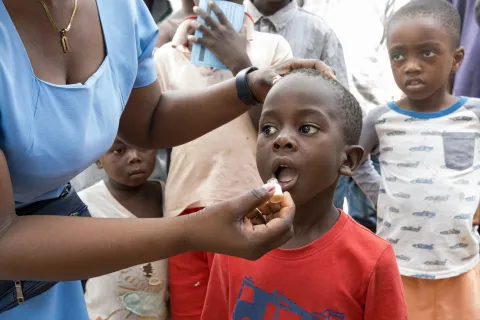
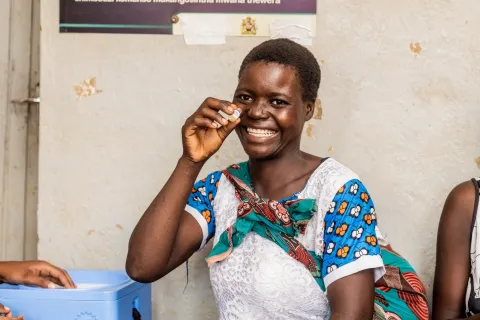
UNICEF's support for the national cholera response includes Case Area Targeted Interventions (CATI), which aim to prevent the spread of the disease beyond the locality where the first patient lives or works. These interventions involve disinfecting the homes of confirmed patients, tracing and monitoring potential contacts, and conducting public and door-to-door health talks in affected communities.
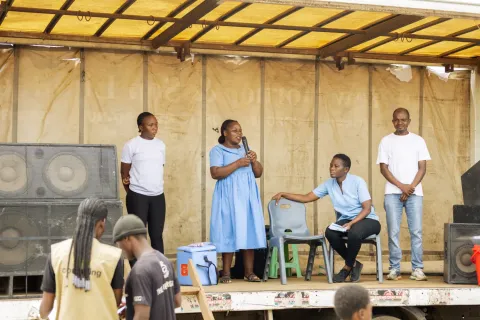
During a community dialogue in Area 5, Asibu and his neighbours received soap, a bucket, and water treatment chemicals to help maintain sanitation and hygiene. Community health workers educated the at-risk population about cholera's dangers and prevention during these public talks.
According to Muyaya, schools should be at the heart of community efforts to eradicate cholera. She states, "Community efforts to end cholera should extend to schools, which are also severely affected by disease outbreaks."