Communities unite to stop cholera in Kasungu
Local mobilisation and oral vaccines help Gogode contain a fast‑moving outbreak.

Twenty-eight years ago, Makulata Hara witnessed first-hand the devastating consequences of a cholera outbreak when a close relative fell ill in Kasungu district, central Malawi.
Though she was still young at the time, the memory remains vivid.
“My young relative was passing watery, whitish stool and became extremely weak and pale,” recalls the 42-year-old mother of six from Traditional Authority Suza.
“She was admitted to the clinic for several days. The pain she endured, and the way the community shunned her, frightened me. That was when I realised how dangerous cholera is.”
Cholera, an acute diarrhoeal disease caused by ingesting contaminated food or water, can kill within hours if left untreated.
That experience left a lasting impression on Makulata and shaped her commitment to disease prevention.
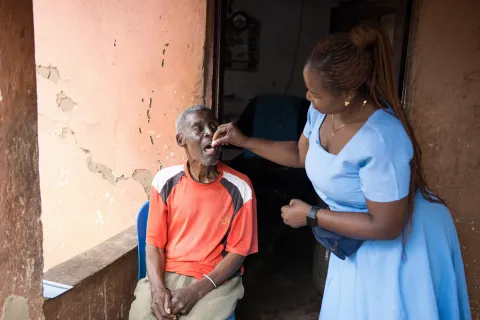
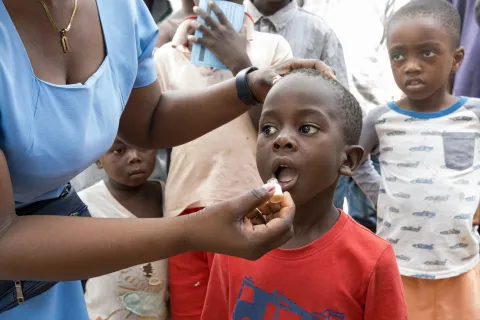
Today, she sits patiently at Gogode Health Centre with her 14-month-old daughter, Gloria, waiting to receive an oral cholera vaccine (OCV) during a vaccination campaign in the area.
The campaign followed the confirmation of five cholera cases within a single household in the community.
Despite the seriousness of the situation, the atmosphere at the vaccination site is hopeful. Makulata chats and laughs with other women as health workers organise the queue. Many community members say seeing neighbours and friends coming forward for vaccination encouraged them to do the same.
The campaign targeted 22,773 people considered to be at high risk in the Gogode catchment area.
“From what I witnessed in the past, cholera is a deadly disease,” she says.
“My relative survived because she received treatment in time. I do not want my family to go through that experience. That is why I came for the vaccine, to protect myself and my children.”
Beyond safeguarding her own health, Makulata has mobilised her entire household.
She has encouraged her husband and six children to get vaccinated, recognising that collective protection is essential to interrupt transmission.
As a first-time OCV recipient, she commends health workers for strengthening hygiene and sanitation awareness alongside the vaccination drive.
“We are being reminded to wash our hands with soap, drink chlorinated water, use pit latrines, manage waste properly and maintain hand-washing facilities at home,” she explains.
“The vaccine helps, but good hygiene is just as important.”
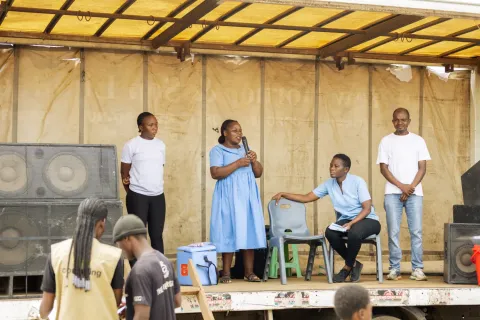
Cholera was confirmed in the area on 20 December 2025, prompting the Kasungu District Health Office to rapidly engage community and faith leaders, youth groups, volunteers and local partners to sensitise communities on preventive measures. Trusted local leaders played a central role in addressing fears and correcting rumours around the vaccine.
With support from UNICEF and the World Health Organization (WHO), the district implemented a five-day OCV campaign in Gogode, where the initial cases were detected and contained.
District teams aimed to administer nearly 23,000 doses, with a daily target of 4,555. On the first day alone, they exceeded the target by 351 doses—an early sign of strong community uptake.
Nationally, the situation remains concerning. As of 21 January 2026, Malawi had recorded 33 confirmed cholera cases and more than 1,000 suspected cases across 11 of the country’s 28 districts.
In response, the Ministry of Health, with support from UNICEF and WHO, has launched a national OCV campaign targeting 94,000 people aged one year and above in high-risk communities in Blantyre, Mwanza, Neno and Kasungu districts.
According to Kondwani Mutowa, Expanded Programme on Immunisation (EPI) Coordinator for Kasungu, hotspot classification is based on population density, sanitation coverage and population mobility.
“In Kasungu, areas such as Gogode, Dwangwa and Kaluluma are classified as high-risk,” says Mutowa. “In Gogode, we have successfully contained the outbreak. There has been no escalation since the first cases, thanks to effective case management, early chlorination of water sources and strong social mobilisation supported by good coordination among partners.”
Health workers also observed a shift in community attitudes. “People were actively demanding services and vaccines,” Mutowa adds. This marked a shift from earlier hesitation, as communities gained confidence through dialogue and visible uptake.
For adolescents like 16-year-old Chifuniro Mwale, the vaccine offers reassurance. “I hear that people die from cholera,” he says. “Now I feel protected, as long as I continue practising good hygiene.”
Similarly, 15-year-old Dickson Phonex believes vaccination will help him stay in school. “Cholera can interrupt learning. I want to stay healthy and perform better,” he says.
Traditional leaders played a key role in mobilising communities. Senior Chief Gogode and Health Centre Management Committee chairperson Alex Milamba say they personally encouraged households to improve sanitation and take up the vaccine.
“This disease affects not only the body, but also livelihoods and dignity,” says Mark Chipeta, Senior Health Surveillance Assistant.
“People understand that now, which is why they turned out in such large numbers for the oral vaccine.”
Despite registering success in containing the outbreak, challenges included misinformation-driven hesitancy, poor road access due to flooding, intermittent fuel supplies and limited health facility space.
Misinformation hesitancy was addressed through intensified community engagement and partner support.