How early preparedness is keeping Mwanza cholera free
Proactive vaccination, border vigilance and community mobilisation are helping Mwanza hold the line as cholera resurges across Malawi.

The morning chant of vowels at Biki Primary School in Mwanza blends with an unusual classroom scene: Health Surveillance Assistants (HSAs) in light‑blue fatigues setting up vaccination stations among tiny desks.
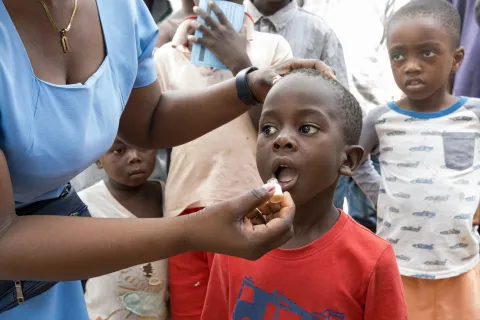
As five‑year‑olds recite “a, e, i, o, u,” HSAs quietly administer Malawi’s oral cholera vaccine—now the district’s strongest shield against a disease resurging across the country.
By late January, 11 of Malawi’s 28 districts had reported more than 1,000 suspected cases. But in Mwanza, a border district where the rainy season usually signals overflowing cholera wards, the story is different.
Local facilities remain empty, thanks to months of early preparedness and a community that has embraced prevention.
For school administrator Lekeni Mpinganjira‑Gwetsa, bringing her daughters—two‑year‑old Orama and eight‑year‑old Elanive—to the front of the vaccination queue was an easy decision.
“Children are the most vulnerable,” she says. “They pick up food anyhow. Prevention is better than cure.”
That same sense of responsibility is visible at Mwanza District Hospital, where 17‑year‑old Alice Sadzapanja and 16‑year‑old Atupele Chaomba arrived early after learning their school had not yet been reached by health teams.
“I am told it is deadly and I am afraid of getting infected,” Alice says, hoping her classmates will follow their example.
This shift in mindset is striking for a district long familiar with cholera’s devastation.
HSA Eunice Jussa Chaomba, who has worked through some of the worst outbreaks in her 25‑year career, remembers years when hospitals were overwhelmed.
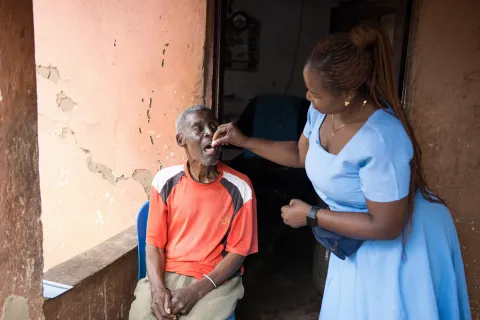
Today, she sees the impact of a new strategy: taking vaccines directly to schools, markets and villages. Despite lingering myths and religious objections, uptake in schools has been strong.
Mwanza’s success is even more notable given its geography. The district has recorded 87 cases and three deaths this season—but none originated locally. Every patient came from across the border in Mozambique, specifically from a gold mine at Lizinje.
“The cases are both Malawians who cross the border to work at the mine and Mozambicans from the mine,” explains Dikirani Chanza, the district’s health promotion officer.
To prevent imported infections from igniting local transmission, the district launched a targeted campaign for kabaza (motorcycle taxi) riders, who often transport sick miners into Malawi. As a high‑risk link between the mine and local communities, vaccinating them is critical to breaking the chain of transmission.
Beyond the campaign, Mwanza spent months before the rains strengthening sanitation.
HSAs conducted house‑to‑house visits, distributing chlorine and encouraging households to build toilets. Chlorine dispensers were installed at boreholes to protect shallow wells. Cross‑border meetings with Mozambican officials helped align the response on both sides.
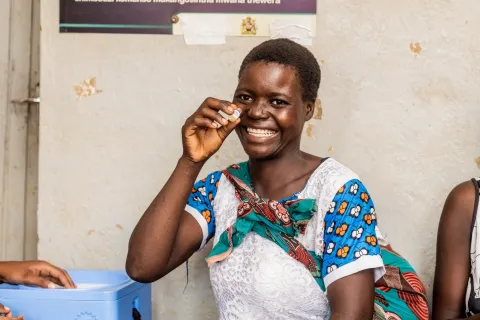
Supported by UNICEF and WHO, the recent oral cholera vaccination campaign, conducted by Ministry of Health and Sanitation from 19th and 23rd January, aimed to reach more than 20,000 people in high‑risk villages in the district within three days.
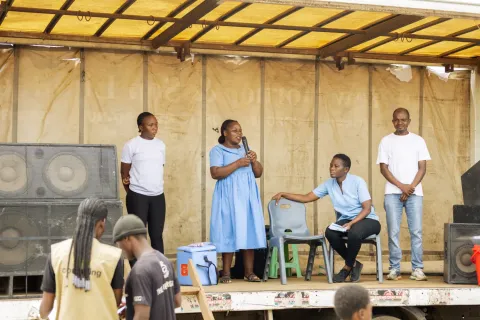
An “edutainment” truck travels through communities using music and drama to dispel myths and draw people toward vaccination points.
The district is now preparing a rapid qualitative assessment, with UNICEF support, to understand why its interventions are working so effectively while other regions struggle.
By listening to communities and those affected, officials hope to refine their messaging and close any remaining gaps.
For veteran health workers like Eunice Chaomba, watching children receive protection in their classrooms is deeply affirming.
“I can testify that these vaccines, coupled with other interventions, are really helping to bring cholera under control,” she says.
In Mwanza, at least, the sounds of school life continue uninterrupted – proof that early action, community trust and relentless outreach can keep a preventable tragedy at bay.