A little goes a long way: In drought-hit southern Madagascar, cash transfers provide lifelines
In southern Madagascar, UNICEF and partners are assisting 7,000 families, including 21,000 children


Tsimiatoa, 60, lives in the commune of Ifotaka, in the south of Madagascar. Like many in this region, he struggles to feed himself and his family. Today he has just "Bagne", a kind of wild sweet potato, that families pick from the forest when there is a lack of food.

In this drought-affected region, he gets his water from a well, a 10-minute walk from his home.

Tsimiatoa, his wife, his children and grandchildren, don’t have a home and sleep where they can make a shelter. Tsimiatoa is jobless and has neither land to cultivate, nor animals for herding.

Tsimiatoa and his family benefit from a cash assistance program that is implemented by UNICEF and Development Intervention Fund with the support of the British Government, through FCDO and other donors such as SDG Fund, Norad and KOICA. Some of the money Tsimiato receives is used to pay off debts incurred when he needed to buy rice to feed his family.

Each household receives a monthly sum of 100,000 Ariary, or about USD $25. The aim of the program is to provide vital assistance to the most vulnerable that allows them cope with the current crisis.

He also uses it to buy medicine for his backpain at the local health center. He thinks the pain is caused the climbing he has to do to fetch water at the well.

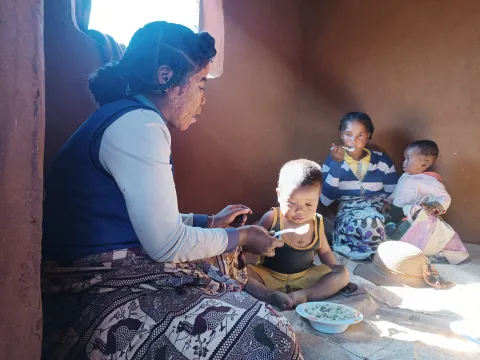
Volasambizoto, 16, had to leave school after giving birth to her daughter, Varinanjara.

Volasambizoto is herself cared for by her mother Soagnarahie, 38, who heads a family of ten.
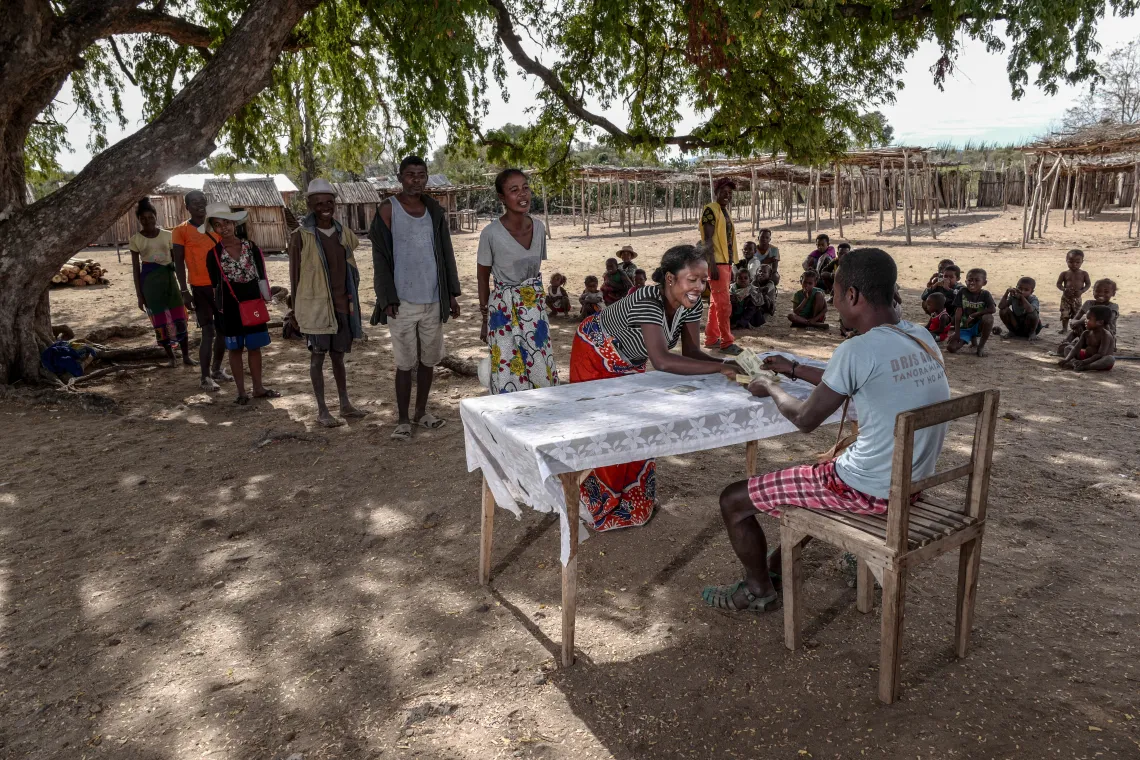
The family also benefits from the cash transfer program. The program “Tosike Vonjy Aigne” is run by UNICEF and Development Intervention Fund and has benefitted 7,000 families, including 21,000 children since it began in December 2020, thanks to Foreign Commonwealth Development Office (FCDO), Korean International Cooperation Agency (KOICA), Norad and SDG Fund.
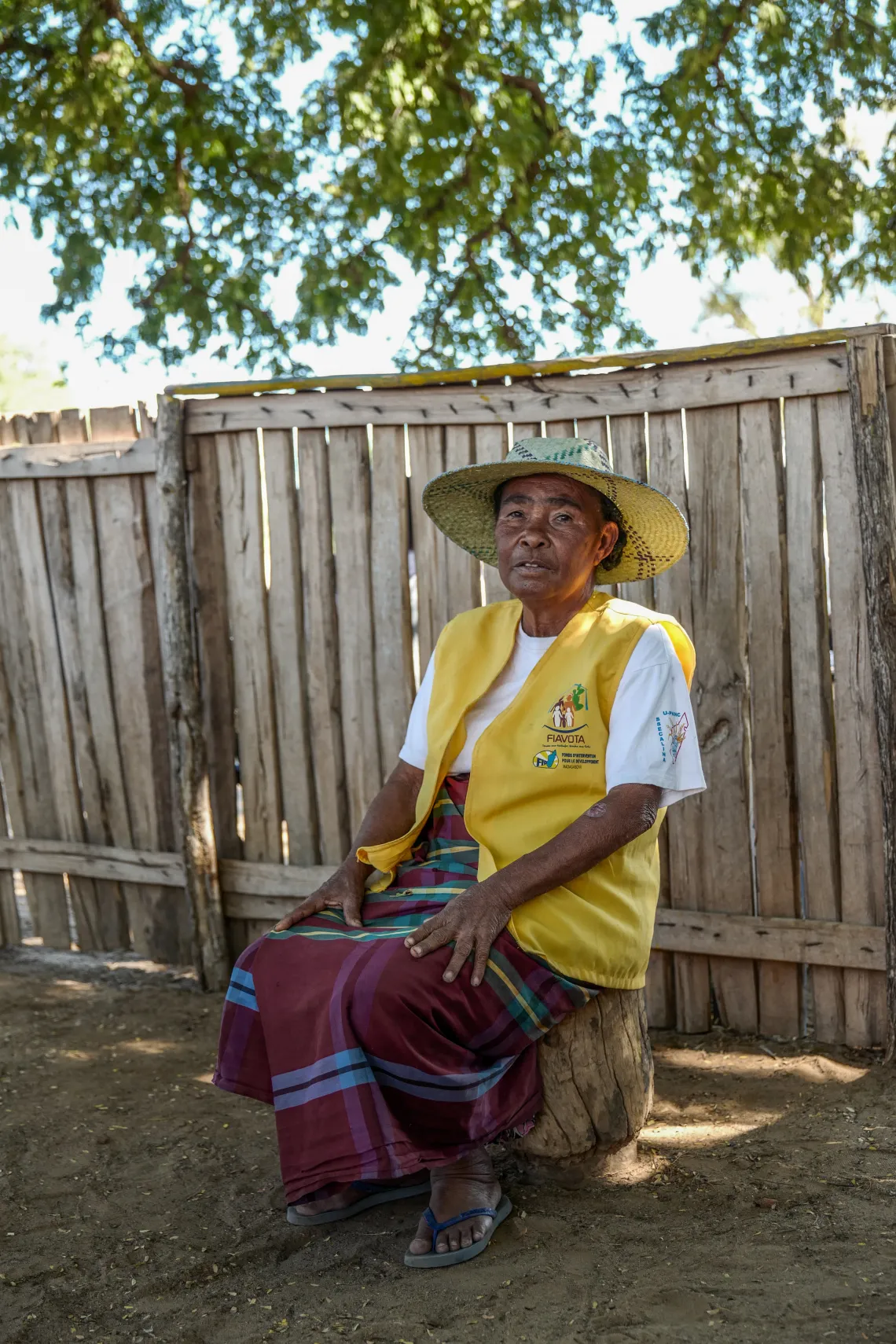
Miza Augustine, 50, is one of the agents implementing the cash transfer program in Ifotaka. “Without it,” she says, “many people in the community would not survive.”

Soagnarahie happily displays the two 50-kilogram bags of rice she has purchased with the cash she received. "This rice will allow us to survive a few weeks and we still hope that the situation will improve for us" she confides.