In Fenoarivo, the investigators were welcomed with joy
National Micronutrient Deficiency Survey – ENCM 2024

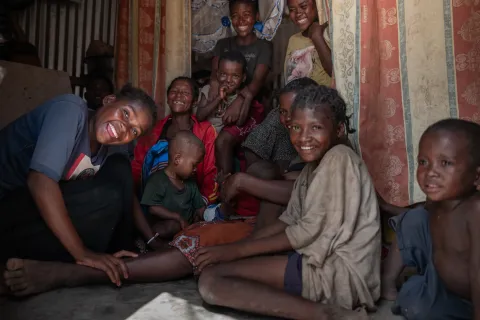
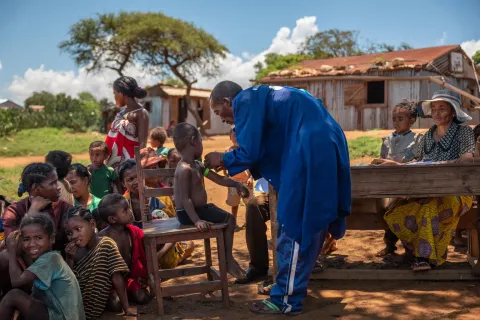
The joy is visible in the faces of household members who were selected by drawing lots, first for participation in the ENCM survey, and secondly to benefit from a diagnosis of anaemia and malaria, advice; and investigators were sent to Fenoarivo, South-East of Madagascar.
To get to the village of Fenoarivo – located 45 km from Manakara, in the south-east of Madagascar – it is necessary to take steep trails, almost impassable. It took the National Micronutrient Deficiency Survey (ENCM 2024) team of investigators two hours to reach the community. Yet, team leader Orelie Ramanantsialonina says that “the village is accessible compared to other localities selected for the survey.”
The village was selected by random draw for data collection, as part of the ENCM survey, which aims to assess the prevalence of micronutrient deficiencies among the Malagasy population to develop targeted intervention programmes and improve nutritional health.
Malaria and malnutrition particularly affect children, girls, pregnant women and breastfeeding women. Households, especially the poorest, are struggling to meet the costs of medical care.
Georges Rasolofomandimby, the village chief and community health volunteer, is enthusiastic about his hosts’ arrival. “I am delighted that you have come to Fenoarivo. The selected families have the chance to receive medical consultations free of charge,”
One of the ten heads of households selected also has trouble hiding his joy. “This survey is a boon for my family. We all received medical consultations; one of us was diagnosed with malaria and fully taken care of,” he says with a big smile. “He was fortunately treated for free since the treatment is expensive. The travel is also tiring because our village is far from the health centre. I am very pleased that my family has chosen to participate in the 2024 National Micronutrient Survey,” added TSABOTO Valisoa.
The protocol recommends that, after diagnostic tests, people suffering from malnutrition, malaria and severe or moderate anemia be referred to the health centre. The drugs required for the treatment of these diseases can be provided by the survey team if it is recommended by the health centre staff, so as to ensure proper patient care.
Orelie Ramannantsialonina, the team leader, highlighted the valuable collaboration of the populations. Thirty households were eligible and 10 were selected to perform the tests. “The families’ support has made our work in the fight against malnutrition, malaria and anemia easier,” she said. Moreover, pregnant and lactating women were sensitized to the consequences of undernutrition and received key messages on feeding infants and children under five for behavioural and social change.
The ENCM started in June and will continue until September 2024 across the country.
This survey was made possible thanks to the financial support of UNICEF and a panel of donors (GIZ, USAID, World Bank and WFP).