

International Day of Education: UNICEF encourages the transformation of education through best practices identified in Madagascar’s model schools.
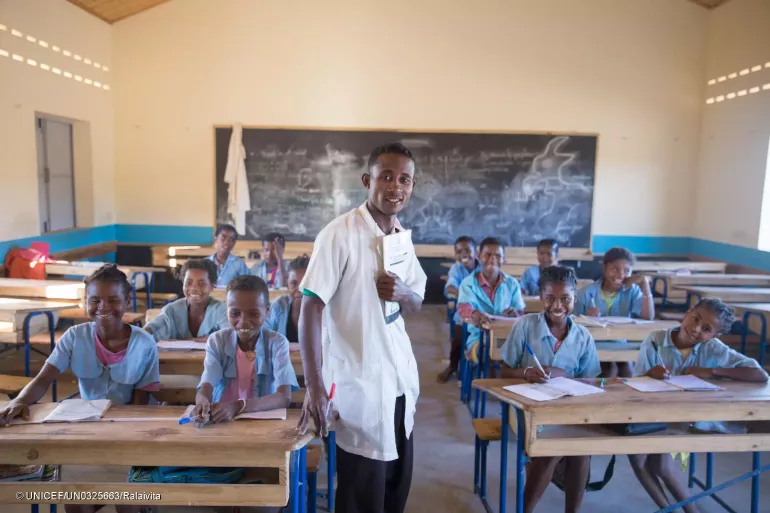
Antananarivo, 24 January 2025 – Sixty model schools across Madagascar were part of the Data Must Speak research project, co-created by the Ministry of National Education and UNICEF, which identified more than 25 best practices that can contribute to improving the quality of teaching and learning.
Conducted in 2023, the research project aimed to identify, within schools, innovative solutions in the form of local practices to overcome learning challenges. These best practices are making a real difference: some schools are achieving exceptional results even though they operate in the same context and have the same educational inputs as other schools.
The performance of these 60 public primary schools exceeded predictions, which is why they were selected for this research. They are also representative of the different key social and economic characteristics of the country. The 25 best practices were identified in five main areas, such as school leadership and management, teaching practices, the school environment, community involvement and decentralised administration. These include:
- Regular meetings between management and teachers: to address daily challenges, share new teaching methods and discuss successful practices, which leads to greater student motivation and better academic results.
- Close monitoring of student progress: the director and teaching team adapt teaching to the needs of each child, which significantly increases their chances of success.
- Regular assessments throughout the year: teachers frequently assess students' learning to measure their progress and adjust their teaching methods, promoting more targeted learning.
- Ongoing support from educational advisors: field visits and continuing education strengthen the skills of teachers and improve the overall quality of teaching.
- Frequent meetings between parents and teachers: these regular meetings help to monitor the results of children and find practical ways to support them at home.
The next stage of the research will focus on scaling up these key findings. These behaviours and practices can be replicated in all schools.
Together, let's transform education for every child!


