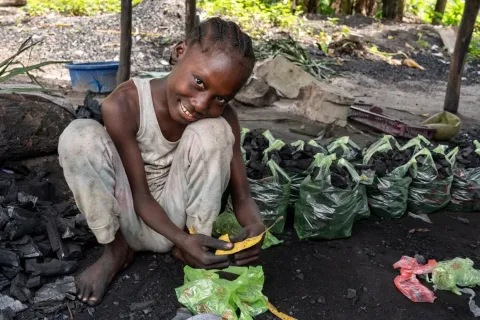
Liberia’s girls are boldly cultivating their futures: A landscape worth investing In
“Our Power. Our Voice. Our Future”
Change does not always begin with something big. It begins with small actions. It begins when one person chooses to listen, speak up, or create space or opportunity for someone to do just that.
Girlhood is the embodiment of change, where an emotional bond is built on unspoken empathy, mutual support, and shared moments and spaces where girls show up for each other, learn, and discover themselves without limitations. For many girls around the world, girlhood is, as Arpu-Elizabeth Juasemai puts it, “…the simple moments that allows a girl to just be a child. Sitting with your friends, laughing, playing together, braiding each other’s hair, going to school, dreaming about your future…”
Protecting girlhood is investing in change- the change needed to end gender-based discrimination and violence that denies millions of girls around the world their rights, restricts their choices, and limits their opportunities. Among the many challenges limiting girls’ ability to shape their own futures, child marriage remains one of the most critical issues affecting girls globally.
According to UNICEF’s 2026 Global Trends and SDG Progress estimates,[GU1] one in five girls worldwide is married before age 181, representing approximately 650 million women and girls alive today who were married as a child2. Each year, more than 12 million girls (or one every three seconds) are married before reaching adulthood3.
Across the globe, levels of child marriage are highest in West and Central Africa, where one in three girls is married before the age of 184. In Liberia, 49 per cent of girls in 1995 were married before age 18, compared with 25 per cent in 20205. Despite progress over recent decades, millions of girls continue to be denied their right to girlhood, education, health, protection and choice.
The challenge is not a lack of evidence but a lack of investment in ensuring that proven solutions reach every girl. Ending child marriage and investing in girls means expanding opportunities for girls.
In Liberia, poverty, violence, child marriage, and teenage pregnancy continue to take these moments away from girls. Amid all the limitations and the choices, they are stripped of, some still choose to dream, and some choose to lead.
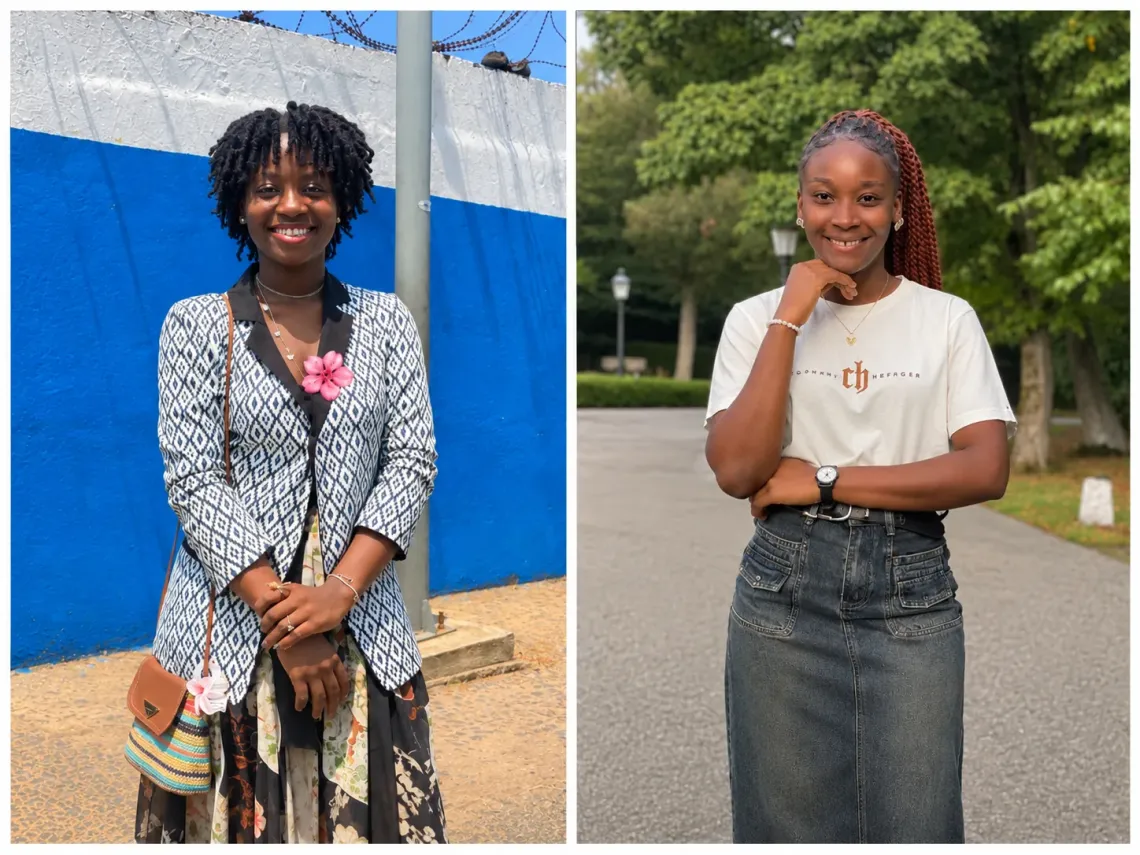
Jophelia F. Quayee a public health student at the African Methodist Episcopal University and the President of UNICEF Liberia’s Adolescent Girls Advisory Council (SAUTI) is committed to making the dreams of many young girls like her a reality through amplifying young people’s voice and advocating for girl’s rights in Liberia. She shares her vision for girls through her poem:
Where Every Path Belongs to Her
I imagine a place
where the morning does not begin
with a girl being told what she cannot become.
Instead, the sun rises gently
over classrooms filled with questions,
over playgrounds filled with laughter,
over homes where girls are heard
before decisions are made for them.
The roads are many.
One leads to a university,
another to a hospital,
another to a microphone,
a laboratory, a courtroom,
a farm, a business and a parliament.
Some girls choose to lead.
Some choose to create.
Some choose to teach.
Some choose to heal.
Some simply choose to dream
and no one tells them their dreams are too big.
Along these roads,
there are no walls built from poverty,
no chains disguised as tradition,
no closed doors called child marriage,
no silence forced upon a girl's voice.
There are mentors beneath the shade of trees,
teachers who say, “You can.”
Communities that say, “You are safe.”
And leaders who do not only listen to girls
when cameras are watching.
The landscape is painted
in the colours of possibility
purple for dignity,
green for growth,
gold for opportunity,
and the bright colours of thousands of dreams
still waiting to be lived.
There are rivers, too,
and every girl is allowed
to decide which bridge she crosses.
Some paths may be difficult.
Some may require courage.
Some may lead somewhere unexpected.
But the beauty of this future
is that the choice belongs to her.
And perhaps that is what investing in girls truly means:
not choosing the road for us,
but making sure the roads are open.
Not speaking for us,
but making room for our voices.
Not simply protecting our childhood,
but protecting our right
to imagine what comes after it.
In this landscape,
a girl is not a promise waiting to become useful.
She is already a person
with rights,
with choices,
with a voice,
with a future.
And every path she chooses
is a path the world
should be ready to respect.
Protecting girlhood means protecting not just a girl’s safety but also her freedom to become whom she wants to be. It is investing in real opportunities for girls to grow and make decisions for their future. For Jophelia,, investing in girls “…should not stop at telling girls they are the future. It should give girls the tools, resources, opportunities, and freedom to actually shape that future.”
Fanell Decontee Dewee, an 18-year-old student, child rights advocate, and the Program Director of UNICEF Liberia’s Adolescent Advisory Council (SAUTI), states that investing in girls means taking action now.
Fanell emphasizes that investing in girls means more than providing kind words or telling them they are important; it means taking action with real support and creating real opportunities. This includes ensuring high-quality, affordable education and healthcare; safe schools; access to safe health information and learning materials; and support for the teachers who teach them.
Investment in girls is more than just money. It is about time, commitment, protection, opportunities, resources, and trust. Investment is “a classroom with shelves full of books and bright windows, a clean, well-equipped hospital, and a circle of young people making decisions for their community”
As these girl leaders highlight, the world girls deserve has a bright sky and air full of laughter, questions, big ideas, and the opportunity to choose when they are ready, when they are sure, and are never limited because they are “simply a girl.”
On this Day of the Girl Child, investing in girls’ rights means ensuring girls’ rights are respected not only in policies and conferences but in everyday life too- in online spaces, classrooms, communities, and homes. It is taking action to protect girlhood from harmful practices such as female genital mutilation (FGM) and child marriage.
Every girl deserves to experience girlhood, to be a child before anyone expects them to be adults, and to have the freedom to be a child who goes to school, discovers who she is, and dreams out loud.
Now more than ever, we must commit and recommit, publicly and collectively, to protecting all girls’ rights to remain girls, and to end child marriage once and for all. In doing so, the sun may rise with the bright colours of possibility and the thousands of dreams waiting to be lived can become a reality.
Investing in girls means giving them something every child deserves: the freedom to imagine a future and the opportunity to choose it.