Makani: A Safe Space for Learning and Hope
With the support of Al Ghurair, Makani centers help children recover lost learning, build confidence, and remain on track for academic success

At just 13 years old, Moustafa’s world has already been shaped by challenges far beyond his years. Growing up amidst poverty and uncertainty, he struggled to keep up with school and often felt left behind. That changed when he found Makani, a community-based safe space created by UNICEF and supported by Al Ghurair. Makani means "My Space" in Arabic.
“I joined Makani five months ago,” Moustafa says with a smile. “I’ve become much better in English, Arabic, and Science. Makani changed my life. I can now go there to do my homework. I can even help others if they need it when I get home,” he adds.
Makani centers offer more than just education; they are holistic, multi-service hubs designed to support children like Moustafa who face the harsh realities of displacement, poverty, and marginalization. These centers combine in-person learning, catch-up classes, psychosocial support, internet access through digital hubs, and recreational activities—all under one roof.
The Retention Support (RS) program, an important part of Makani, focuses on helping children from grades 1 to 9 stay enrolled in school by bridging learning gaps. These children follow the school cycle and are supported throughout the academic year. Tailored catch-up sessions and a learning recovery plan ensure that no child is left behind.
“Makani helped boost my confidence,” Moustafa shares. “Here, I learned to be less shy and interact with my friends. I also learned many other activities, like Robotics! I even learned about agriculture. Before, I didn’t know how to grow plants.”
“I had a dream Makani filled the gap for me to learn and reach my dream.”
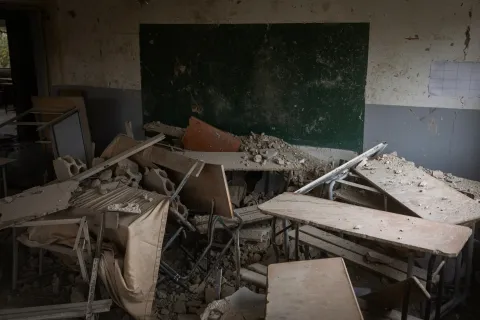
Across Lebanon, more than 500,000 children, both Lebanese and non-Lebanese, are out of school, with many at risk of child labor, early marriage, or exploitation. For these children, education is not just about learning; it’s a lifeline to a safer and brighter future.
The prolonged impact of COVID-19 and the country’s economic crisis has left many children struggling to return to classrooms. With limited spaces in public schools and growing financial barriers, such as the high cost of transportation, programs like Makani are urgently needed to provide flexible, child-centered learning pathways.
Makani doesn’t stop at education. It offers life skills training, sports, psychosocial support, and referrals to specialized services, creating a protective environment where children can connect, play, and heal. Caregivers also receive support, including early childhood development and parenting guidance, ensuring that entire families benefit.
For children like Moustafa, Makani is more than just a learning center; it’s a place of hope, resilience, and community.
“I had a dream,” Moustafa says. “Makani filled the gap for me to learn and reach my dream. Makani allowed me to invest my time productively and combat boredom.”
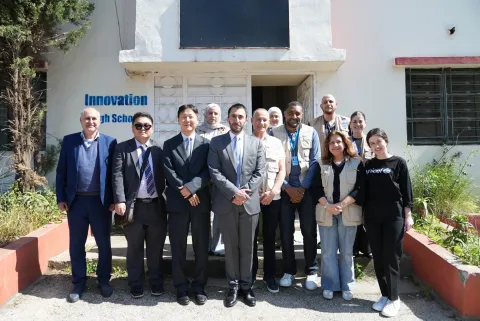
With the support of Al Ghurair, UNICEF can continue to expand the Makani model, ensuring that thousands of children recover education losses, reach their grade level requirements, and remain enrolled in school.